


SMART Goals for Project Managers: How to Set Them, Use Them, and Stand Out


As a project manager, you’re an architect carefully planning every detail and then executing your vision to bring projects to life.
But here’s what’s stopping you: vague goals create chaos
- Teams don’t know their priorities
- Resources get misallocated
- Deadlines become meaningless
You need a framework that bridges the gap between planning and execution. SMART goals do exactly that, transforming your unclear ideas into specific, measurable actions that deliver results.
In this guide, we’ll explore everything project managers need to know about SMART goals, complete with examples, templates, and practical tips to apply right away.
Let’s get started.
What Are SMART Goals?
SMART goals are a structured framework for setting clear, trackable, and achievable objectives that drive successful outcomes.
This framework builds a roadmap that transforms your project goals into accountable action with measurable progress toward completion.
Here’s what the SMART goals acronym stands for:
- Specific: Clearly defining what exactly you want to accomplish
- Measurable: Ensures you can track progress and completion
- Achievable: Focuses on setting realistic goals within available resources
- Relevant: Aligns your goal with the organization’s broader goals
- Time-bound: Establishes when you will complete the goal
The idea behind the SMART approach was first introduced by George T. Doran in 1981 in Management Review and has evolved into a widely used framework.
Today, project managers use SMART goals to define clear project planning and execution with aligned teams working toward specific project outcomes.
SMART Goals vs SMART Objectives: What’s the Difference?
Although SMART goals and SMART objectives are often used interchangeably, they serve different purposes in structured project planning. As a manager, you must understand their clear distinction to use them effectively in real project scenarios.
| Aspect | SMART Goals | SMART Objectives |
| Scope | Broad and strategic | Narrow and tactical |
| Timeframe | Long-term | Short- to mid-term |
| Purpose | Define what to achieve | Explain how to achieve it |
| Usage | Guide long-term strategic planning | Support short-term operational tasks |
| Hierarchy | Broad goals covering multiple objectives | Specific steps toward a larger goal |
| Example | “Increase blog traffic by 40% in the next 6 months” | “Publish 2 SEO-optimized blogs per week for 3 months” |
| Measurement | Based on overall performance (e.g., traffic, leads) | Based on task completion (e.g., blog count, schedule met) |
The SMART criteria apply to both. If the difference between goals and objectives themselves still feels blurry, our guide on project goals and objectives clears it up.
Why SMART Goals Give Project Managers a Competitive Edge?
SMART goals are what separate successful project managers who manage with purpose from those who manage in chaos.
As a project manager, here’s why SMART goals should be your top priority –
- Enhanced project clarity: SMART goals eliminate confusion by providing clear goals that every project team member can understand and work toward, ensuring everyone knows exactly what success looks like from day one.
- Improved resource management: With specific, measurable targets, project managers can allocate resources more effectively, ensuring the right people work on the right tasks at the right time without waste or overlap.
- Better stakeholder communication: SMART goals create a common language between project managers and stakeholders, making it easier to report progress, justify decisions, and manage expectations as a project moves forward.
- Stronger team accountability: When goals are clearly defined, team members understand their roles and responsibilities and take greater ownership, which reduces constant micromanagement.
- Effective scope control: Project managers can use SMART goals as a filter for change requests, ensuring additions meet the original Specific, Measurable, and Relevant criteria while preventing scope creep.
- Data-driven decision making: Measurable goals provide project managers with concrete data to track progress, identify bottlenecks early, and make informed adjustments to keep projects on track.
- Increased project success rate: Teams working with SMART goals are significantly more likely to complete projects on time and within budget, as the clear framework keeps everyone focused on what truly matters.
- Improved risk management: SMART goals help project managers anticipate potential issues by establishing clear checkpoints and measurable indicators that signal when a project might be veering off course.
Also Read: Why project management is important
SMART Goals for Project Managers: How to Set and Achieve Them
Here’s a step-by-step guide to setting SMART goals for a project that delivers measurable results –
Step 1: Start with the specifics
Clearly state what you want to achieve by defining the “What,” “Why,” and “Who” of your project.
Begin by setting up your project with a clear title and description that captures your core objective and establishes what success looks like upon completion.
This is also the right moment to run a project kickoff meeting so the whole team hears the goal defined the same way.
This initial focus centralizes your efforts around a well-defined target and ensures everyone understands the project’s purpose, scope, and expected outcomes from the start.
Step 2: Establish measurable criteria
Once your goal is specific, determine how you will know it’s accomplished. Make your goals measurable by defining concrete metrics, deadlines, and performance indicators.
Use templates to structure your goal-setting process and establish key project performance indicators to monitor progress throughout your project.
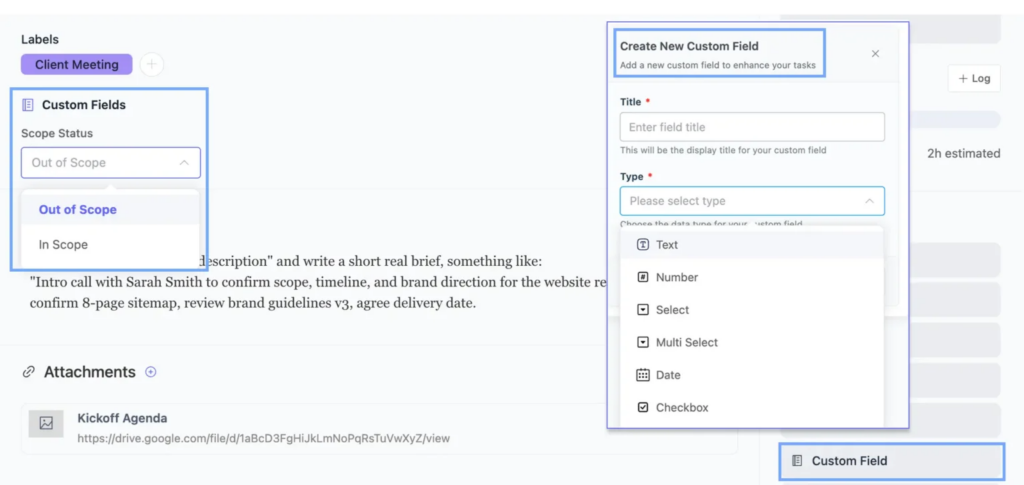
You can also add custom fields to your tasks to capture exactly the information you need to measure, whether that is budget spent, completion percentage, or client approval status.
Step 3. Keep goals achievable
Now, determine if your goal is realistic, considering your team’s capabilities and available resources. It should stretch your team’s potential but remain within reach, avoiding overambitious targets that could derail progress.
Therefore, break down larger goals into smaller, manageable tasks that represent the specific work needed to achieve your objectives.
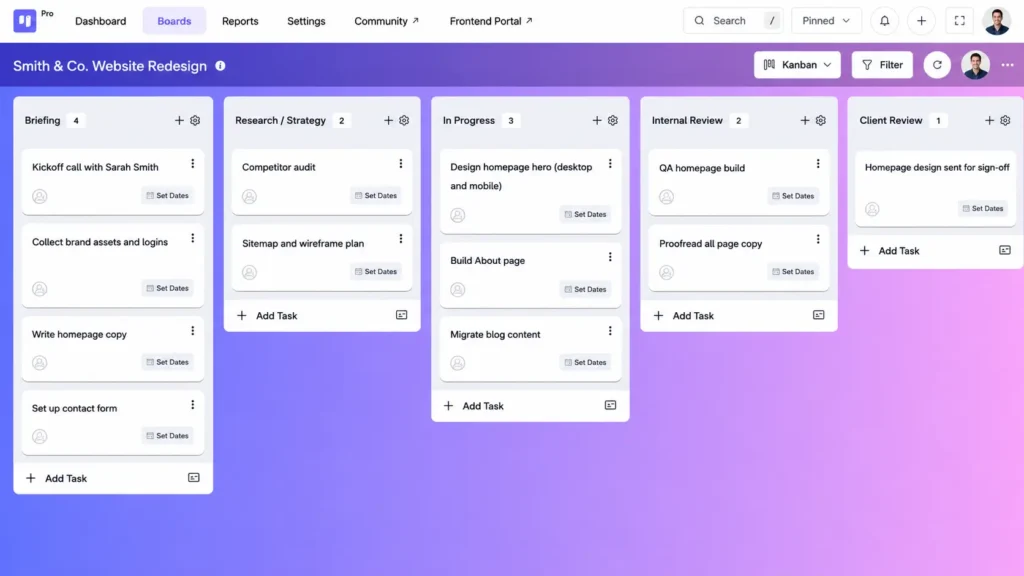
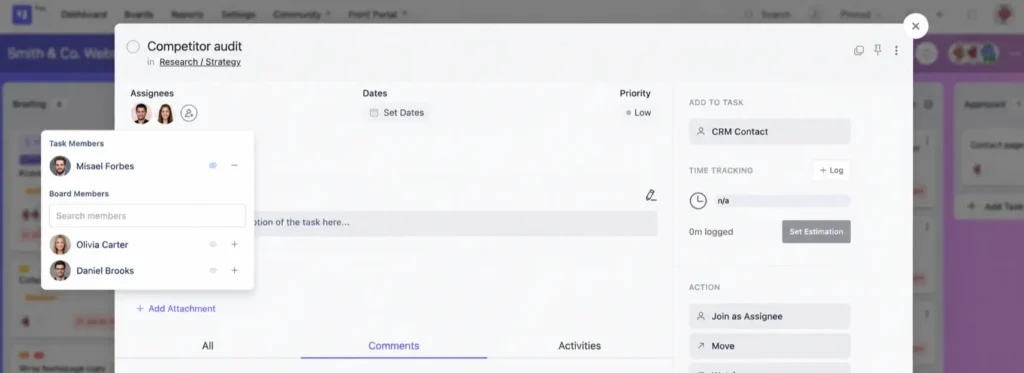
Then assign them to your team members based on their skills and availability. This process significantly enhances achievability and ensures clear accountability throughout the project.
Step 4: Confirm goal relevance
Align your project goal with your company’s broader strategic vision. Confirm the timing is right to pursue it now, and consult with relevant stakeholders to ensure your project supports important company priorities.
This collaborative approach ensures you are investing resources in objectives that genuinely move the business forward.
Step 5: Set a time-bound deadline
Assign a clear deadline for each goal, creating urgency and a target for completion. Set start and due dates for individual tasks to track progress against your timeline effectively.
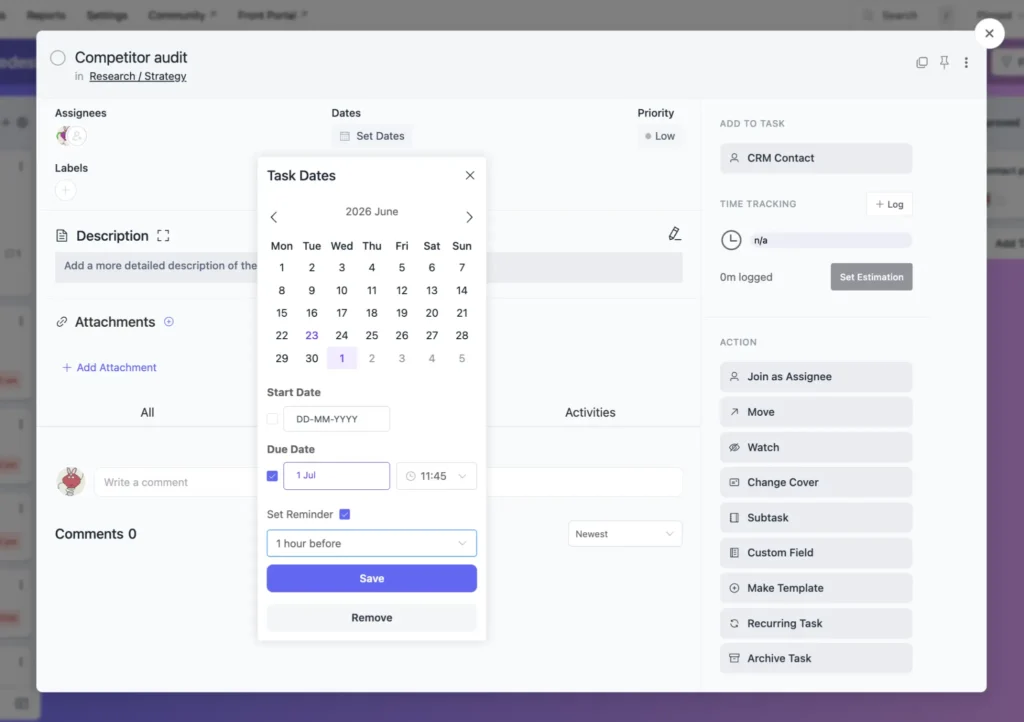
Tip: A deadline only helps if the team sees it coming. Set task and subtask reminders in FluentBoards so nobody discovers a missed deadline the day after.
Step 6: Monitor and adapt
After establishing your SMART goals, continuously track your progress by monitoring key milestones and performance indicators.
At the same time, stay ready to adjust your strategies whenever new information becomes available or circumstances shift.
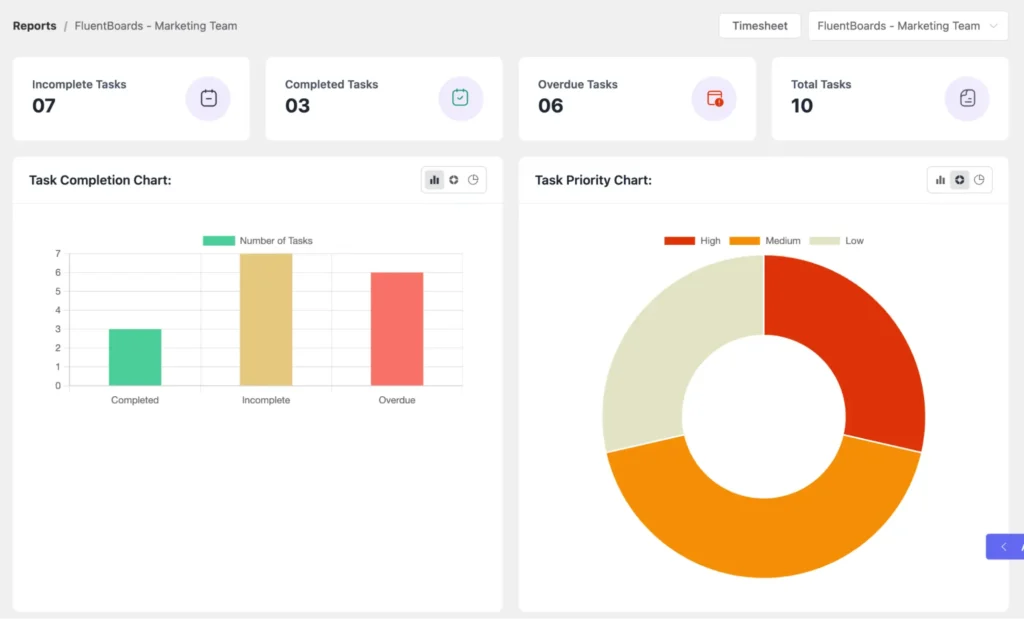
By conducting regular reviews through status updates and progress reports, you can identify issues early, allowing for quick course corrections to keep your project on track.
Go Beyond the Basics! (Bonus Tips for Better SMART Goals)
Here are some essential tips to keep in mind when crafting SMART goals-
- Focus on only meaningful project management goals instead of chasing too many at once
- Thoroughly assess your resources and team capacity before locking in your goals
- Add a 10-15% time buffer for key milestones to manage unexpected challenges
- Keep your “why” front and center and regularly remind yourself why each goal is important to stay motivated
- Define clear metrics to track progress and confidently know when a goal is achieved
- Continuously evaluate progress and adapt your goals as circumstances change
- Use a real-time dashboard to maintain team transparency
Ready-to-Use SMART Goal Templates for Project Managers
To help you create effective SMART goals, we’ve crafted practical templates designed for managing projects efficiently-
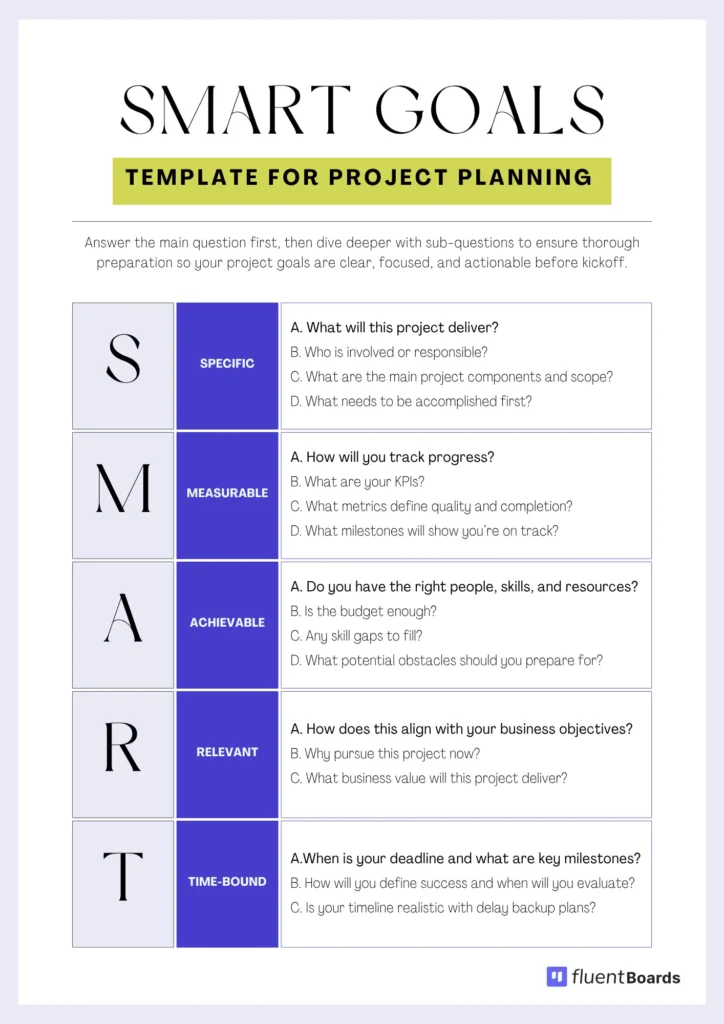
Project Planning Template
A project manager can use this template to set clear goals and align priorities before starting a new project.
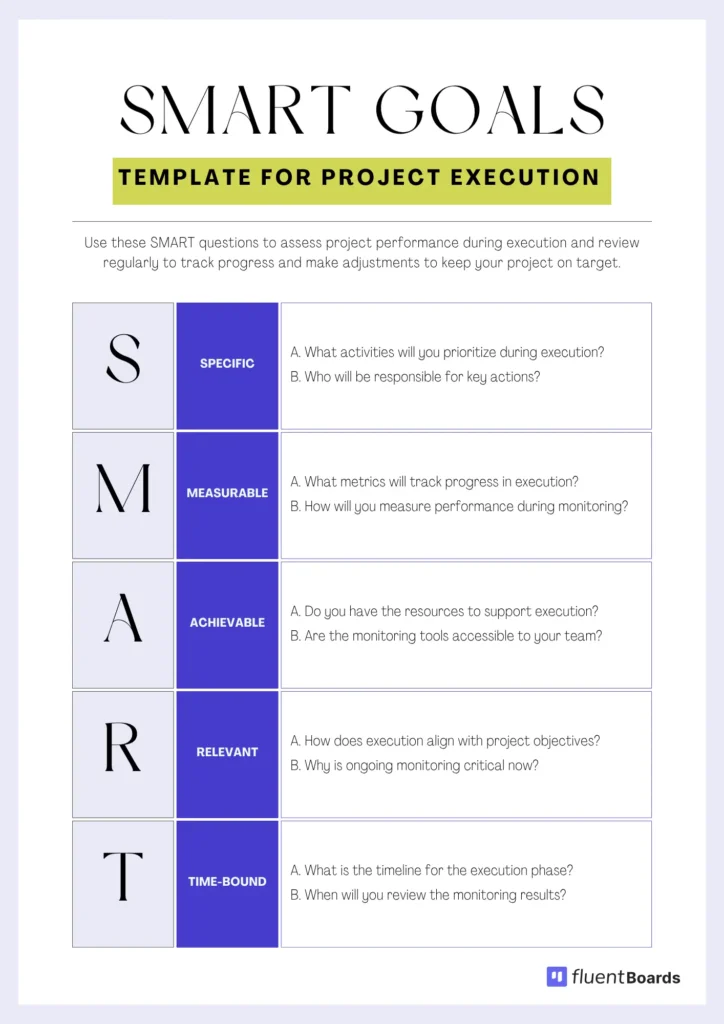
Project Execution Template
This template guides project managers to supervise progress, analyze metrics, and maintain project momentum during execution.
SMART Goals in Action: Some Real-Life Examples
Let’s look at some real-world SMART goal examples that show you exactly how to apply this framework to your daily project management activities:
1. Improve communication
SMART Goal: By the end of this month, implement a structured communication plan that outlines weekly team updates, bi-weekly stakeholder check-ins, and a shared summary of progress. This system will reduce redundant queries and ensure all stakeholders receive consistent, real-time information.
- Specific: Establish a schedule and clear process for team and stakeholder updates
- Measurable: Success will be measured by fewer repeated questions and missed updates
- Achievable: Can be implemented using existing team workflows
- Relevant: Keeps the project aligned and prevents miscommunication
- Time-Bound: Fully implemented by month-end
2. Manage scope, time, and budget
SMART Goal: During the next project cycle, reduce scope creep by 30% through a formal scope agreement signed by all stakeholders during the planning phase. Include a change request process and conduct weekly scope checks in team meetings.
- Specific: Introduce a scope sign-off process and regular scope reviews
- Measurable: Aim for a 30% reduction in unauthorized changes
- Achievable: Can be managed within the existing workflow and meeting structure
- Relevant: Prevents overwork, missed deadlines, and budget overruns
- Time-Bound: Applied to the next project cycle (approx. 8 weeks)
3. Improve the quality of deliverables
SMART Goal: Over the next 6 weeks, create and apply a “quality checklist” for all project deliverables. Each deliverable must pass through a peer review and meet the defined criteria before client handoff, aiming to cut revision requests by at least 40%.
- Specific: Introduce a standardized checklist and review process
- Measurable: Track the number of revisions requested before and after
- Achievable: Easily implemented within the team’s current process
- Relevant: Delivers cleaner, client-ready work and saves time
- Time-Bound: To be used for all deliverables over the next 6 weeks
4. Build and develop the team
SMART Goal: By the end of Q3, assign a mentorship pairing between each senior and junior team member, with bi-weekly sessions to transfer project knowledge and skills. Track junior members’ independent task handling to assess improvement.
- Specific: Formal mentorship pairings with bi-weekly check-ins
- Measurable: Monitor junior team member autonomy over time
- Achievable: Can be done with internal planning and coordination
- Relevant: Prepares the team for growth and reduces single points of failure
- Time-Bound: Program active through Q3
5. Risk identification and mitigation
SMART Goal: For all upcoming projects this quarter, create a detailed risk register during the planning phase, identifying at least five potential risks with mitigation strategies. Review and update the register every two weeks to keep it current.
- Specific: Establish a risk register with active review cycles
- Measurable: Minimum five risks identified per project
- Achievable: Easily integrated into regular planning and review sessions
- Relevant: Prevents surprises and project derailments
- Time-Bound: Applied to every project this quarter
6. Grow your project management skills
SMART Goal: Within the next 6 months, earn a recognized project management certification by studying 5 hours per week on a fixed schedule. Book the exam date in advance and track study sessions weekly to stay on pace.
- Specific: One named certification with a fixed weekly study routine
- Measurable: 5 study hours per week and a pass on the first attempt
- Achievable: The weekly hours fit around a full project workload
- Relevant: Strengthens your case for leading bigger projects
- Time-Bound: Certification completed within 6 months
FAQs About SMART Goals for Project Managers
Quick answers to the questions project managers search for most about SMART goals.
What does SMART stand for in project management?
SMART stands for Specific, Measurable, Achievable, Relevant, and Time-bound. Each letter is a test your goal has to pass before work starts. If a goal is vague on any of the five, refine it until it isn’t.
What are the 5 SMART goals for project managers?
The 5 in SMART refers to the five criteria every goal should meet: Specific, Measurable, Achievable, Relevant, and Time-bound. There is no fixed set of five goals every project manager must use. The right ones depend on your project, though the examples above cover the most common areas like communication, budget accuracy, and deadlines.
How do you write a SMART goal?
Start with an action verb, name the deliverable, attach a measurable target, and set a deadline. For example: increase sprint completion rate from 80% to 95% within two quarters. Then check the result against all five criteria and tighten anything that reads vague.
Set SMART, Stay Aligned, and Deliver with Confidence!
The most successful project managers don’t treat SMART goals as a one-time activity; they integrate them into their ongoing project management processes.
Start with one well-crafted SMART goal for your next project. Learn from the experience, then refine your process as you go. Remember, it’s not about perfection on your first attempt, but about creating a systematic approach that improves your outcomes over time.
This approach keeps your team aligned, improves outcomes, and leads to happier teams and consistently successful project completions with confidence!
That’s all for today! Wishing you a more focused and results-driven project management journey ahead!
Let’s redefine project management with FluentBoards!

Follow:


Get Tips, Tricks, & Updates
We won’t send you spam.





Leave a Reply