


Project Team 101: What Is a Project Team and How to Build a Winning One?


The strength of the team is each member. The strength of each member is the team.
Phil Jackson
The essence of Phil Jackson’s quote highlights a simple truth: each person adds strength to the team, and the team, in turn, strengthens each person.
But here’s a reality check – building a perfect project team isn’t easy, and hassles can arise at every turn.
However, don’t worry, we’re here to help! In this piece, we explain what is a project team, and how to build a perfect one from start to finish.
So, it’s time to read on!
What Is a Project Team?
A project team is a group of skilled individuals who collaborate on a specific project to achieve its objectives and complete it within the planned timeline and budget.
Each member brings a distinct area of expertise. Together, they cover everything the project needs, from planning and decision-making through to execution and delivery.
Unlike a permanent department, a project team is temporary by design. It forms around a specific goal, operates until that goal is met, then disperses.
Members typically come from different departments and return to their regular roles once the project closes. That cross-functional, goal-bound makeup is what sets a project team apart from any other group inside the same organization.
And, the real strength of a project team lies in:
- Selecting the right team structure
- Understanding the roles within the team
- Assigning the right members to each responsibility
- Ensuring clear and open communication among different groups
What Makes a Good Project Team?
Not every group of people working on the same project is an effective team. A strong project team has characteristics that separate it from a group that is just assigned to the same work.
Clear, shared goals: Every member understands what the project is trying to achieve and why. There is no ambiguity about what success looks like.
Defined roles: Each person knows what they are responsible for. Overlapping responsibilities are one of the most common sources of conflict and dropped work.
Open communication: Team members share progress, flag problems early, and ask questions without hesitation. Information flows both ways.
Accountability: People take ownership of their tasks. When something slips, the team addresses it directly rather than passing blame.
Complementary skills: The team covers the full range of skills the project needs. Gaps are identified early and filled, whether from within the organization or externally.
These characteristics do not happen by accident. They are built through the way the team is assembled and managed from the start.
How Big Should a Project Team Be?
Most project teams work best with five to nine members. For most projects, the sweet spot is five to seven. Smaller than that, and the team often lacks the range of skills to cover the work end to end. Larger than that, and coordination cost starts to overwhelm progress.
The reason is straightforward. As a team grows, the number of communication paths between members grows much faster. A team of five has ten possible connections. A team of ten has forty-five. Decisions slow down, meetings stretch, and individual ownership starts to blur.
For bigger projects, the answer is not a bigger team. It is several smaller teams working on clearly separated parts of the project, each with its own focus and accountability.
When in doubt, start lean. Add a member only when there is a specific skill gap you cannot cover from inside the current team.
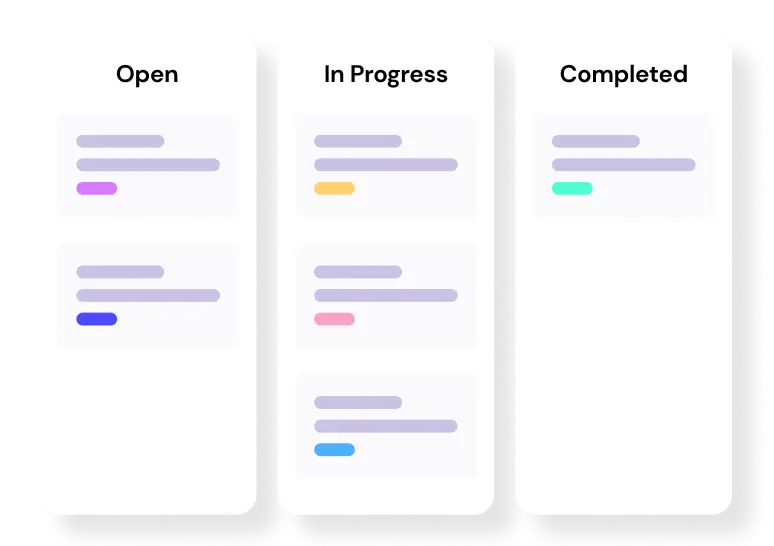
Level up your project management game inside WordPress – where limitless possibilities come at an unbeatable price!
How to Build a Project Team
Building a project team requires more than just effort—it demands a strategic approach to ensure you check all the boxes and assemble a team capable of meeting your project’s needs effectively.
Here’s a step-by-step process you can follow to build a project team that delivers results:
1. Define project goals and objectives
Clearly outline what the project needs to achieve. Use the SMART criteria, Specific, Measurable, Achievable, Relevant, and Time-bound, so every goal is concrete and trackable.
This gives the team a shared reference point and makes it easier to measure progress at every stage.
2. Set some ground rules
Establish how the team will communicate, resolve conflicts, and collaborate before work begins.
Ground rules reduce friction and set clear expectations for behavior and working standards. A few agreed-upon norms, written down early, prevent most common team problems before they arise.
3. Decide roles, responsibilities, and team structure
Choose the team structure that fits your project’s size and complexity. Then define each role clearly and document what each person is accountable for.
For larger projects, map responsibilities using a RACI chart. RACI stands for Responsible, Accountable, Consulted, and Informed. It forces you to decide, for every key task, exactly who owns it, who has the final call, who needs to give input, and who just needs to stay informed.
Done early, it closes the most common source of project drift: two people assuming the other one owned a piece of work.
4. Identify required skills
List the skills the project needs at each stage, both technical and interpersonal.
Match those requirements to your available team members. Skill gaps discovered mid-execution are one of the most disruptive problems a project team can face, so address them before work starts.
5. Onboard the right team members
Evaluate your existing resources first. Check capacity as well as skills. A strong candidate already stretched across other commitments will become a bottleneck the moment work starts.
Balance the team’s makeup too. A group of people with identical strengths and working styles typically produces less than a diverse mix. Once the team is set, assign work clearly so no one is uncertain about what they own.
Common Roles and Responsibilities of a Project Team
A project team is built around five core roles. The exact responsibilities vary by project size and complexity, but these positions appear in some form on almost every team.
Understanding these roles also helps you identify all the stakeholders a project involves beyond the core team itself.
Project Sponsor
The project sponsor is the executive backer of the project. They align the work with business objectives, secure the budget and resources the team needs, and give the project manager the authority to act.
When major decisions need organizational weight behind them, the sponsor steps in.
Project Manager
The project manager is the person responsible for making everything happen. They plan the work, track progress against time and budget, manage stakeholder expectations, and keep the team focused on the goal.
When something goes wrong, the project manager is the one who diagnoses it and decides what to do next.
Project Analyst
The project analyst keeps the project grounded in data. They gather and interpret information, identify risks early, and translate complex findings into clear guidance the team can act on.
In practice, they are the person who spots when a decision is based on assumption rather than evidence.
Resource Manager
Ensures the team has the right people, tools, and materials at the right time. In smaller projects, the project manager absorbs this role.
In larger, multi-workstream projects, a dedicated resource manager becomes essential for preventing bottlenecks and keeping capacity balanced.
Project Team Member
The people doing the core work. They execute tasks, collaborate across the team, report progress, and flag blockers before they become bigger problems.
The quality of delivery depends directly on how clearly each member understands what they own.
For a complete breakdown of how to assign and document all five roles, see our guide to project team roles and responsibilities
Project Team Example: What One Looks Like in Practice
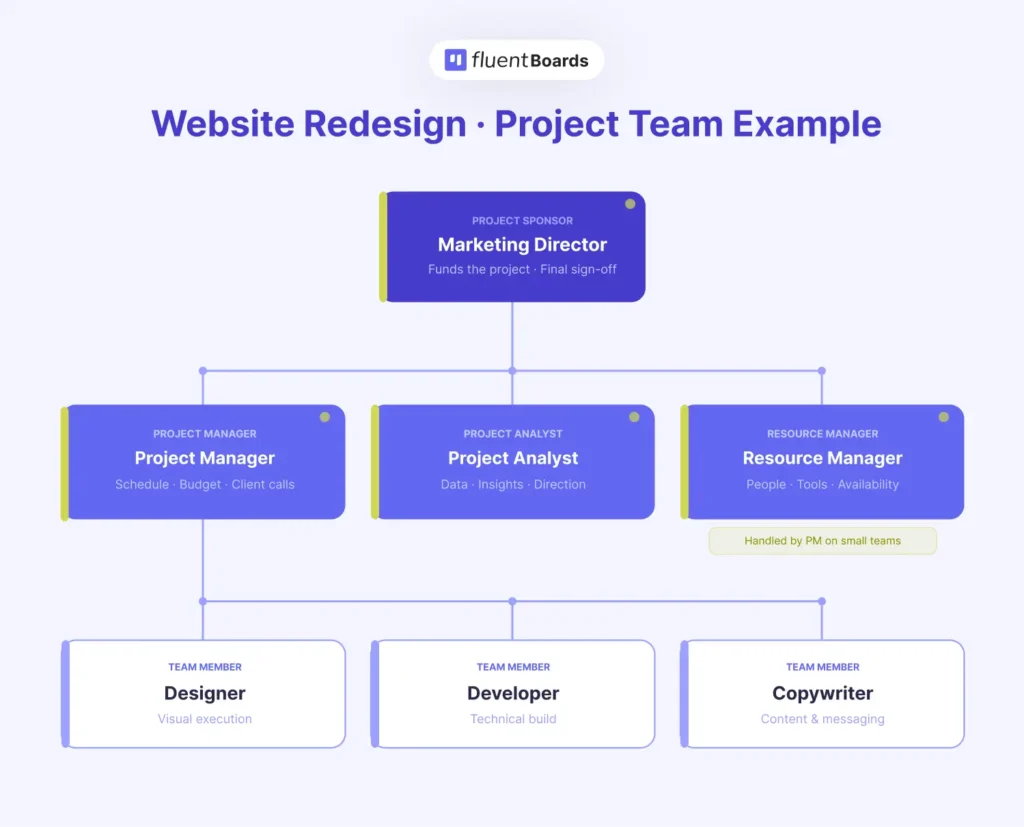
Picture a three-month website redesign project. The project sponsor is the client’s marketing director, who funds the work and signs off on the final result. The project manager runs the schedule, budget, and client calls.
The project analyst gathers user data and turns it into design priorities. The resource manager ensures the right people, tools, and time are in place throughout the project. On this small team, the project manager also takes on that function since the team does not need a dedicated person for it.
The three team members are a designer, a developer, and a copywriter who produce the actual deliverables.
Five roles, five different jobs, one shared deadline. On larger projects each role sits with a dedicated person. On smaller ones, some roles overlap. The structure stays the same either way.
Different Types of Project Team Structures
A project team can follow various structures, each tailored to the project’s needs and complexity. Common structures include functional, matrix, and projected.
- Functional project structure: A functional project team structure organizes departments by expertise, with functional managers overseeing their teams. Functional managers lead departments and connect regularly with an executive.
- Project-based team structure: In a project-based organizational structure, team members are pulled from different functional departments to form a temporary team focused on a specific task.
- Matrix-based project team structure: A matrix organizational structure arranges team members in a grid format, allowing them to report to both a functional manager and a project manager.
Check out our detailed blog on project team structure to gain in-depth insights and discover a few additional types!
How Project Teams Develop Over Time
Choosing the right structure is just the beginning.
A project team does not perform at its best from day one. Teams go through predictable stages of development, and understanding them helps you manage the process rather than react to it.
Researcher Bruce Tuckman identified five stages most teams move through-
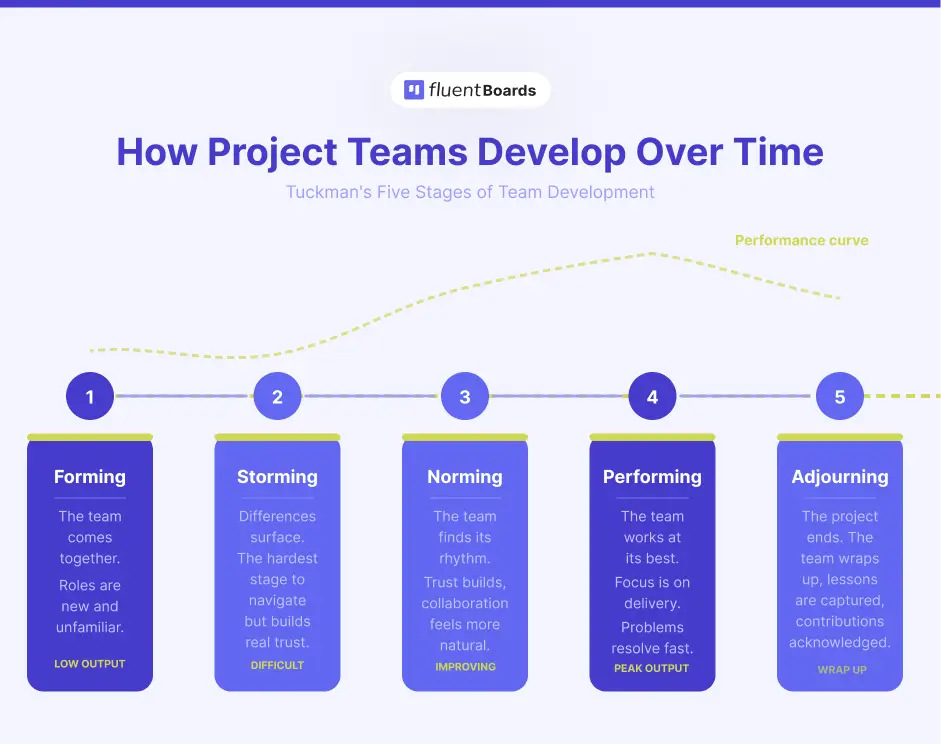
Forming: The team comes together. Roles are new, relationships are unfamiliar, and members are still figuring out how to work with each other. Productivity is low, but this stage is necessary.
Storming: Differences in working style, priorities, and communication begin to surface. This is often the most difficult stage. Teams that navigate it openly come out with stronger norms and better trust.
Norming: The team finds its rhythm. Roles are clearer, trust has developed, and collaboration becomes more natural. Progress accelerates.
Performing: The team is working at its best. Focus is entirely on delivery. Problems get solved quickly because the team has the trust and systems to handle them.
Adjourning: The project ends. The team disperses or transitions. Recognizing this stage matters because it is when lessons are captured and contributions are acknowledged properly.
Most teams spend longer than expected in the storming stage when roles and expectations were not set clearly at the start. Strong team management is what moves teams through it faster and into performing.
For a practical guide on leading your project team through each stage, see our full article on project team management
How FluentBoards Helps Your Project Team Stay Aligned
Managing a project team gets complicated quickly. Work is assigned, updated, and blocked across multiple people and tasks at the same time.
Without a central system, visibility breaks down and the project manager ends up chasing status instead of solving problems.
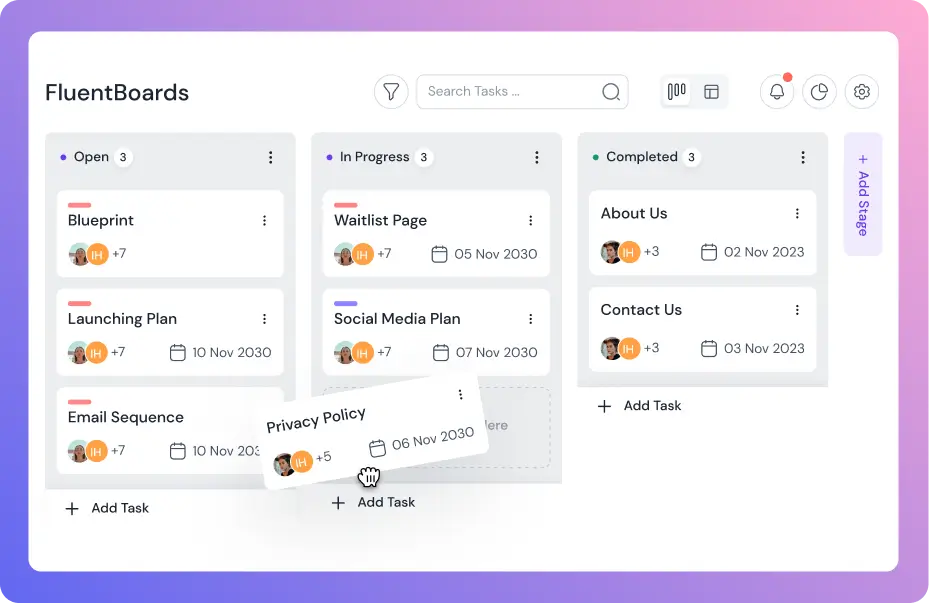
FluentBoards is built for WordPress and gives your team a shared workspace where everything related to the project lives in one place.
Everyone stays on the same task
With Infinite Assignees, any task can be assigned to multiple team members at once. No separate emails, no duplicate cards. The right people see what they need to act on, and nothing slips because of a missed handoff.
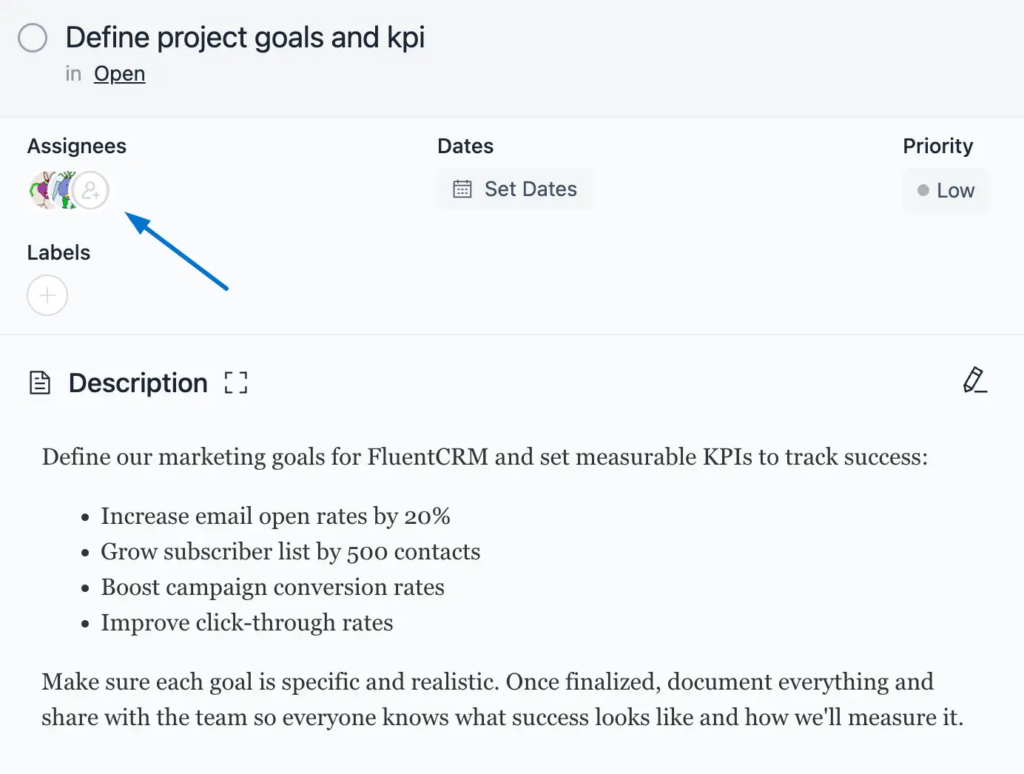
As tasks move through stages, Stage Default Assignee automatically routes them to the right person. The work moves forward without anyone having to manually reassign it each time.
Communication stays where the work is
Team members can comment directly on tasks, tag each other with @mentions, and follow threads without leaving the board.
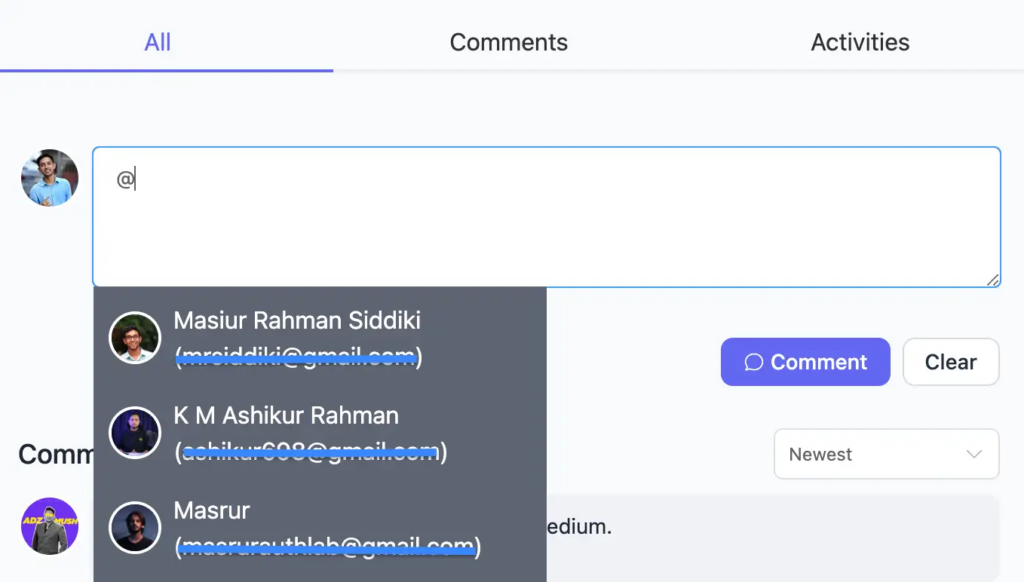
When a question comes up, it gets answered in context. That keeps communication tied to the work rather than scattered across inboxes and chat threads.
The right people stay informed without getting in the way
Not everyone needs to be assigned to a task to stay involved. Task Watchers lets team members follow tasks and receive updates automatically.
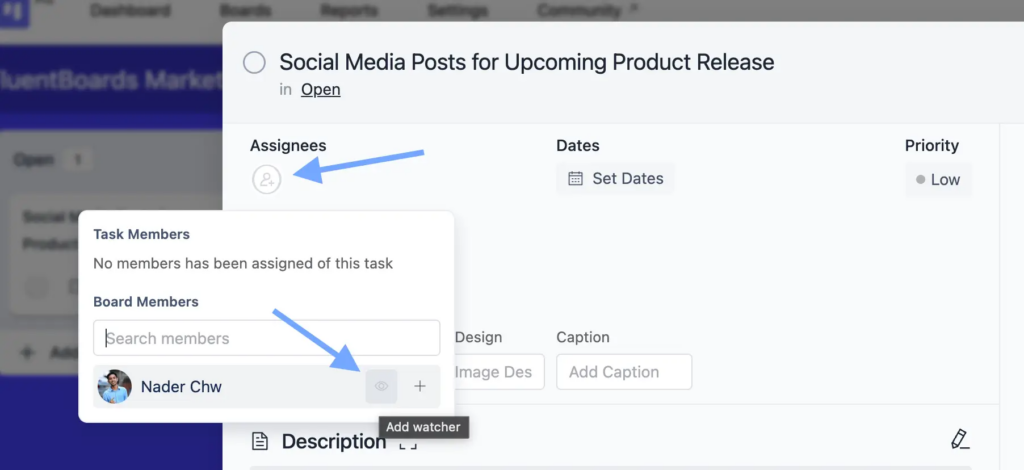
Sponsors, stakeholders, and anyone who needs visibility without ownership can stay informed without cluttering the working view.
Clients get visibility without extra friction
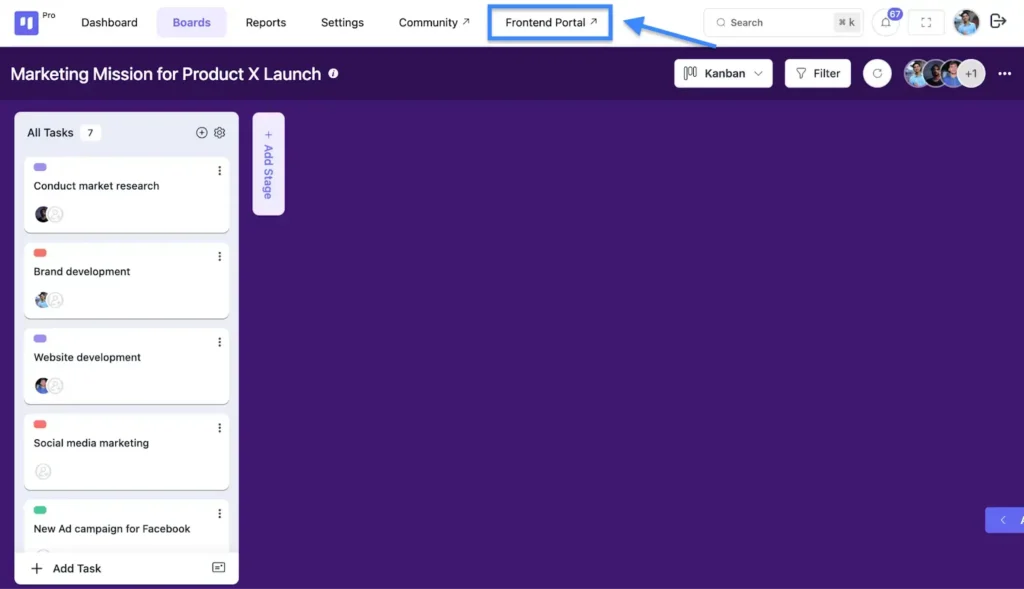
Instead of sending status update emails or scheduling check-in calls, teams can share project boards directly with clients through the Frontend Portal on their website. Clients see progress in real time. The team keeps working without interruption.
Access stays controlled as the team grows
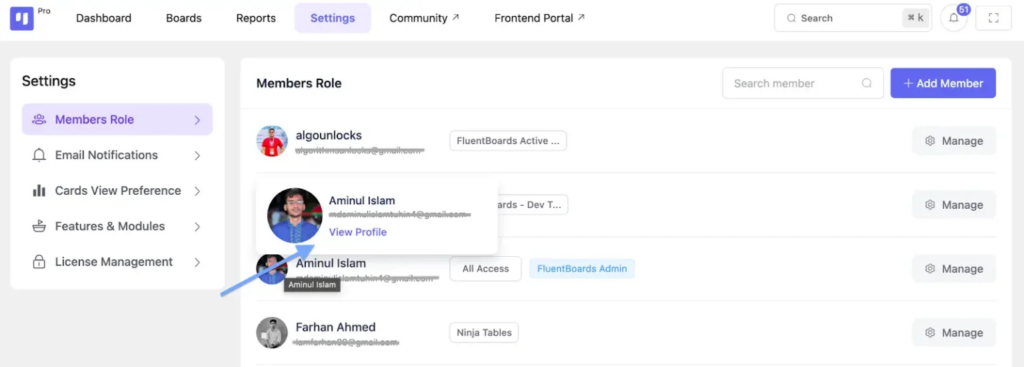
As project teams expand or bring in external contributors, keeping the right people in the right areas matters. Role Management and Access Management let you set exactly who can see and do what across the workspace, so each person has what they need and nothing they should not.
Build Your Top-Notch Project Team Strategically!
That’s a wrap! Applying these insights will help you build a project team that’s confident and ready for any challenge.
Remember, each project team brings fresh opportunities to learn, grow, and work together. Be part of the journey, lift each other, and celebrate each success along the way.
Thanks for reading! Your insights are welcome! Share your thoughts below. Cheers to winning project teams!
Let’s redefine project management with FluentBoards!

Follow:


Get Tips, Tricks, & Updates
We won’t send you spam.




Leave a Reply