


Team Management in Project Management: How to Manage Your Project Team in 2026 and Actually Get Results


Who wouldn’t want a team that’s both happy and productive?
But to be honest, that road isn’t an easy one, especially when you are managing a diverse group of people!
Every team member brings their unique traits, quirks, strengths, and weaknesses to the table. And as the “captain of the ship,” the project manager, it’s your responsibility to connect all these dots and create an environment where everyone flourishes and excels seamlessly.
Not easy, right?
Don’t worry. In this article, we’ll share practical tips to help you manage your project team and navigate the tough moments with confidence.
Team Management in Project Management
A project team is a group of people with defined roles, assembled around a shared goal, working under a project manager’s direction to deliver results within a set timeline. Project team management is the process that keeps the team on track and brings maximum output.
In other words, managing a project team is about working together as a cohesive unit, not just as individuals. With well-defined roles and responsibilities in the project. It involves aligning everyone’s unique skill sets within the right team structure to achieve project success.
However, managing a project team comes with its own set of challenges. While these challenges can vary significantly from one team to another, here are some of the most common ones project teams encounter:
- Miscommunication leads to confusion and mistakes
- Unresolved conflicts disrupt progress
- Lack of accountability affects deadlines
- Differing priorities cause disengagement
- Uneven workload, with some feeling overwhelmed
As the project manager, it’s your responsibility to address these challenges and guide your project toward success. Like the captain of a ship, you must take charge and take responsibility for planning, organizing, leading, and controlling.
Level up your project management game inside WordPress – where limitless possibilities come at an unbeatable price!
Why is Effective Project Team Management So Important?
Do you know that 57% of employees leave their jobs because of their manager? We bet you definitely don’t want to be that kind of boss, and to avoid this, following good team management practices is a must.
But the impact of effective team management goes far beyond just keeping people from quitting. It shapes how your team performs every single day, how they feel about their work, and ultimately, whether the project succeeds or fails.
- It turns individual effort into collective momentum
A group of talented individuals working in silos will always underperform a well-managed team working toward a shared goal. When a project manager actively connects people, aligns priorities, and removes friction, individual contributions multiply. Teamwork wins trophies, not just individual brilliance!
- It keeps everyone focused on what actually matters
Without clear direction and consistent management, teams drift. People work hard on the wrong things, deadlines get missed, and scope creeps in quietly. Effective management keeps the team anchored to the project goals and makes it easy to course-correct when priorities shift.
- It spots problems before they become crises
A project manager who is close to their team hears about a risk before it becomes a blocker, notices when someone is struggling before burnout sets in, and catches miscommunication before it derails a deadline. That early visibility is only possible when trust and communication are built into how the team operates day to day.
- It protects team morale
People do their best work when they feel valued, heard, and supported. A team that is managed well shows up with energy and ownership. A team that isn’t managed well shows up defensively, does the minimum, and starts looking for the exit. The difference between those two teams often comes down to one person: the project manager.
- It makes the best use of time and resources
Poor management leads to duplicated work, unclear handoffs, and wasted effort. Good management means the right people are working on the right tasks at the right time, and nothing falls through the cracks.
- It delivers better results consistently
Teams that communicate openly, resolve conflict quickly, and hold each other accountable don’t just finish projects. They finish them well. Quality improves when everyone understands what done looks like and trusts that their work will be reviewed fairly.
Learn more about the benefits of collaboration in teams
7 Proven Tips to Manage a Project Team Like a Pro
By sticking to the right strategies, planning from the start, and using your powerful collaboration skills, you can make managing a project team much more manageable!
Here are 7 proven tips to manage your project team effectively:
- Build your team around skills, not availability
- Define how your team works before the project starts
- Ensure effective communication within the team
- Build a culture of accountability
- Foster a collaborative team environment
- Establish performance metrics and recognise excelling members
- Take part in regular team-building activities and celebrations
1. Build your team around skills, not availability
Picking the right people for your team is huge when it comes to making your project a success. In fact, building a rockstar project team is the first step to a winning project.
Remember, it’s not just about finding someone to fill a spot. You need people with the right skills and experience to actually do the work. So, before selecting anyone,
Evaluate experience and fit
Review their work history, the roles they have played in previous projects, and their strengths and weaknesses. Make sure each team member is the right fit for the specific task.
Balance the workload
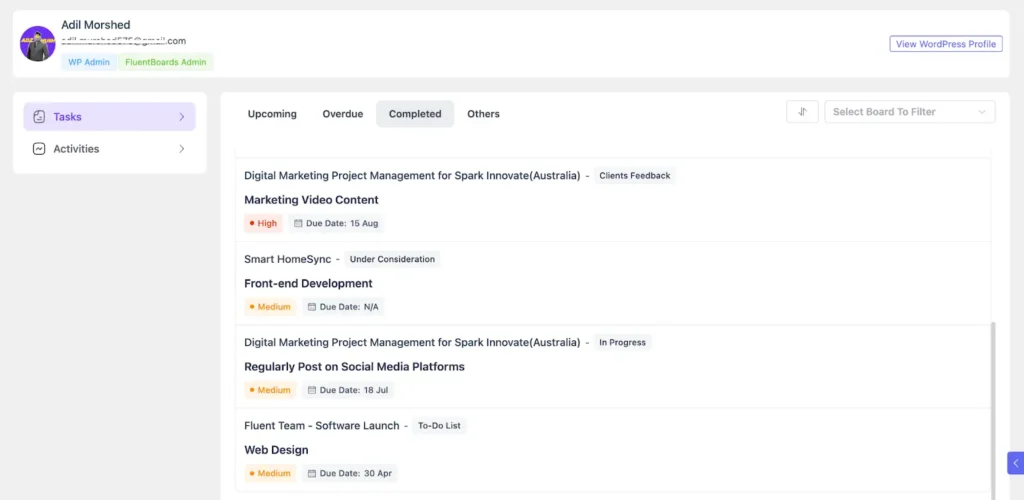
Workload balance matters because when tasks pile up unevenly, some people burn out while others coast, and both outcomes slow the project down. So, map out how much each person already has on their plate and ensure everyone has a fair chance to contribute without anyone being overloaded.
Focus on team compatibility
Look beyond technical skills and consider how well each person collaborates and fits within your team structure. A balanced mix of personalities and skill sets encourages smoother collaboration and helps the team handle challenges more effectively.
Learn how to onboard new team members effectively
2. Define how your team works before the project starts
One of the most common reasons project teams struggle isn’t a lack of talent or effort. It’s that nobody took the time to agree on how the team would work together before the work actually started. And to make sure your project doesn’t take that path:
Define goals and objectives
The very first thing that structure should cover is shared clarity on goals. Make sure every team member understands what the goal and objectives of the project are, why it matters, and how their specific role connects to the bigger picture.
Set your team structure and clarify roles
Define how your team will operate and choose the project team structure you’ll follow. Clearly outline responsibilities, identify who can make day-to-day decisions independently, and specify reporting lines for everyone.
Finalize your communication plan
Finalize your communication plan by defining check-in frequency, channels, and update expectations. Set how progress will be tracked, how delays are handled, and how issues are raised and escalated. Clear alignment helps teams spot problems early and resolve them faster.
Bonus Tip
You don’t need a 20-page document or a full day of workshops. You just need enough clarity that everyone starts on the same page and knows how to operate when things get busy.
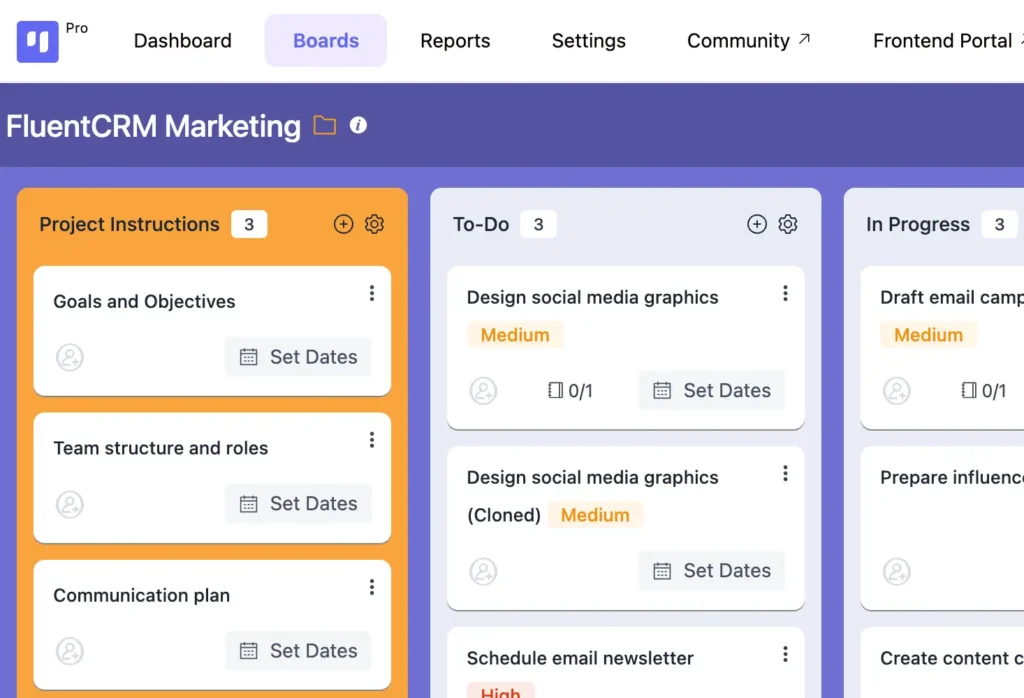
You can create a dedicated stage on your project board before the project kicks off. Call it “Project Instructions,” “Team Guidelines,” or whatever fits your workflow, and keep project goals, team structure, communication plan, etc as tasks within it.
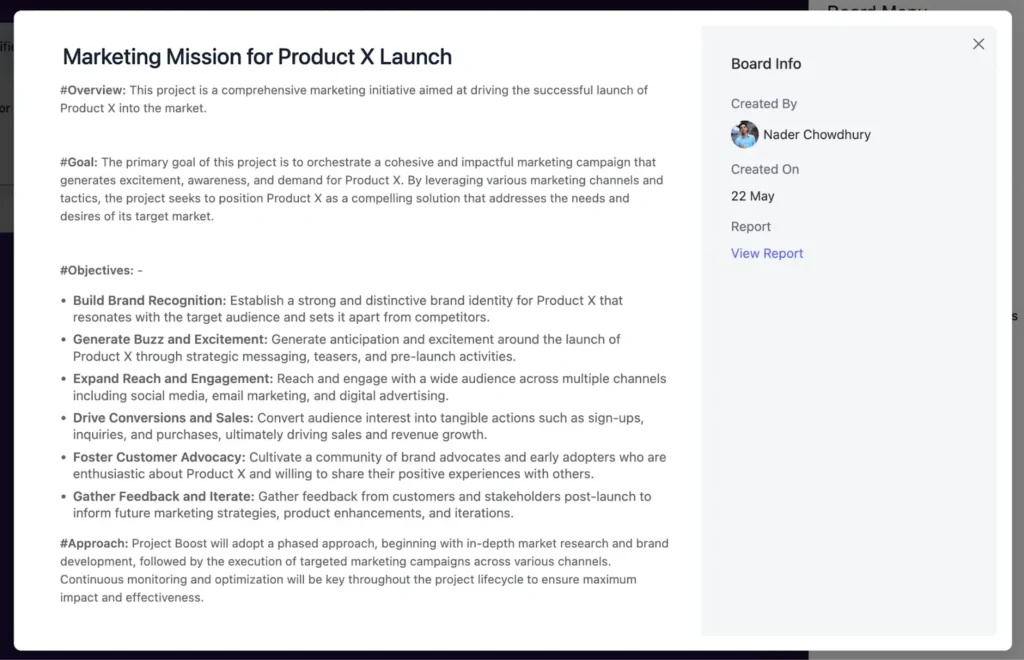
You can also use the project description box to clearly note down all key details, keeping everything in one place that every team member can access from day one.
These approaches also make onboarding much easier for anyone joining mid-project. Instead of relying on tribal knowledge, they can simply open the board and find everything they need.
3. Ensure effective communication within the team
At the heart of any winning team is open communication. Whatever the team members’ personalities, whether they’re extroverted or introverted, a project manager’s main responsibility is to break the ice and encourage open communication.
Here is what effective team communication looks like in practice:
Set communication expectations early
Agree upfront on how the team communicates, which channel for what type of message, how quickly people are expected to respond, and what level of detail is needed in updates. When these norms are defined at the start, communication becomes consistent rather than chaotic.
Keep discussions where the work lives
When conversations happen in separate chat threads or email chains, context gets lost. Keeping communication tied directly to tasks, through comments, @mentions, and updates on the task itself, means anyone who picks up that work later has the full picture without having to chase it down.
Make updates proactive, not reactive
A team that shares progress regularly doesn’t need to be chased for status updates. Encourage team members to post a brief update when a task moves forward, hits a blocker, or changes in scope. This keeps everyone aligned without the overhead of constant check-in meetings.
Address communication breakdowns quickly
Miscommunication left unaddressed compounds fast. When something gets lost in translation, surface it immediately, clarify directly, and move on. Letting it fester is how small misunderstandings turn into project-level problems.
Stay updated without always asking for it
Don’t be the boss who chases updates. Instead, use your project management tool the right way and be the one who already knows.
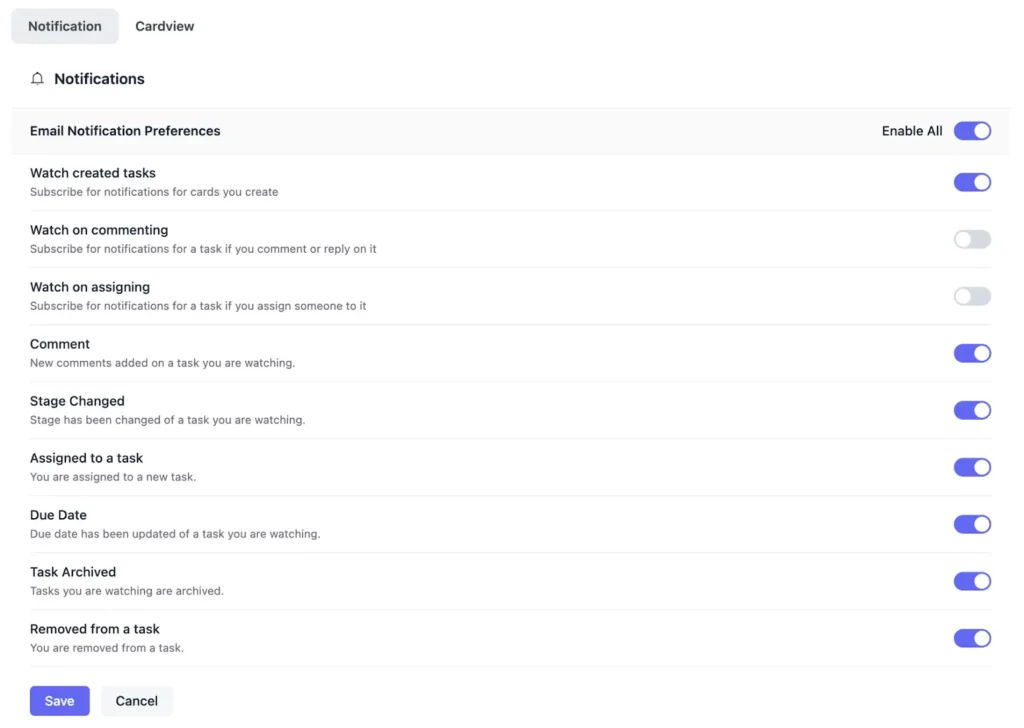
Turn on notifications for key updates like comments, status changes, and due dates. Let your project management tool handle the follow-ups so the right information reaches you automatically and “any updates?” becomes a question you never have to ask.
Also Read: How to prevent miscommunication within your project team
4. Build a culture of accountability
Accountability is what turns good intentions into actual results. When every team member knows they own a specific piece of work and that ownership is visible to the rest of the team, things get done. When accountability is fuzzy, tasks stall, deadlines slip, and the same problems keep coming back.
The key is building accountability into how the team works from the start, rather than trying to enforce it after something goes wrong. Here is what that looks like in practice:
Make ownership explicit
Every task should have one person responsible for it. Not a group, not a vague shared responsibility. One person who can say “that’s mine” and mean it. When ownership is clear, follow-up becomes a natural part of the workflow rather than an uncomfortable conversation.
Set expectations early
At the start of the project, agree on what done looks like for each role. When people know exactly what they are accountable for and how their work will be measured, they are far more likely to deliver it.
Create visibility without surveillance
There is a big difference between a team that can see how work is progressing and a manager who is constantly checking up on people. Shared visibility builds trust and peer accountability. Constant check-ins breed resentment and erode ownership.
Address slippage early and directly
When a deadline is missed or a task stalls, address it quickly and without blame. The goal is to understand what happened and remove the blocker, not to assign fault. Teams that handle slippage this way stay accountable because they know issues will be resolved fairly, not punished.
For a deeper look at getting this right, see our guide on how to ensure accountability in a project without micromanaging.
5. Foster a collaborative team environment
A collaborative mindset, focusing on “we” rather than “I,” helps build trust and open communication. By fostering a collaborative team environment, you’ll be able to build a project team that supports one another, grows continuously, and celebrates success together.
However, creating a collaborative culture comes with its challenges. Resistance to change, personality clashes, and communication breakdowns can undermine all your dedicated efforts.
That’s why collaboration isn’t just one thing you do; it’s a set of daily practices that shape how your team works together. And we suggest you:
Clarify roles and set the foundation
Collaboration breaks down fastest when people are unclear about who owns what. Clarify everyone’s roles from the start, ensure everyone understands their specific tasks and areas of accountability, and foster an inclusive environment where team members feel comfortable sharing ideas without fear of judgment.
Handle conflicts directly and fairly
When people with diverse mindsets collaborate, conflicts are bound to arise. When conflicts come up, stay neutral and listen carefully to all parties involved. Make decisions from a place of understanding, not just by majority rule. Avoid taking sides and focus on finding common ground. This approach protects your credibility as a leader and keeps the team united regardless of how big the conflict seems.
Make every voice count
Valuing each team member’s opinion is one of the most practical things you can do to build a genuinely collaborative environment. When people feel heard, confidence and ownership soar. Over time, a culture where every idea is welcomed, no matter how small, leads to better decisions, stronger buy-in, and the kind of groundbreaking insights that come from unexpected places. Keep off the “dictatorship mode” and encourage innovation freely.
Stay open to feedback
Regardless of your leadership style, being open to feedback is essential for continuous growth. Feedback should always be viewed as an opportunity to learn and evolve, not as criticism. Encourage an open feedback loop where team members feel comfortable sharing suggestions and raising concerns. Act on it when appropriate. In the long run, this demonstrates that every team member is equally valued, heard, and respected, and that pays back in morale and performance every single day.
Here are some more proven team collaboration tips that you can follow to build a strong and lasting collaborative environment
6. Establish performance metrics and recognise excelling members
You can’t manage what you can’t measure. Before the project picks up pace, define what good performance looks like for your team. Not just at the project level, but at the individual level too. When people know upfront how their work will be evaluated, they have a clear target to aim for and a fair basis to be measured against.
Start by setting clear KPI
Set key performance indicators for the project clearly and map them down to each team member’s responsibilities. These don’t need to be complicated. A few well-chosen metrics like task completion rate, deadline adherence, quality of deliverables, and responsiveness to feedback should be enough to give you and your team a shared language for performance that removes ambiguity and makes conversations easier when things go well or when they don’t.
Review progress regularly, not just at the end
Performance metrics only work if you check them. So, build in regular review points throughout the project, not to micromanage, but to catch drift early. A team member who is consistently missing deadlines in week three is easier to support than one you only notice in week eight. Regular check-ins also allow you to acknowledge progress as it happens, which keeps motivation high throughout the project rather than only at the finish line.
Make recognition specific and timely
When a team member delivers great work, say so, and say exactly what they did well. “Good job this week” lands very differently from “the way you handled the client feedback on Tuesday and turned it around in 24 hours made a real difference to the timeline.” Specific recognition is more meaningful to the person receiving it and more motivating to the rest of the team who hear it.
Don’t wait for the project to end to reward excelling members
End-of-project recognition is valuable, but it’s too far away to drive day-to-day performance. When someone goes above and beyond, acknowledge it in the moment. That immediacy is what turns recognition into motivation rather than just a formality.
And what comes after evaluation? Reward, right? So, don’t shy away from recognizing and rewarding top performers. It won’t just boost the rewarded individuals, but also inspire others to aim higher.
Note: Recognition doesn’t always have to be formal, either. A public acknowledgement in a team meeting, a personal message, or simply calling out great work in a task comment goes a long way. What matters is consistency. A team where good work is regularly noticed and named is a team that keeps producing it.
7. Take part in regular team-building activities and celebrations
Regular team-building activities and celebrations are essential for maintaining high morale and strong relationships among team members. A break from daily tasks helps teammates get to know each other and improve teamwork.
That’s why you shouldn’t forget to think outside the office sometimes. Whether it’s a day trip, a tour, or even a dinner, meeting with your team outside the office can open the door to new ideas, strengthen bonds, and reveal your teammates’ untapped potential.
It’s quite common for someone to be a completely different person outside the office, and you may discover new strengths and qualities in your team that you never expected.
How FluentBoards Helps in Effective Team Management
Managing a project team gets a lot easier when your tools are built around how teams actually work. FluentBoards, the simplest project management plugin, brings everything your team needs into one place, so you spend less time chasing updates and more time moving work forward.
Here is how FluentBoards supports each layer of team management:
Clear task ownership
With Infinite Assignees and Stage Default Assignee, every task has the right person attached to it from the moment it enters a stage. No ambiguity about who owns what, and no tasks sitting unassigned while the project moves forward.
Workload visibility
The Dynamic Admin Dashboard gives you a real-time picture of activity across all projects and team members. You can see who is overloaded and where work is stalling before it becomes a problem, without scheduling a status meeting to find out.
Accountability without micromanaging
Activity Tracking logs every change and action on a task automatically. Task Watchers let team members follow tasks they care about without being formally assigned. Between these two features, your team stays informed and accountable without you having to follow up constantly.
Communication in context
Task-level comments, @mentions, and notification management keep all discussion exactly where the work lives. Nothing gets lost in email threads or separate chat channels.
Scalable structure
Role Management and Access Management let you control exactly who sees what and who can do what across the workspace. As your team grows, the structure grows with it without creating an administrative nightmare.
Reusable workflows
Board, task, and stage templates mean you are not rebuilding the same project structure every time. Set up your workflow once, save it as a template, and your next project starts with everything already in place.
Ready to see it in action? Check what’s available on the FluentBoards Free vs Pro page to find the plan that fits your team.
At the Core
Managing project teams has its ups and downs, but great things can happen with good organization, clear communication, and teamwork. When everyone is aligned, communicates openly, and stays organized, the path to success becomes clear.
We hope this article helps you lead your team with confidence. If you want to see these principles in action within a real WordPress workflow, take a look at how FluentBoards supports agency project management in practice.
That’s all for today. Wishing you all the best in your project team management journey!
Let’s redefine project management with FluentBoards!

Follow:


Get Tips, Tricks, & Updates
We won’t send you spam.



Add your first comment to this post