


What Is a Project Charter? Definition, Examples, and How to Write One to Get the Green Light


Picture a construction crew showing up to a site with no blueprint, no assigned roles, and no agreed deadline.
Everyone is ready to work. But nobody agrees on what they are building.
That is exactly what happens when a project kicks off without a project charter. Your team moves. Your stakeholders assume. And three weeks in, everyone is somewhere different.
So, what is a project charter? Why does every project need one before anything else begins? And how do you write one that actually holds?
This blog breaks it all down. Let’s get into it.
What Is a Project Charter?
A project charter is a short, formal document that authorizes a project to exist and gives the project manager the authority to begin.
In simpler terms: it’s the official “green light.” It answers the big foundational questions before detailed planning begins —
- What problem are we solving?
- Why does this matter?
- Who’s involved?
- What does success look like at a high level?
According to the Project Management Institute (PMI), the charter grants authority and serves as the reference point throughout the project.
It lives in the project initiation phase, where you define the “what” and “why” before moving into the heavier “how” of planning.
Bonus Information That Might Help:
A project charter is also not a scope statement. Project scope is one component inside the charter, not a separate document.
A project charter is not a project plan. The plan is created after the charter is approved and covers how the project will be executed step by step.
A project charter is not the same as a business case. The business case argues whether the project is worth doing. The charter says it is approved and ready to begin.
Why a Project Charter Matters Before Your Project Even Begins
Benjamin Franklin said it plainly: “By failing to prepare, you are preparing to fail.”
And nothing proves that faster than a project that starts without a charter. Here is what breaks almost immediately-
Stakeholder whiplash: The marketing lead wants X. The product owner wants Y. The CEO remembers a “small” thing from a conversation three months ago. You become the pinball, and everyone else is holding the paddles.
The invisible project: There’s no formal start, no defined end. Work just… happens. And when it drags on forever, nobody can remember what “done” was supposed to look like.
The blame game: “That wasn’t what we agreed on.” Sound familiar? Without a signed charter, every disagreement becomes a finger-pointing contest. You lose.
Now, here’s what a charter gives you instead:
- Alignment: One document. One source of truth. Everyone signs it. No more “I thought we were doing this.”
- Authority: The charter literally hands the project manager the keys. It says, “This person is in charge. Respect their calls.”
- A shield against scope creep: A stakeholder wants to add a “quick little feature”? You point to the charter’s “Out of Scope” section. “Sorry. Not in the agreement.”
Level up your project management game inside WordPress – where limitless possibilities come at an unbeatable price!
Project Charter vs. Project Plan: What Is the Difference?
This confuses almost every new project manager. So let’s break it down with a simple table.
| Feature | Project Charter | Project Plan |
| Purpose | To authorize the project. To say “yes, do this.” | To execute the project. To say “here’s exactly how.” |
| Created in… | The Initiation Phase (very beginning). | The Planning Phase (after approval). |
| Answers… | WHAT are we doing? WHY does it matter? | HOW will we do it? WHEN? WHO does what? |
| Scope | Broad, high-level boundaries. | Detailed task breakdown (WBS). |
| Audience | Executives, stakeholders, sponsors. | The project team, contractors, doers. |
| Length | Short. Usually 1-3 pages. | Long. Could be 20+ pages with schedules. |
Simply put: You can’t build a credible project plan without first having an approved project charter. One is the foundation. The other is the house.
For a better understanding of where the charter fits, check out our guide on the project planning phase
Core Components of a Project Charter: What Every Charter Must Include
A project charter does not need to be long. But it does need to be complete. Every component below exists for a reason.
Project name and description: A clear name and one-line summary that gives the project a recognizable identity from day one.
Project purpose and objectives: Explains why the project exists, what problem it solves, and what your project objectives look like when it is done.
Project scope: Defines what is included and what is not. Both sides of your project scope matter equally.
Key deliverables: The final outputs the project will produce. Not tasks. Not effort. The actual results.
Stakeholders and roles: Names every person involved and clarifies who approves, who contributes, and who stays informed. Start by identifying your project stakeholders.
Timeline and milestones: A high-level schedule showing the major checkpoints. Track the key project milestones from kick-off to final sign-off.
Budget and resources: A rough estimate of the financial and human resources needed to complete the project.
Risks and assumptions: Known risks that could affect the project, including anything that could cause scope creep, and the assumptions the plan is built on.
Approval and authority: Who signs off and what authority the project manager holds once they do.
Pro Tip: Scope exclusions matter as much as inclusions. The things you say no to in the charter are exactly what keep scope creep out during execution. Write both sides with equal care.
How to Write a Project Charter: A Step-by-Step Guide
Writing a project charter is less about formatting and more about making decisions. Each step below forces one decision your project needs settled before execution begins.
Step 1. Start with the project purpose
This is the most important line in the entire charter. One sentence. No jargon.
Ask yourself: why does this project exist, what problem does it solve, and who benefits when it is done?
If you cannot answer all three in one sentence, the project is not ready to be chartered yet.
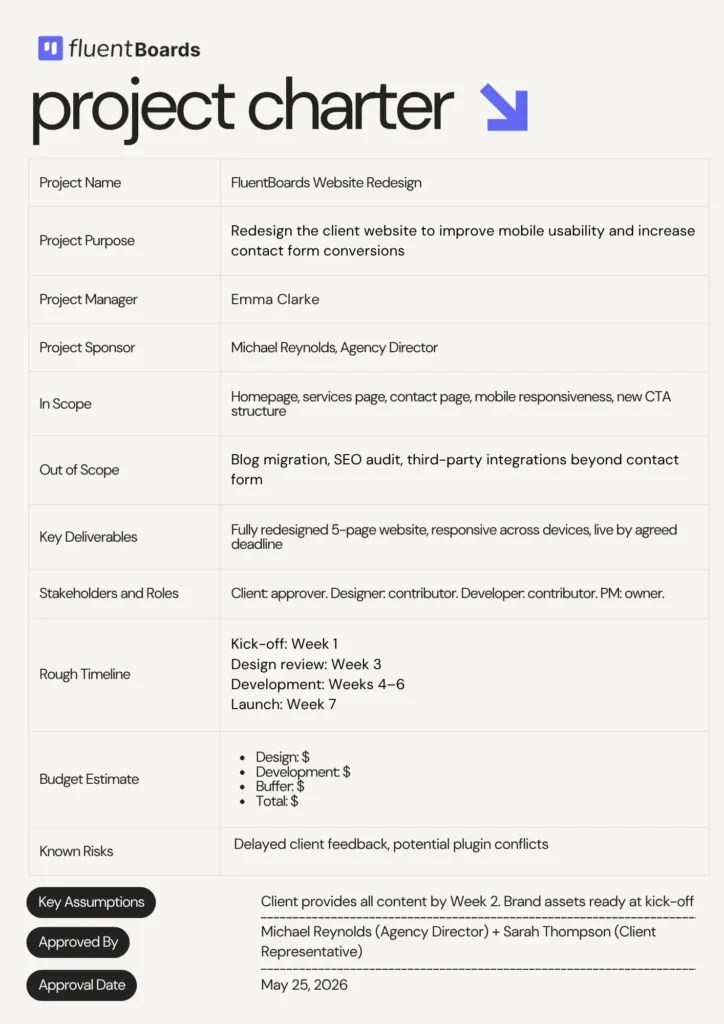
Example: “Redesign the client website to improve mobile usability and increase contact form conversions.”
Step 2. Define what is in scope and what is out
Most managers write what is included and forget what is not. That is where the trouble starts.
Be specific on both sides:
- In scope: Homepage, services page, contact page, mobile responsiveness
- Out of scope: Blog migration, SEO audit, third-party integrations
The out-of-scope list is your shield. Every time a stakeholder wants to add something, you point here first.
Step 3. List your key deliverables
Deliverables are not tasks. They are the final outputs the project will produce when it is done. A redesigned website. A tested campaign. A new onboarding workflow.
Deliverables, not activities. Outcomes, not effort.
Step 4. Identify every stakeholder and their role
Name every person involved and assign their level clearly:
- Decision-maker: Has final say on major calls
- Approver: Signs off before deliverables move forward
- Contributor: Does the actual work
- Informed: Stays updated but does not decide
Nobody should be unnamed. An unnamed stakeholder is a surprise waiting to happen.
Step 5. Set a rough timeline with major milestones
Not a task schedule. Just the big markers:
- Week 1: Kick-off
- Week 3: Design review
- Weeks 4 to 6: Development
- Week 7: Launch and sign-off
Keep it honest. Leave buffer for feedback and unexpected delays.
Step 6. Estimate budget and resources
Rough numbers are fine. Break it down by category: design, development, testing, buffer. Name the human resources needed and at what capacity. The goal is alignment, not precision.
Step 7. Identify known risks and assumptions
What could go wrong? What are you assuming to be true that has not been confirmed? List both. Risks you name early are risks you can plan for.
Step 8. Get stakeholder sign-off
No exceptions. Without approval, the charter is just a document. With approval, it becomes the authority your team operates under.
Do not start executing until the right people have signed. This is the step most managers skip in a rush. And it is the step they regret first.
Note: Do not wait for a perfect charter. A clear charter that is signed and agreed beats a detailed one sitting in review for three weeks. Clarity and commitment matter more than completeness.
Project Charter Template and Example
Here is a simple format you can use right now. Adapt the depth to your project size.
How FluentBoards Board Setup Mirrors a Project Charter
While a traditional charter is a static document, FluentBoards lets you turn it into a living, always-accessible reference.
Here’s how your FluentBoards board naturally mirrors the charter:
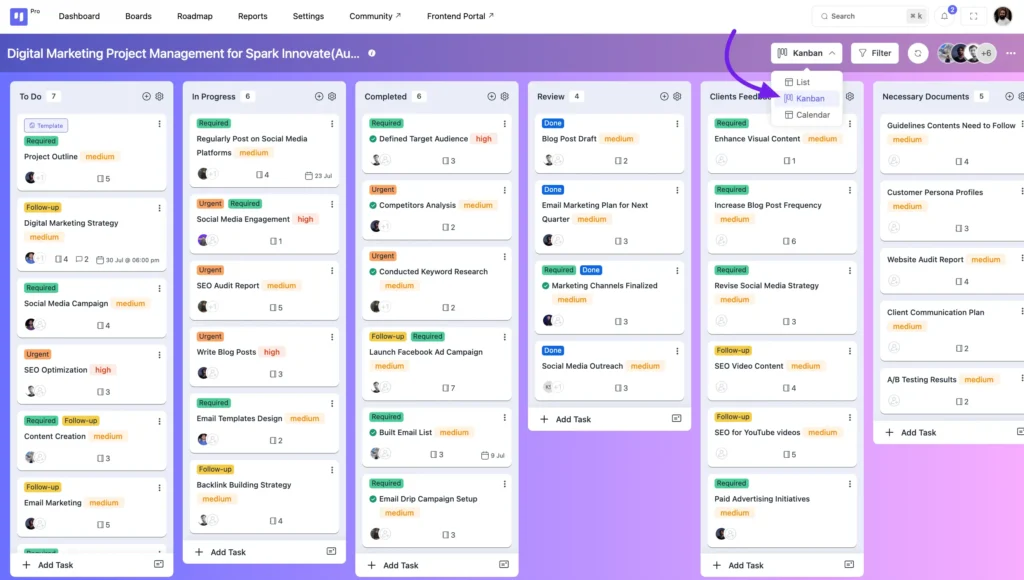
Scope becomes your board structure
The project name and description from your charter become your board in FluentBoards. What is in scope and what is out shapes how the board is set up: what stages exist, what work belongs here, and what does not.

Step into the Future of Project Management!
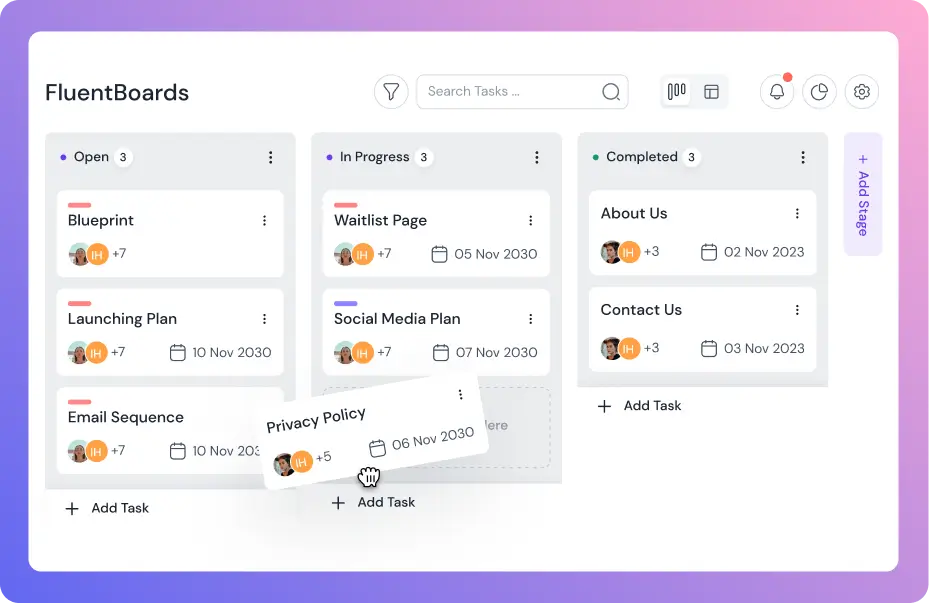
Stages reflect your project phases and deliverables
Each key deliverable or phase from your charter maps directly to a stage in FluentBoards.
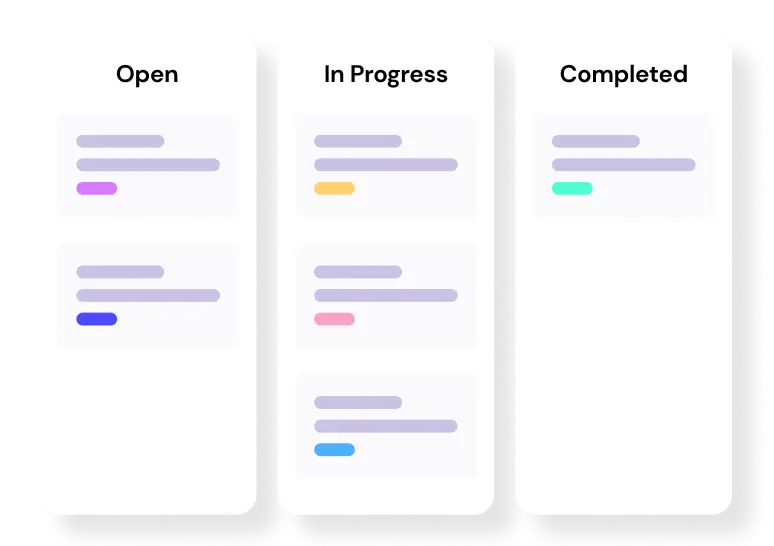
- Open
- In Progress
- In Review
- Done
Your stages mirror the flow the charter defined, making progress visible at a glance.
Assignees match your stakeholder roles
The stakeholders and roles you named in the charter become your board members in FluentBoards.
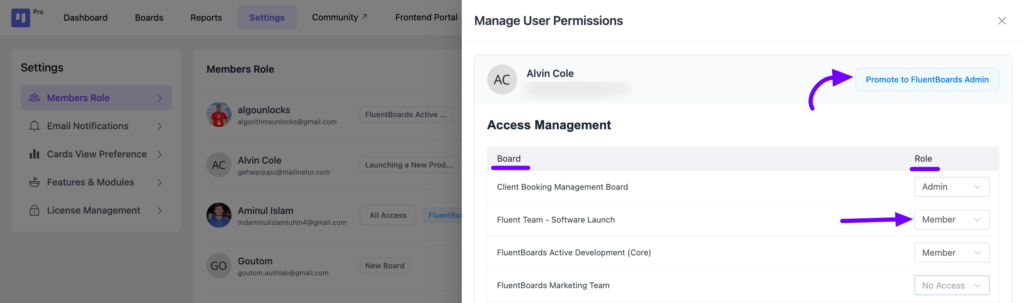
Admin roles for decision-makers. Member roles for contributors. Everyone has the right level of access from day one, exactly as the charter outlined.
Deadlines bring your charter timeline to life
The rough timeline and milestones from your charter become real due dates on tasks inside FluentBoards.
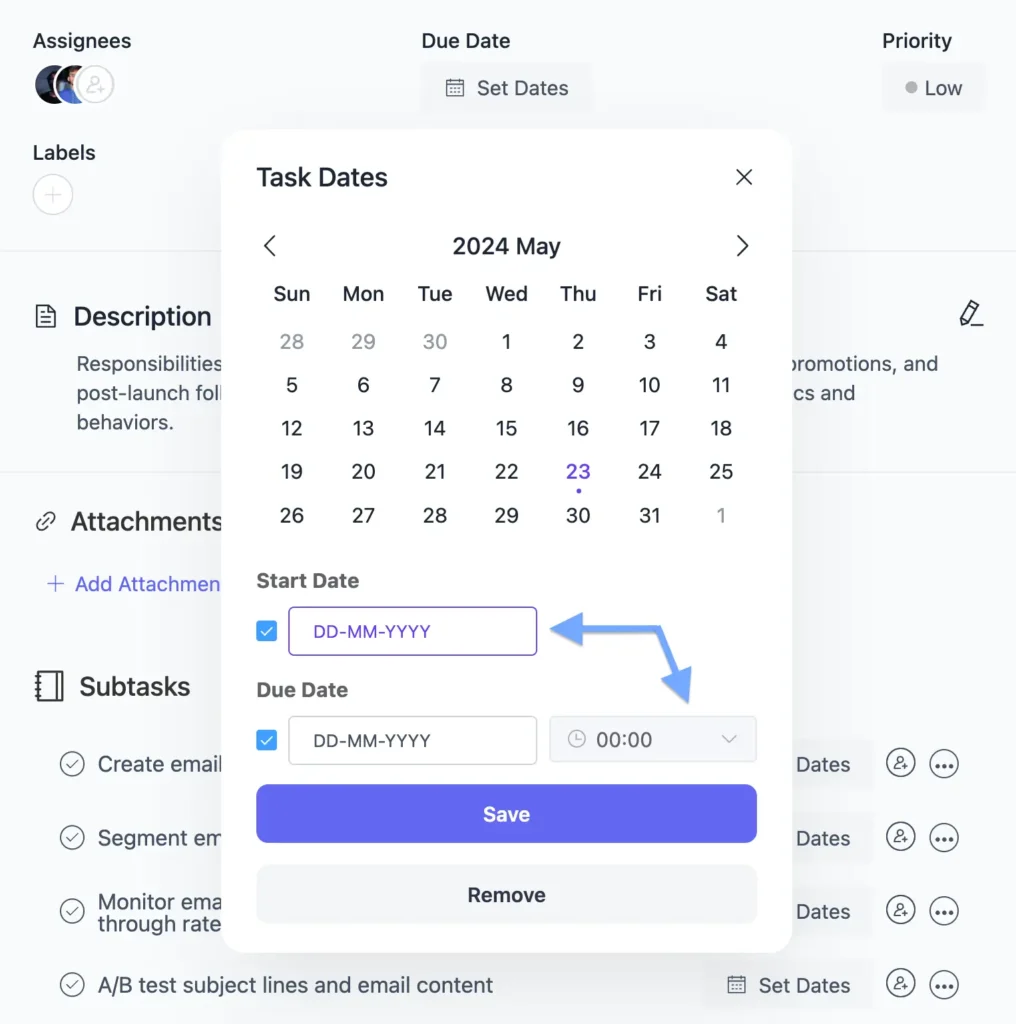
No more “we agreed on this somewhere in an email.” The deadline is on the task, visible to the whole team, tracked automatically.
Best Practices for a Foolproof Project Charter
A few pro tips before you go write your own:
Write for a busy executive. Use bullet points, bold text, and short sentences. They need to grasp the entire project in 60 seconds.
Be specific about the “Out.” Most charters fail because they only say what’s in. Scope creep loves a vague “Out” column.
Don’t skip the signature. A verbal “okay” evaporates the first time things get hard. Ink doesn’t.
Use it as a weapon (politely). When someone asks for a new feature, say, “Great idea. Let’s check the charter. If it’s out of scope, we can create a change request and get sponsor approval.” Watch how fast they decide it’s not that urgent.
Keep it visible. Don’t bury it. Link it in your FluentBoards board, pin it in Slack, stick it on the wall. The charter only works if everyone remembers what it says.
Strong Starts, Confident Executions
A project charter won’t solve every problem on your plate.
But it will solve the biggest one: starting without a real plan.
It gives you clarity when everyone else is confused. It gives you authority when stakeholders are pulling in different directions. And most importantly, it gives you permission to build something great without second-guessing every move.
So next time you’re pacing at 2 AM, stop guessing.
Write the charter. Get the nod. And build with confidence.
Thanks for reading this far. Wishing you confident kick-offs and projects that actually go the way you planned.
Let’s redefine project management with FluentBoards!

Follow:


Get Tips, Tricks, & Updates
We won’t send you spam.





Add your first comment to this post