


External Stakeholders in a Project: Who They Are and How They Drive Project Success


You kicked off the project. Roles are set. The plan looks solid.
And then the client emails.
“Just a small change.” No big deal, right?
But nobody pulled the fire alarm.
Nobody warned you that one request would touch three tasks, two dependencies, and a vendor already running tight.
And just like that, the project is on fire.
That’s external stakeholders. They don’t announce themselves.
They just show up. And most managers learn their role the hard way, midway through execution, when it’s already too late.
So what role do they actually play? And how do you stop managing them from behind?
Here is everything you need to know.
What Are External Stakeholders in a Project?
External stakeholders are individuals, groups, or organizations outside your company who have a direct interest in your project’s outcome or are affected by it.
Simply put, they are the people your project touches from the outside.
Now, they are not part of your organization. They don’t sit in your meetings or work inside your daily workflow.
But they have a real stake in what your project produces, whether that’s a client, a vendor, or a regulator whose approval you can’t skip.
In practice, external stakeholders are the ones who:
- Can influence your project’s direction from outside your organization
- Have an interest in your project’s outcome
- Are directly affected by what your project delivers
Read: Different Types of Stakeholders
External Stakeholders vs Internal Stakeholders
Understanding the difference isn’t just categorization. It completely changes how you manage each group.
Internal stakeholders are inside your organization. They share your tools, attend your meetings, and feel the same deadline pressure you do.
External stakeholders don’t have that context. They see the deliverable. They don’t see what it took to get there.
So when something shifts on your end, they’re often the last to know and the first to react.
That’s the core difference. Not just inside vs outside. It’s visibility vs blindness.
Here’s a simple breakdown:
| Aspect | Internal Stakeholders | External Stakeholders |
| Position | Inside your organization | Outside your organization |
| Project access | Inside workflow and tools | See outcome, not the process |
| Communication | Ongoing, daily workflow | Structured, intentional touchpoints |
| Your control | Direct | Through relationship only |
| Examples | Sponsor, team, managers, analysts | Clients, vendors, regulators, investors |
Why External Stakeholders Matter in a Project
External stakeholders control the checkpoints your project can’t pass without them: approval, delivery, sign-off and funding.
Managing them without knowing their role is like navigating without a map. You’ll eventually get somewhere, just not where you planned.
According to PMI,
Stakeholder management is the most critical process in project success, with over 90% of project professionals ranking it as their top priority, regardless of scope, budget, or timeline challenges.
Yet most managers only think about it after something has already gone wrong.
When you don’t understand the role each external stakeholder plays, here’s what actually happens on a project:
- The client adds “small” changes mid-execution because project scope boundaries were never made clear to them at the start
- A vendor misses a critical handoff because their dependency on another task was never communicated
- Regulatory approval stalls the final delivery because compliance wasn’t mapped into the plan from the project planning phase
- Sign-off takes two weeks because the right person wasn’t looped in at the right milestone
- A kickoff never happened, so every stakeholder walked in with their own version of what the project should deliver
- Late feedback forces rework because external stakeholders had no structured visibility and saved everything for the final review
- A funding request takes three extra weeks because the people controlling the budget haven’t heard from you since kickoff and need a full catch-up before approving anything
Step into the Future
of Project Management!
Who Are Your External Stakeholders and What Each One Needs
Not every project has the same external stakeholders. But most will have at least a few from this list.
And each one carries a different kind of influence across your project lifecycle.
Clients and customers
The client defines what success looks like from the outside. Their satisfaction is the final word on whether the project actually delivered what it promised.
Their role is heaviest during initiation and planning, where they set requirements and scope boundaries, and again at closure, where they approve or reject the final deliverable.
What they need: Clear expectations set from the start and a structured channel to give input without derailing execution mid-project.
When the client’s role is defined early, feedback comes in at the right time and in the right format. When it is not, every email becomes a scope conversation nobody planned for.
Vendors and suppliers
Vendors deliver the outside services your project depends on. The hosting provider, the freelance developer, the stock asset platform, the printing partner for the campaign.
Their role is most critical during planning and execution. They confirm availability, costs, and timelines during planning. During execution, their reliability directly determines whether your project stays on schedule.
What they need: Advance notice on requirements and timelines. Not a last-minute request the week before you need delivery.
A vendor running two days behind does not just affect their piece. It creates a chain reaction through your entire timeline.
Regulators and government bodies
Some projects cannot legally move forward without regulatory sign-off. Permits, compliance approvals, legal clearances.
Their involvement is not optional and their timeline is not flexible. You work around them, not the other way around.
What they need: Early engagement. Compliance requirements need to be mapped into the project plan from the start, not treated as a final step before closure.
Teams that engage regulators late are the ones rewriting deliverables under pressure in the final stretch.
Investors and funders
Investors are not always visible during execution. But their role is significant at two points: initiation, where they decide whether the project is worth funding, and closure, where they assess whether outcomes matched expectations.
A project sponsor often bridges this gap, connecting internal leadership with external investors to keep both sides aligned.
What they need: Milestone visibility at the right intervals. Not daily updates. Not silence for three months followed by a final report.
Keep them informed at the right moments and they stay in the background. Go quiet too long and they become very present very fast.
End users
End users are the people who will actually use what your project produces.
Their feedback during planning shapes whether the deliverable is useful. Their validation during execution catches problems before they compound. And their acceptance at closure is what turns a completed project into a successful one.
What they need: Early involvement and structured feedback windows. Not a one-off survey at the end after every decision has already been made.
When end user feedback comes in late, it usually means rework. And rework at the end is the most expensive kind.
Your External Stakeholders at a Glance
Here’s a quick summary so you can map your own project right now.
| Stakeholder | Their Role | Most Active Phase | What They Need |
| Clients and customers | Define success, approve deliverables | Initiation, closure | Clear expectations, structured feedback |
| Vendors and suppliers | Supply resources, maintain timelines | Planning, execution | Advance notice, reliable communication |
| Regulators and government | Set compliance boundaries | Initiation, planning | Early engagement, documented approvals |
| Investors and funders | Fund and assess project value | Initiation, closure | Progress visibility at key intervals |
| End users | Shape requirements, validate output | Planning, execution | Early involvement, feedback channels |
How to Manage External Stakeholders Through Your Project
This isn’t about adding more meetings. It’s about building a structure so external stakeholders stay informed, involved at the right moments, and never become a source of last-minute pressure.
Note: We use FluentBoards screenshots throughout these steps so you can follow along practically.
Step 1: Map them before the project starts
Before a single task moves, know who your external stakeholders are and what they need.
For each one, answer:
- What is their level of influence on the project?
- What does success look like from their side?
- Which project phase requires their involvement?
- What decisions need their input or approval?
A simple mapping exercise at the start will save you hours of reactive communication later. This isn’t a formality. It’s how you avoid surprises.
Want the full stakeholder picture? Read our complete guide to project stakeholders.
Step 2: Run a proper kickoff meeting
A project kickoff meeting with your key external stakeholders, particularly the client, is not optional.
Think of it as the foundation before the house goes up. Skip it and everything built on top is unstable.
This is where scope, timelines, communication channels, and decision-making authority get aligned before the work starts moving.
It’s also where you establish who goes through whom when requests come in.
A good kickoff meeting stops small misunderstandings from turning into big problems weeks later.
Step 3: Align everyone before execution begins
The kickoff gets everyone verbal agreement. But a client isn’t in your daily standups. Three weeks in, when they ask “wasn’t I supposed to approve that?”, a verbal agreement from one meeting doesn’t help either of you.
Before execution starts, make sure these four things don’t depend on anyone remembering that conversation:
- What the project is delivering and what it is not
- What you will share with them and when
- What decisions require their input
- What decisions require their approval
Once a stakeholder can check these for themselves, you stop being the one who has to remember and repeat them.
Step 4: Give each stakeholder the right level of visibility
External stakeholders need enough visibility to stay confident. They don’t need everything.
Think of it like a window, not a door. They should see what’s happening inside. Not walk in whenever they want.
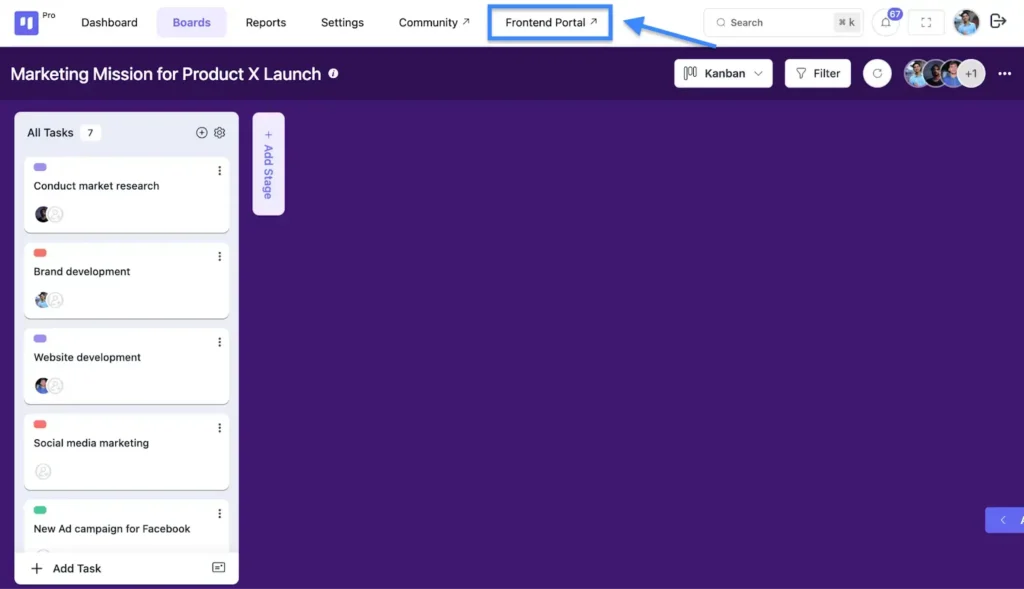
This is exactly where a project management tool changes the dynamic. Instead of forwarding summary emails and hoping they land clearly, you can give external stakeholders structured, real-time visibility into the parts that actually matter to them.
With the right tool, you can: share a dedicated project view with clients without exposing your full internal workflow.
Step 5: Keep their input attached to the work
The client reviewing design drafts. The partner whose approval moves the work forward. Their feedback has to live somewhere.
And an email thread is the worst place for it. A week later nobody can find the decision. The context is gone. You are back to explaining the same thing from scratch.
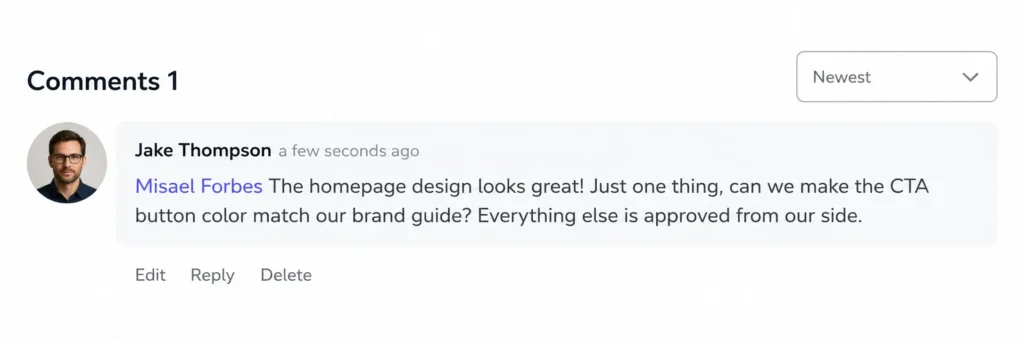
So bring them into the project and let their input land directly on the task. They see the work, they drop their comment, and the whole team acts on it with full context. Nothing gets lost between inboxes.
The decision stays attached to the work, forever findable and always in context.
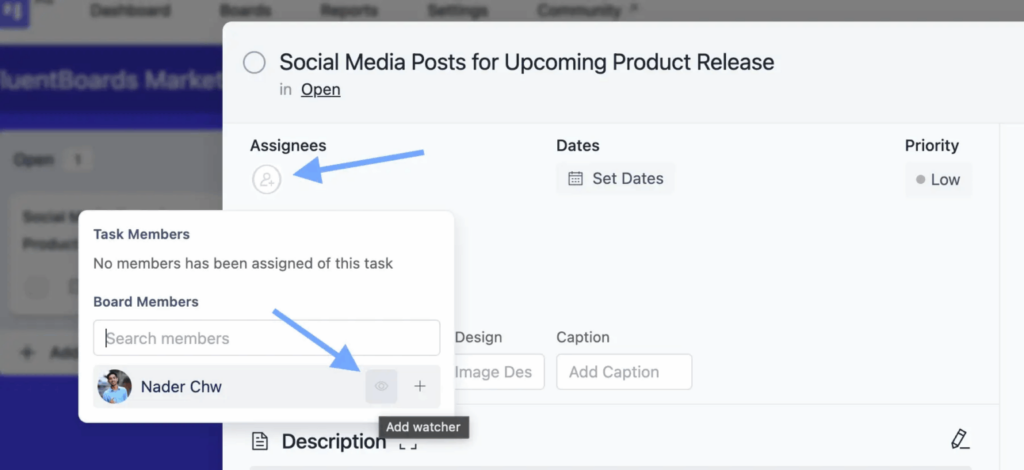
Pro tip: For stakeholders who only need to stay informed, add them as a watcher on their tasks. They get notified on every update automatically but cannot change anything. Your team keeps full control while they stay in the loop.
Also Read: Stakeholder Collaboration in a Project
Step 6: Collect feedback from the widest circle
The last two steps brought your closest stakeholders directly into the board. End users sit outside that circle entirely, and they were never meant to be inside it.
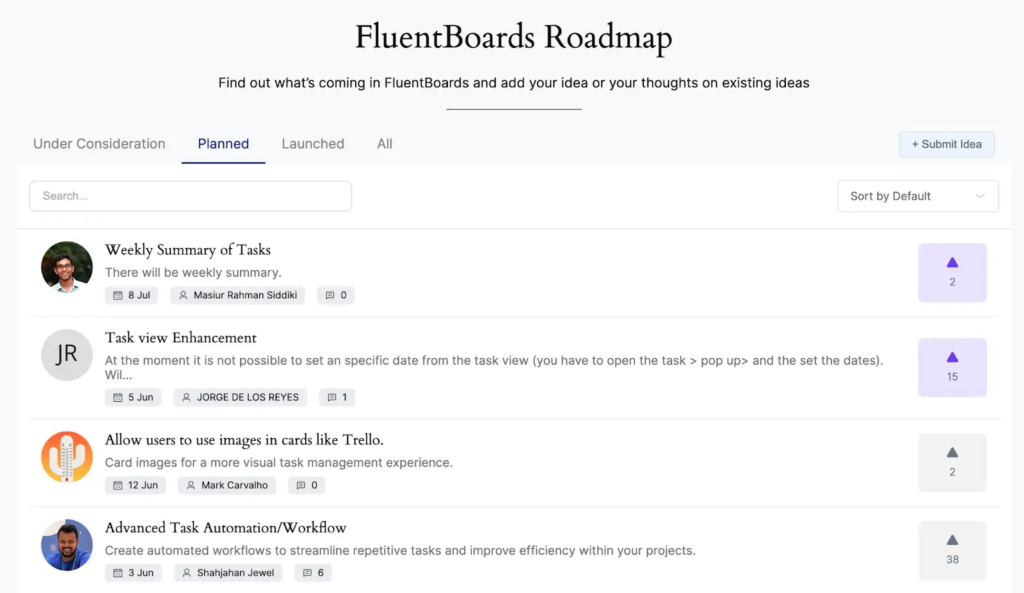
But their feedback still shapes whether what you ship actually works. So give them a public roadmap instead: they add suggestions, vote on what matters, and you sort by upvotes or comments to see what actually carries weight.
They can also watch their own suggestion move from consideration to planned to launched.
Step 7: Automate the updates so nobody waits on you
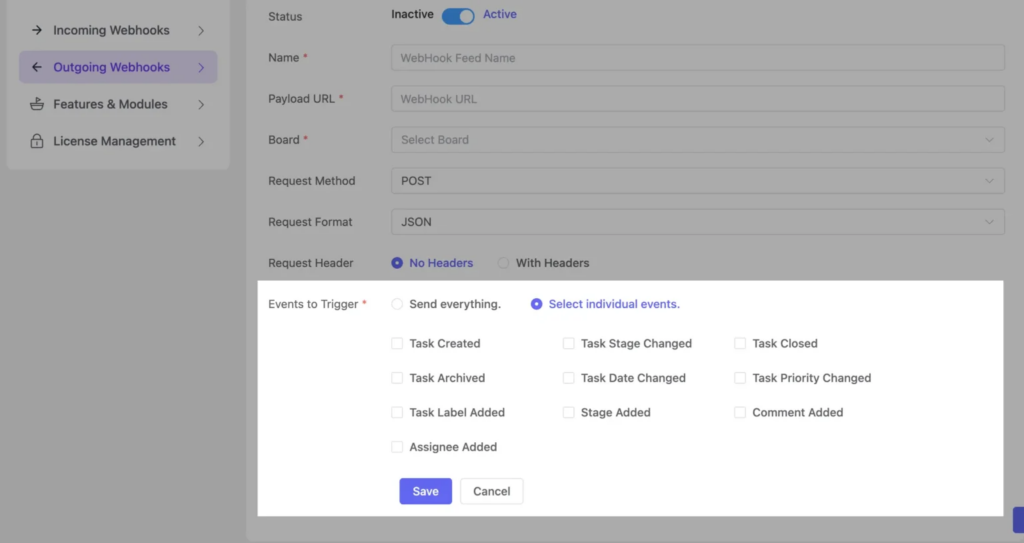
Well, there is one more layer. Even with everything above, some updates need to travel outside your board.
A client who lives in Slack. A partner agency running their own system. A vendor tracking handoffs in a different tool.
You should not be copying updates between tools manually. That is how things get missed and how you become the bottleneck in your own project.
Instead, set it up so the moment something moves in your project, the update reaches their system automatically. Task completed, stage changed, deadline shifted. The information travels in real time without you being the messenger.
Your external stakeholders stay in sync with the project, not with your availability.
Common Mistakes Teams Make With External Stakeholders
Even experienced project managers get this wrong. Here are the four most common mistakes and why they happen so often.
- Bringing them in after the plan is already locked
By then their input cannot change anything meaningful. So they either stay quiet and raise concerns at delivery, or push back immediately and force changes nobody budgeted for.
The fix: Identify your key external stakeholders before the plan is built, not after.
- Giving every stakeholder the same update
A regulator does not need what a client needs. Broadcast the same update to everyone and half your stakeholders drown in detail while the other half miss what actually concerns them.
The fix: Give each stakeholder a focused view of what concerns them, not a broadcast to the whole group.
- Treating feedback as open-ended
“What do you think?” is an invitation for guesswork. Vague questions get vague answers, and vague answers at the end of execution turn into rework requests at delivery.
The fix: Ask a specific question with a clear deadline every time.
- Confusing status updates with stakeholder management
Updates tell them what happened. Management gives them structured input windows at the right moments. A project that sends weekly updates but has no approval process still gets blindsided at delivery.
The fix: Decide upfront which decisions need their approval and when, then build those checkpoints into the project.
Build the System Before the Pressure Builds
External stakeholders will always have opinions, timelines, and expectations that don’t perfectly match yours.
That’s not the problem.
The problem is when their world and your project’s world never properly connect.
When you map them early, run a proper kickoff, and give them structured visibility at every phase, something shifts. They stop being a source of last-minute pressure. They become part of what keeps the project on track.
No PM is an island. And neither is a project.
The relationship doesn’t manage itself. But with the right structure around it, you won’t spend the whole project managing the fallout from it either.
Clients often show up on day one. If that’s where projects tend to slip, here’s how to connect your client onboarding workflow and project handoffs into one system.
Thanks for reading, here’s to fewer fire drills and smoother handoffs ahead.
Let’s redefine project management with FluentBoards!

Follow:


Get Tips, Tricks, & Updates
We won’t send you spam.




Add your first comment to this post