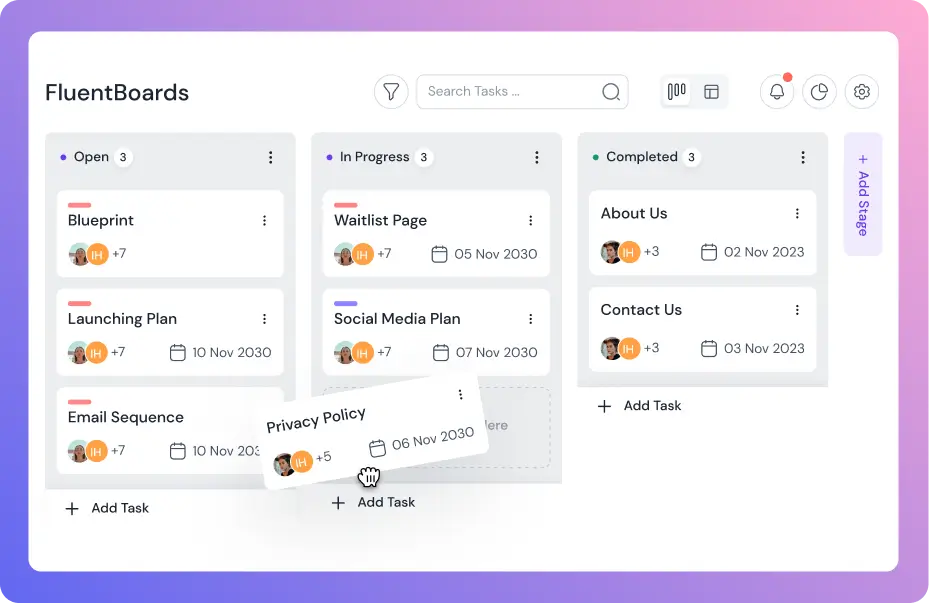
Don’t Let Feature Requests Get Buried
This free feature roadmap template takes you from raw request to public launch, with a built-in process that eliminates the black hole where user feedback disappears.
How to Use This Template
Using the template is super simple!
If You’re a FluentBoards Pro User
- Go to your Boards Dashboard. Open Templates and select Built-in Templates
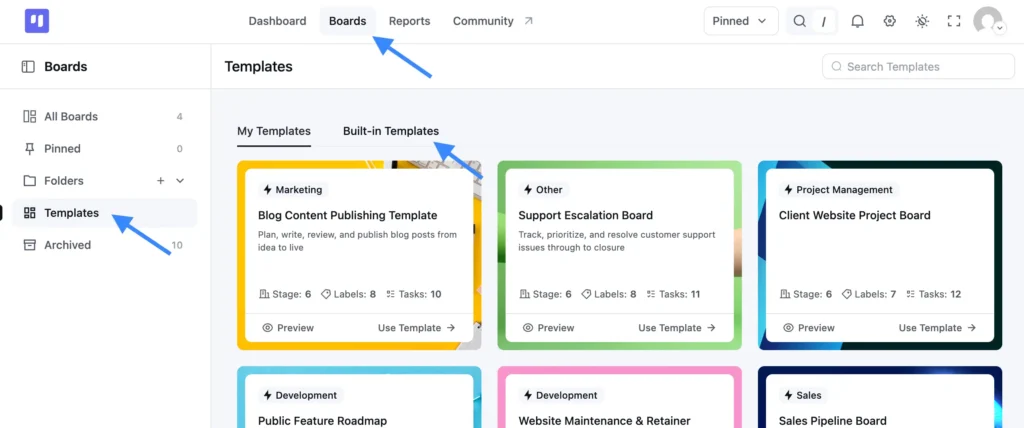
- Find this template and click Use Template
- Choose which stages and labels you want to keep
- Confirm your selection, and your new board is ready to use
If You’re a FluentBoards Free User
Unfortunately, this template requires FluentBoards Pro! Because it works with FluentRoadmap. FluentRoadmap is our public roadmap-sharing add-on, included free with FluentBoards Pro.
You’re Getting Feedback, and It’s Going Nowhere
Every product team starts with the best intentions: a shared inbox, a running doc, a promise to “triage requests weekly.”
Then this happens:
- Requests pile up with no triage owner. A support ticket, a Twitter DM, a comment in the review thread. Each one hits a different person and never gets consolidated anywhere.
- The same features get requested over and over. Without a public roadmap, users have no way to know what’s already on your radar. So they ask again. And again.
- Your team can’t tell loud from popular. One vocal user who files fifteen requests looks indistinguishable from a genuinely high-demand feature. Decisions get made on squeaky wheels.
- Rejected features leave no trace. Six months later someone asks why you didn’t build X. Nobody can remember the reasoning. The whole debate starts over.
It’s not a people problem. It’s a process problem. Specifically, a missing structure between “we heard this” and “we shipped this.”
What This Feature Roadmap Template Gives You
This feature roadmap template gives your team one shared system that separates internal deliberation from what your users actually see, so you’re never accidentally overpromising or going dark.
Stages (in order):
- Pending: Every request lands here first. Support tickets, brainstorm notes, community comments, captured before anyone has evaluated them. This stage stays Admin Only, so nothing premature ever surfaces publicly.
- R&D: A card moves here once it’s worth evaluating for feasibility. Add a custom field for estimated effort or complexity so comparisons are based on data, not gut feel.
- Rejected / Won’t Do: Features you’ve decided not to build. Comment threads on these cards stay internal, so your team builds a documented decision trail without airing it publicly.
- Under Consideration: The first public stage. A card here means you’re comfortable with users seeing it. If FluentRoadmap is enabled, they can upvote it and weigh in directly.
- Planned: Approved and committed. Users know it’s coming. Pin your most anticipated features to keep high-demand requests visible to your team.
- Ongoing: Active development starts here. Subtasks (spec, build, test, docs) run internally even as the card itself is visible. Users see progress without seeing your internal process.
- Launched: Final public state. Export launched features to CSV for changelog compilation or quarterly reporting.
Labels:
- Feature Request: New capability requests from users or the team
- Bug Fix: Fixes that belong on the roadmap because they have user impact
- High Demand: Validated by volume, upvotes, or repeated mentions
- Breaking Change: Shipping requires user communication ahead of time
- Needs Design: Not ready to develop until design input is in
No setup headaches. Import it, configure your public/admin visibility per stage, and start triaging.
Who It’s Built For
If you build software on WordPress and users ask what’s coming next, this template is for you.
- WordPress plugin developers managing a growing user base who want to stop answering “is this on your roadmap?” one support ticket at a time.
- Theme authors who get feature requests in reviews, forums, and support threads and need a single place to evaluate and respond at scale.
- SaaS founders running on WordPress who want a public product roadmap but don’t want to buy a standalone tool just for that.
- Small product teams where one person handles development, support, and roadmap decisions and needs a system that doesn’t collapse the moment it gets busy.
Frequently Asked Questions
Works Hand in Hand With Your Fluent Stack
Related Templates
-
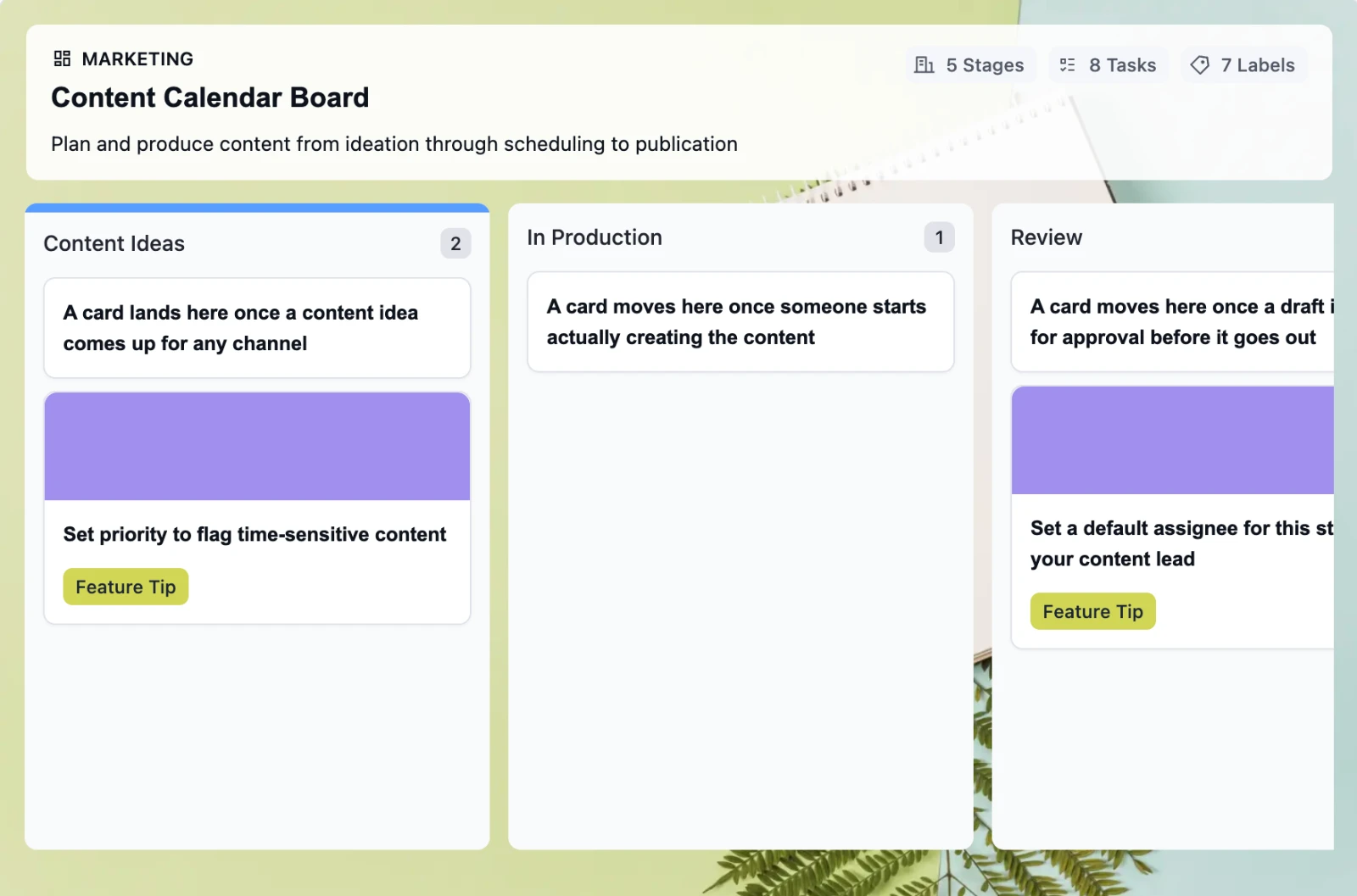
Retire the Content Calendar Nobody Updates
This free employee onboarding template takes new hires from offer acceptance through their 30-day check-in, so nothing slips through the cracks when your team is already juggling everything else
-
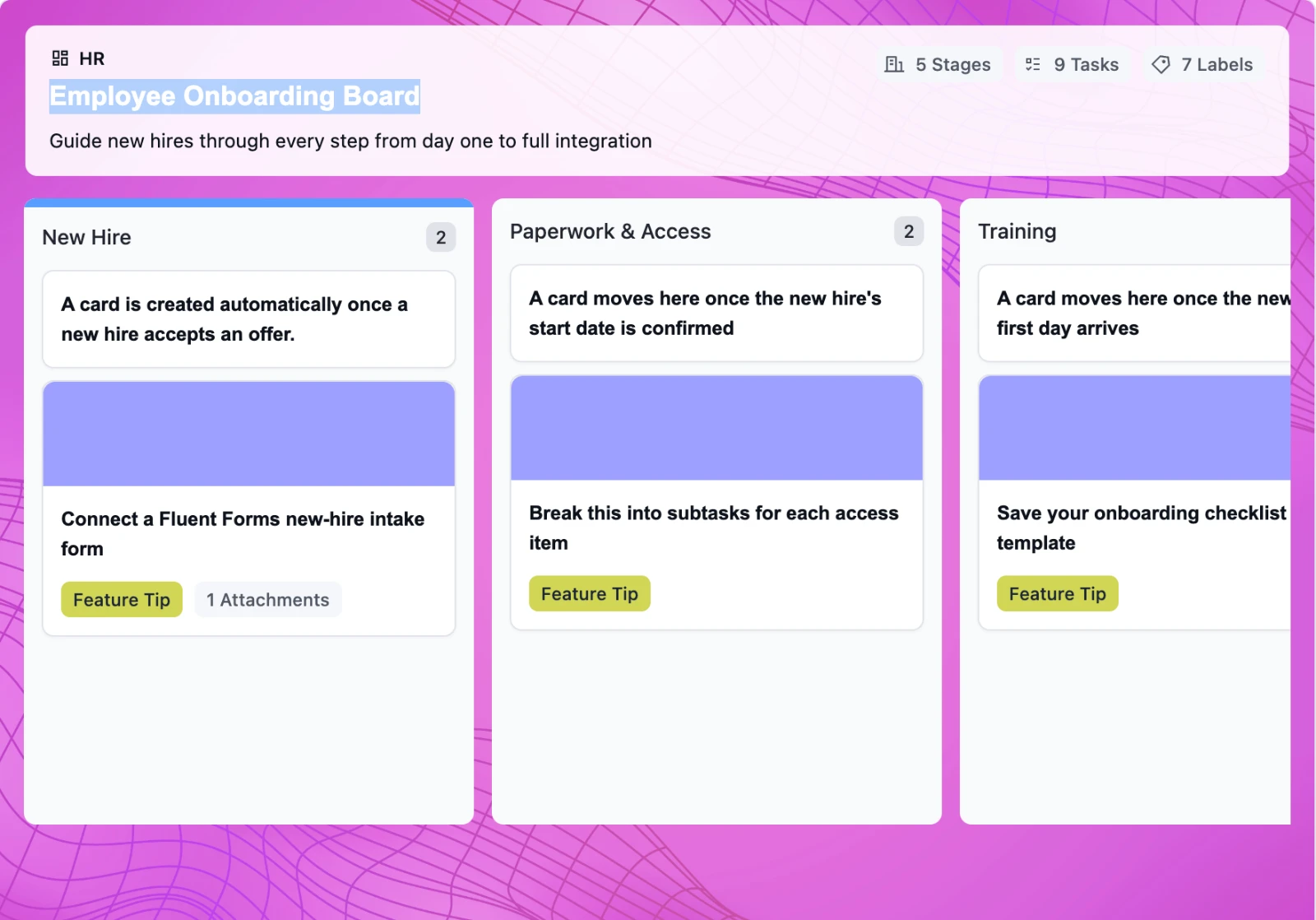
Onboard New Hires Without the Scramble
This free employee onboarding template takes new hires from offer acceptance through their 30-day check-in, so nothing slips through the cracks when your team is already juggling everything else
-
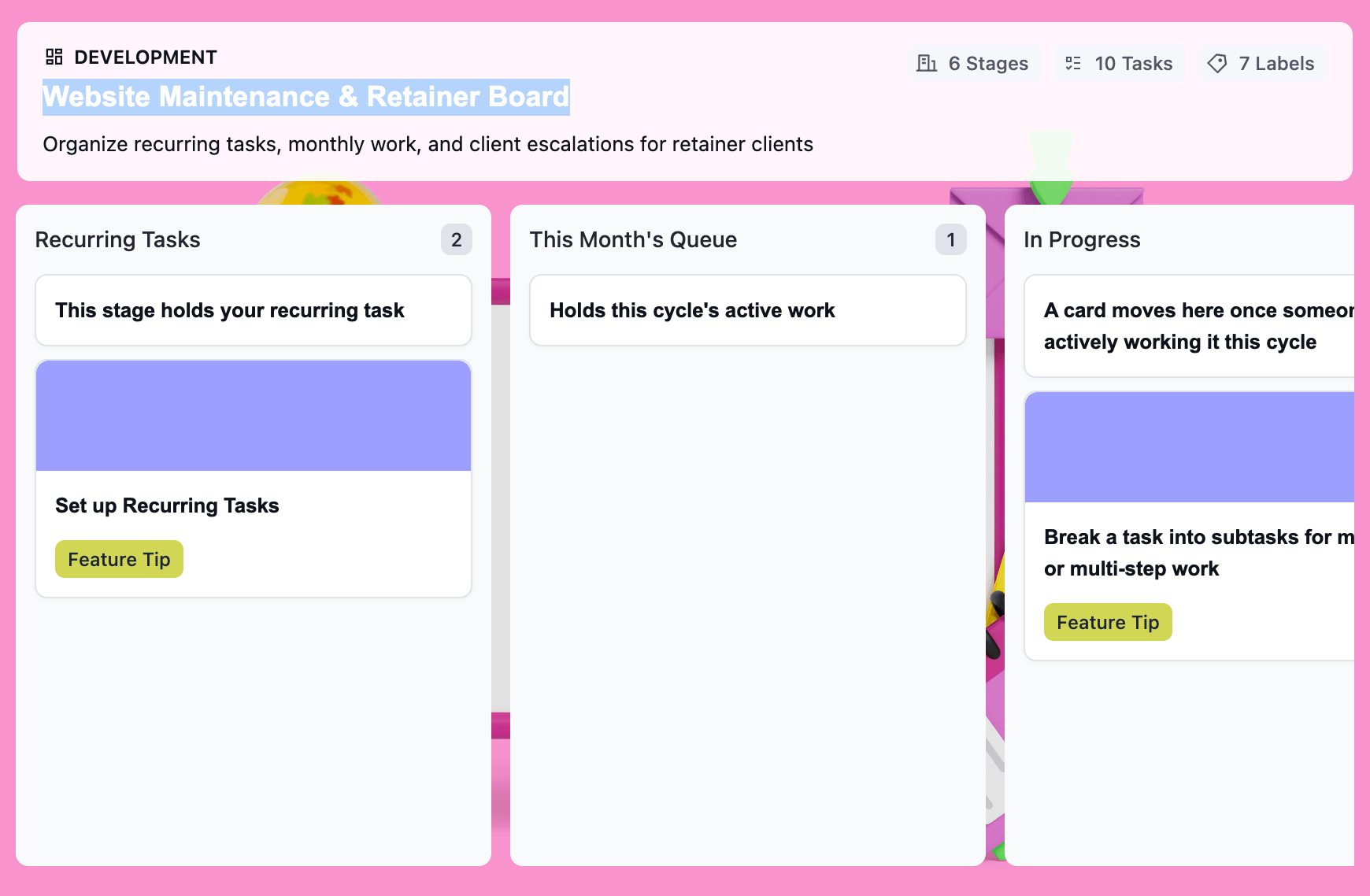
Turn Retainer Client Work Into a Clear Workflow
This free website maintenance retainer template gives you one board per client: recurring tasks that regenerate on schedule, a clear lane for scope creep, and a month-end record that’s already built.