
Stakeholder Collaboration in a Project: How to Collaborate with Internal and External Stakeholders


You’re managing the same project for two completely different audiences.
Your team needs task-level detail. Daily updates. Clear ownership.
Your client needs milestone visibility. Confidence that things are moving.
So you run two systems.
One board for the team. One email thread for the client. A spreadsheet for the investor.
And you’re the one holding all of it together.
Well, here’s where it breaks.
What the team knows, the client doesn’t. What the client said, the team never heard. And somewhere in that gap, something important gets lost.
That’s not a management problem. That’s a stakeholder collaboration problem.
So in this blog, we’re building one system that keeps both groups aligned. Without doubling your workload.
Let’s get into it.
What Is Stakeholder Collaboration in Project Management?
Stakeholder collaboration is the ongoing process of keeping everyone connected to your project informed, aligned, and involved in the decisions that actually affect them.
And notice that word. Involved. Not just informed.
Sending an update is communication. Collaboration is what happens when stakeholders actively participate in reviews, approvals, and decisions. When they’re part of the process, not just recipients of the output.
That distinction sounds small. But it’s the difference between a client who feels like a partner and one who shows up at delivery with a list of things you never knew they expected.
According to PMI, poor stakeholder engagement is cited in 39% of failed projects. Not poor execution. Not budget issues. Stakeholder engagement.
Why Stakeholder Collaboration Breaks Down
Here’s what nobody tells you about stakeholder collaboration.
It doesn’t break loudly. No single moment where everything collapses. It breaks slowly, through small gaps nobody notices until the damage is done.
And those gaps almost always come from the same four patterns.
Everyone gets the same update: Your developer and your client don’t need the same information. One message for all means the wrong message for each. And the right people stop reading your updates entirely.
Collaboration only happens when something breaks: Reactive stakeholder management is crisis management. By the time you’re looping someone in because something went wrong, the moment to prevent it has already passed.
Internal and external communication live in separate systems:Team in Slack. Client in email. Contractor in WhatsApp. Decisions get made without the full picture. Commitments get made externally that the internal team never hears about.
External stakeholders are looped in too late: Clients who only see the project at delivery evaluate it cold. That’s when “this isn’t what I expected” happens. And that’s when rework starts.
Head’s Up: If your stakeholder communication is reactive, your stakeholders are already losing confidence. A proactive rhythm fixes this before it becomes a trust problem.
For a communication structure that prevents most of these problems before they start, read our guide on building a communication plan.
Level up your WordPress project management game with this Trello equivalent solution – where limitless possibilities come at an unbeatable price!
Internal vs External: Why You Cannot Collaborate with Both the Same Way
Most people treat stakeholder collaboration like one thing. But it’s not.
Collaborating with your internal team looks completely different from collaborating with an external client or vendor. And trying to use the same approach for both is usually where the friction starts.
| Internal Stakeholders | External Stakeholders | |
|---|---|---|
| Goal | Align the people doing the work | Align the people affected by the outcome |
| Access | Full project visibility | Milestone-based, selective visibility |
| Communication | Task-level, daily, in the tool | Structured, milestone-based, scheduled |
| Relationship | You manage and direct | You influence and earn alignment |
| Main failure point | Team misalignment mid-project | Surprises at delivery |
Same project. Two completely different collaboration modes.
And the problem with running them in separate systems is that what the team knows and what the client knows never connect. The gap widens without anyone noticing until it’s too late.
Read: Internal Stakeholders of a Project
Read: The Role of External Stakeholders
How to Collaborate with Internal Stakeholders
Your internal stakeholders are the people inside your organization who fund, approve, plan, and execute the project. Your project sponsor, your project team members, your department heads.
They share your tools. They sit in your meetings. They feel the same deadline pressure you do.
But that closeness does not automatically mean alignment. Internal stakeholders still need structure. Just a different kind.
Here is how to build it.
Step 1: Give every internal stakeholder the right level of visibility
Not everyone on your internal team needs to see everything.
Think of it this way. Your team members need to know every task. Your sponsor needs to know when milestones move. Your department head needs to know when their people are needed and for how long.
So before the project starts, ask yourself:
- Who needs daily task-level access?
- Who only needs milestone updates?
- Who needs to approve before anything moves forward?
Once you have that list, set board access to match. Team members get full access to create, move, and comment on tasks freely.
Stakeholders who only need to monitor get read-only visibility so they can check progress without stepping into the workflow.
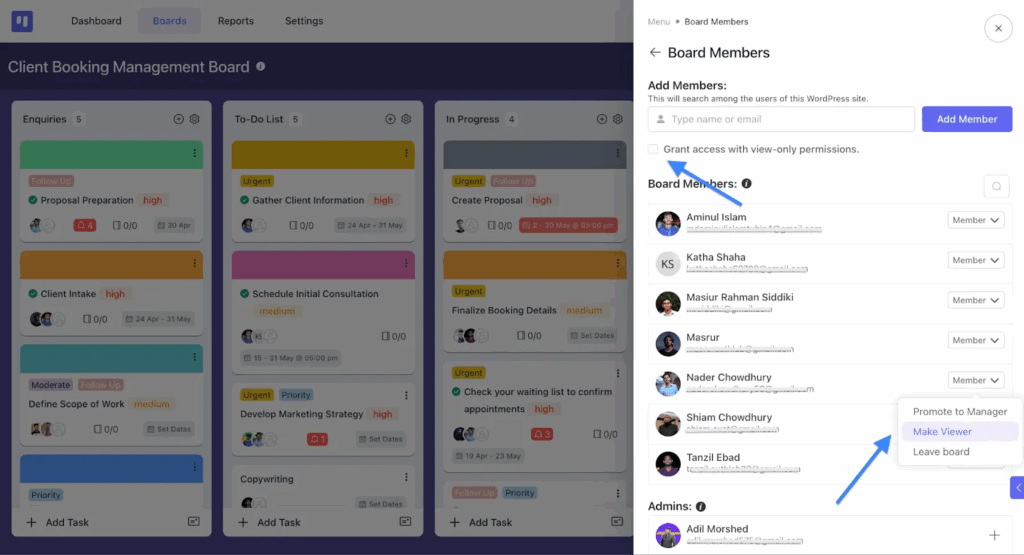
This one setup replaces most of your weekly status conversations.
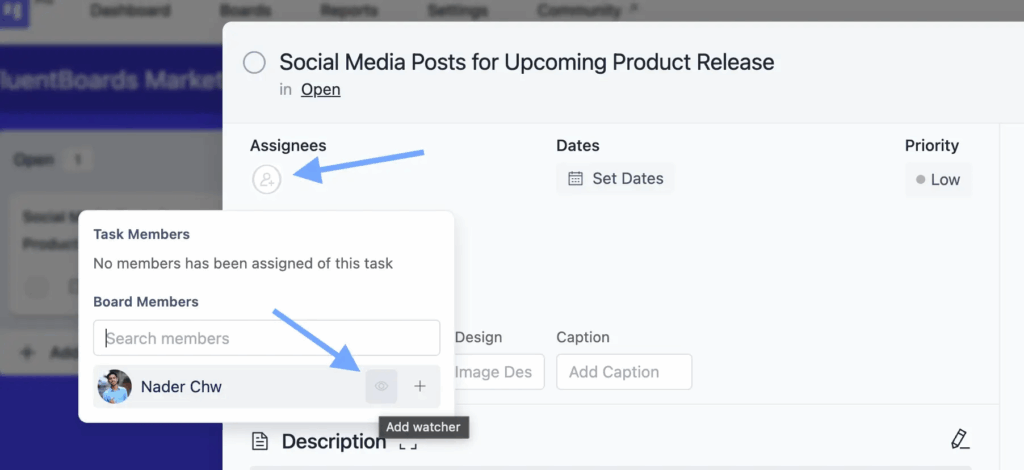
Pro Tip: Add your project sponsor as a watcher on high-priority tasks. They get notified when something critical moves without being pulled into every daily comment thread. Informed without being overwhelmed.
Step 2: Build your board around milestones, not workflow states
Here’s a quick test.
Open your board right now. Do your stage names mean anything to someone outside your team?
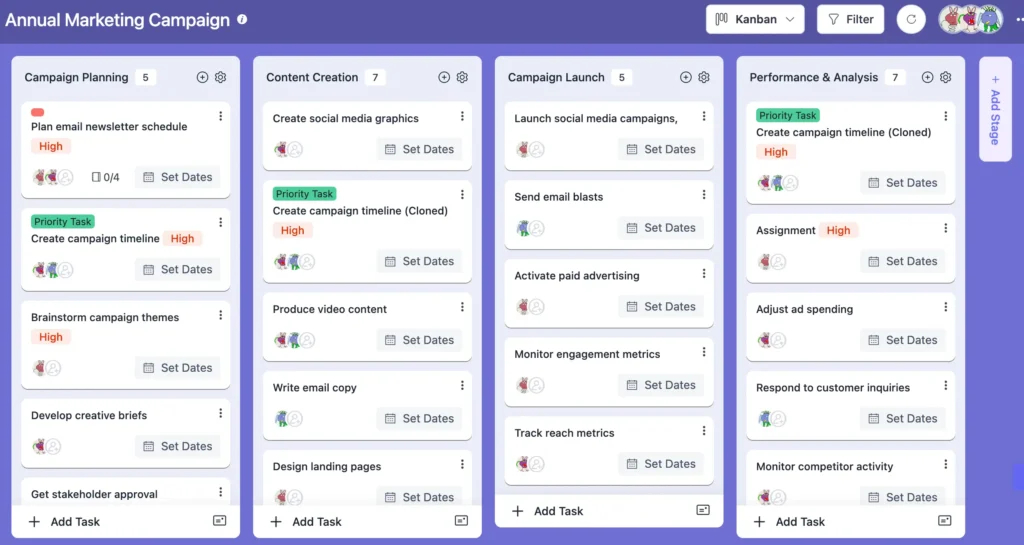
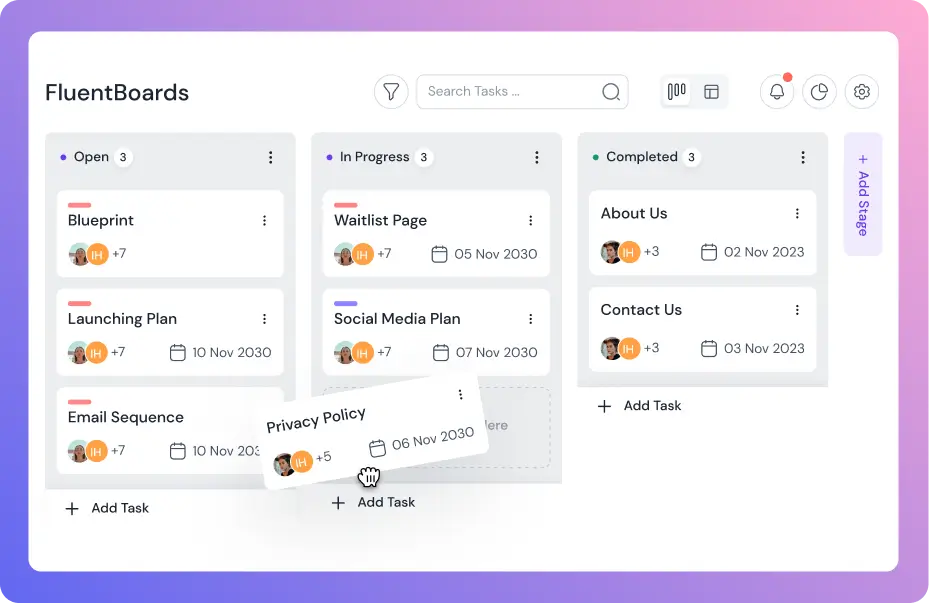
“To Do, In Progress, Done” means nothing to a sponsor or a finance team. But “Brief Approved, In Build, Client Review, Delivered” tells the whole story at a glance.
So name your stages after the real checkpoints that matter to your internal stakeholders. When anyone opens the board, they instantly understand where things stand. No briefing needed. No follow-up call required.
And naturally, when your sponsor sees “Client Review” on the board, they know exactly where the project is without asking.
Step 3: Keep every decision on the task, not in email
Here is where most internal collaboration quietly falls apart.
A decision gets made in a Slack thread. Someone misses it. Two weeks later, nobody can find what was agreed. And the project pays the price.
The fix is simple. When something needs to be discussed, open the task and leave a comment. Tag the relevant person directly.
They respond in context. The thread stays attached to the task. Three weeks later when someone asks what was decided, the answer is right there. Not buried in someone’s inbox.
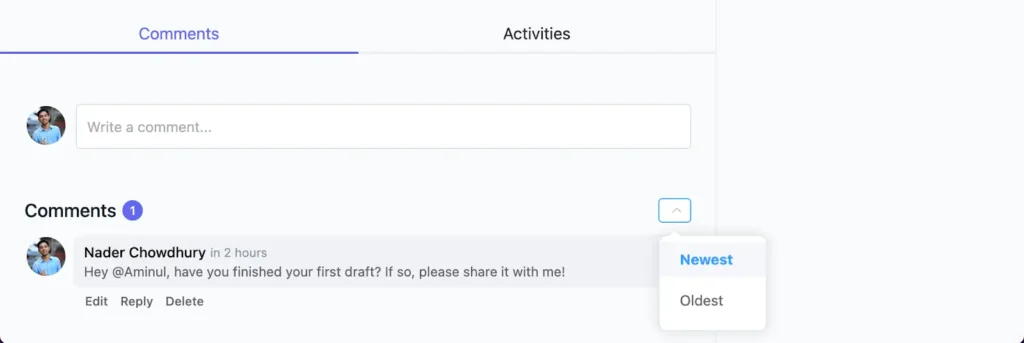
Plus, every comment and every change is recorded automatically. So when someone says “nobody told me,” the timeline says otherwise.
For stronger internal communication that supports this, explore these team collaboration skills.
Step 4: Route the right person automatically at every stage
For any stage that requires a specific internal stakeholder action, such as a budget review, a department sign-off, or a final approval, set that person as the default assignee for that stage.
When a task moves there, the right person is automatically added and notified. No manual tagging. No forgotten follow-up. The project keeps moving because the system handles the handoff.
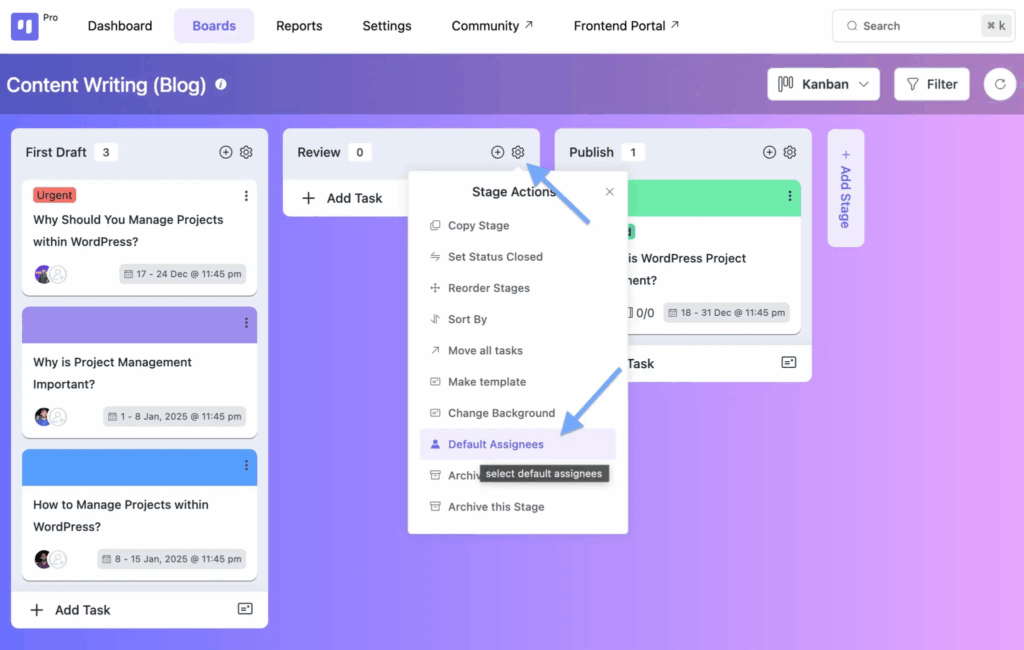
This is exactly how you stop being the connector between every stakeholder and start letting the system do it instead.
Pro Tip: Use this across your entire project lifecycle. When execution moves to monitoring, the right people are already notified automatically.
Read: How to Ensure Accountability in a Project Without Micromanaging
How to Collaborate with Your External Stakeholders
External stakeholders are a different challenge entirely.
Your clients, vendors, investors, regulatory bodies. They don’t sit in your meetings. They don’t use your tools. They don’t feel the daily rhythm of your project.
And that distance is exactly where things go wrong.
Well, the most common external stakeholder mistake is not managing them badly. It’s starting too late. Or giving them too much access. Or too little visibility.
Here is how to get the balance right.
Step 1: Give external stakeholders a window, not a door
Your client needs to see progress. But they don’t need access to your internal workflow, your team’s task conversations, or your backend.
Think of it like a one-way mirror. They see what’s happening inside. They can’t walk in whenever they want.
So give them a dedicated project view they can check without touching anything inside your main workspace. They see what’s moving. They see what’s coming. And they stop sending “just checking in” emails because the answer is already there.
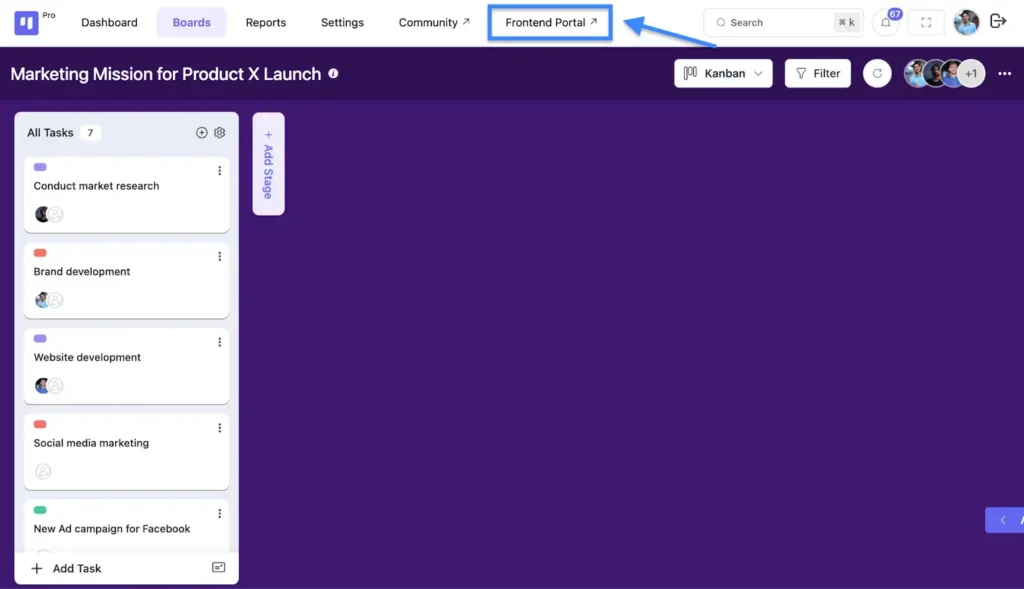
Note: This is especially important for clients prone to scope creep. When they can see real-time progress, the urge to add small changes mid-project drops significantly. Visibility builds confidence.
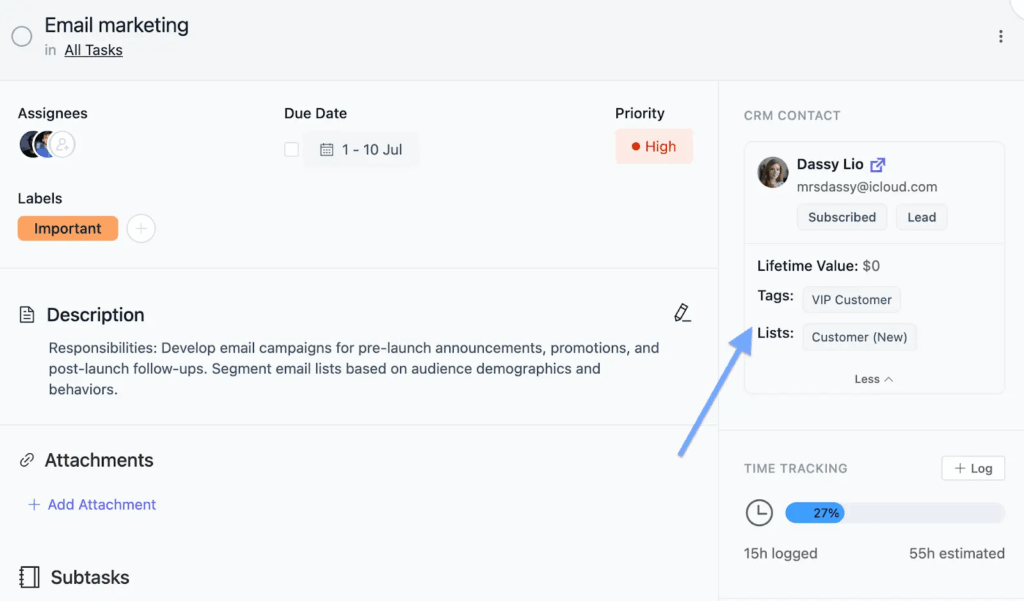
Step 2: Connect every task to the right external contact
When a client raises a requirement, that requirement should live on the task. Not in a separate email thread your team has to hunt for later.
Link each task to the relevant external contact. When your team opens the task, they immediately know:
- Who this task belongs to
- What was requested
- What has already been agreed
So follow-ups become fast. Context is always there. And nothing falls through the cracks because someone forgot who said what.
Step 3: Replace Status Meetings with Visual Progress
Most status meetings with external stakeholders exist for one reason.
They don’t feel confident things are moving.
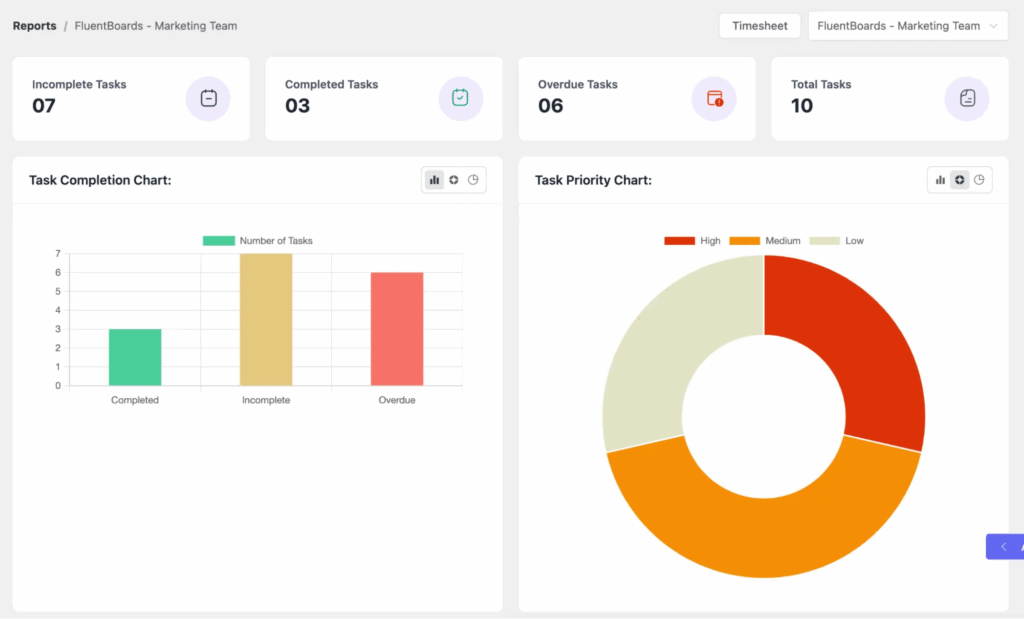
Well, the fix is not another meeting. It’s giving them a real-time view of project health. Completed tasks, upcoming milestones, current bottlenecks, in one clean visual.
When your client can see that 14 of 20 tasks are done and the next milestone lands in five days, they don’t need a 30-minute call to feel confident.
That’s time back for everyone.
Aligned from Day One, Calm Through the Finish
Stakeholder collaboration is not a skill you use once and forget.
It’s a system you build at the start of every project. And when it’s built right, it runs quietly in the background, keeping your internal team aligned, your external stakeholders informed, and your project moving without everything running through you.
So start with access. Then build your communication rhythm. Then give your external stakeholders the visibility they need without the access they don’t.
That’s the whole system.
Thanks for reading this far. Wishing you all the best on your project management journey!
Let’s redefine project management with FluentBoards!

Follow:


Get Tips, Tricks, & Updates
We won’t send you spam.



Leave a Reply