

Project Communication Plan: What Is It and How to Create One That Works


You’re three weeks into a project.
And already things are slipping.
- Team member stuck, waiting on a file
- Client confused, missed a decision
- Sponsor needs an update, now
Sound familiar?
Well, every single one of these happens when there’s no communication plan in place.
Now, you may say “plan!” sounds like a lot.
Honestly? It’s really not.
So this guide breaks it all down. What it is, what goes inside it, and how to create one that actually works.
Let’s begin.
What Is a Project Communication Plan?
A project communication plan is a documented framework that defines how information flows throughout a project.
In other words, it answers the classic five W questions of project communication.
| Question | What It Means |
| Who | Who needs the information |
| What | What updates should be shared |
| When | When communication happens |
| Where | Where the communication occurs |
| Why | Why the information matters |
Now, here’s where most plans get it wrong: they only answer these questions for one audience.
Communication inside projects usually flows in two directions.
Internal communication:
Updates between teammates working on tasks.
External communication:
Updates between the team and clients, sponsors, or leadership.
When these two communication streams work together smoothly, collaboration becomes effortless.
But when they don’t?
Well, things can spiral quickly.
And that’s exactly why a communication plan exists in the first place.
For understanding the roles involved across your project: Roles and Responsibilities
Communication Plan vs Project Management Plan
Well, these two terms often get mixed up.
At first glance, they sound similar. But they serve different roles inside a project.
A project management plan is the master blueprint. It covers everything: scope, schedule, resources, risk management, and delivery strategy.
A project communication plan, on the other hand, focuses on one specific thing.
Information flow.
Think of it like this:
| Plan | Focus |
| Project Management Plan | How the project will run |
| Communication Plan | How information will move |
Or, to put it metaphorically:
The project management plan builds the engine.
The communication plan makes sure everyone in the car knows where the road is going.
Without that visibility, even a powerful engine won’t get the project very far.
Why Every Project Needs a Communication Plan
Here’s something many project managers discover the hard way.
Communication problems rarely appear suddenly. They build slowly.
First, someone misses an update.
Then another teammate works with outdated information.
Then a client asks a question nobody expected.
And before long, the team spends more time explaining the project than actually working on it.
That said, this problem is extremely common.
Studies across project management research consistently show that communication breakdown is one of the biggest contributors to project failure.
In fact, several industry surveys suggest that inadequate communication is linked to more than half of unsuccessful projects.
So what does a communication plan actually solve?
Usually, it helps teams:
- prevent miscommunication
- keep stakeholders informed
- reduce decision delays
- improve team collaboration
Plus, it creates a shared understanding of how updates should happen.
And when communication flows clearly, collaboration tends to follow naturally.
What happens when you don’t have one?
Let’s be honest.
Many projects start without a communication plan. Teams simply “figure it out as they go.”
Sometimes that works. But often, it creates a chain reaction of small problems.
For example:
• stakeholders receive updates too late
• team members duplicate conversations across different tools
• responsibilities become unclear
• decisions take longer than expected
Guess what happens next?
The project slows down.
And the team starts feeling like they’re constantly playing catch-up.
That’s why structured communication isn’t just helpful. It’s essential.
Level up your WordPress project management game with this Trello equivalent solution – where limitless possibilities come at an unbeatable price!
What Should a Project Communication Plan Include?
This is where a lot of guides go one of two ways. Either they list fifty components that nobody actually uses, or they’re so vague that you finish reading and still don’t know what to write.
So let’s keep it practical.
A solid project communication plan covers 7 core components. Each one has a specific job. Together, they cover everything.
1. Stakeholder Identification
Who is involved in or affected by this project?
Not just your immediate team. Your project sponsor, clients, vendors, contractors, and anyone else whose input or decisions shape the work. Map the roles of each person from the start so there are no surprises later about who owns what.
2. Communication Goals
- What is each communication trying to achieve?
- Keeping the client informed?
- Getting sign-off on a deliverable?
- Flagging a risk before it becomes a problem?
Every message should have a purpose. If it doesn’t, it’s noise.
3. Message Types
What categories of information will be shared?
Status updates, meeting recaps, decision logs, escalations, feedback requests, milestone alerts. Define them upfront so nothing slips through the cracks.
4. Communication Channels
Where does communication happen?
Email for formal updates. Task comments for work-level feedback. Video calls for complex decisions. A shared project board for real-time visibility. Different messages need different channels. Mixing them up is how things get lost.
5. Cadence and Format
- How often does each stakeholder hear from you?
- In what format?
Weekly summary emails, bi-weekly client calls, daily standups, and end-of-sprint reviews. Consistency is what builds trust. Sporadic communication, even when well-intentioned, creates anxiety.
6. Communication Ownership
Who sends what?
If everyone is responsible, no one is. Assign a name to each communication type. The project manager owns the weekly status update. The team lead runs the standup. The account manager handles the client call. Write it down.
7. Review and Escalation Process
How does the plan get updated when the project changes?
What happens when something urgent needs to bypass the usual chain? A plan without a review process becomes a relic within two weeks. Build the review in from the start.
How to Create a Project Communication Plan Step by Step
Alright, now let’s move from theory to action.
As we covered earlier, every communication plan ultimately serves two audiences:
- The team doing the work
- The stakeholders expecting updates
So let’s build communication for both.
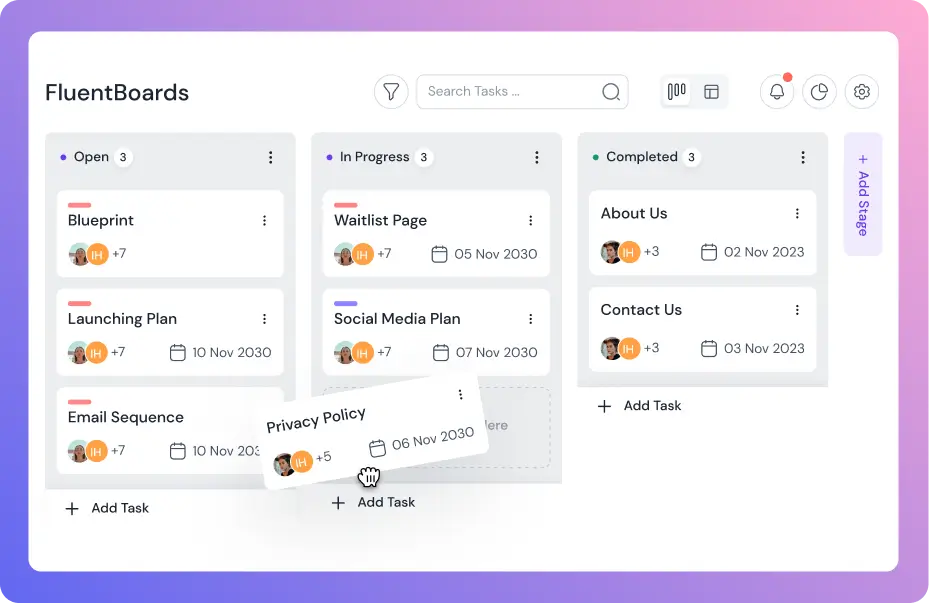
Note: In the following steps, we share FluentBoards screenshots to give you a clear, practical picture of how your communication plan actually comes to life inside a real project management workflow.
Step 1: Identify all your audiences
You can’t communicate with people you haven’t mapped yet.
Start by listing everyone connected to the project, your team members, your project sponsor, clients, and vendors.
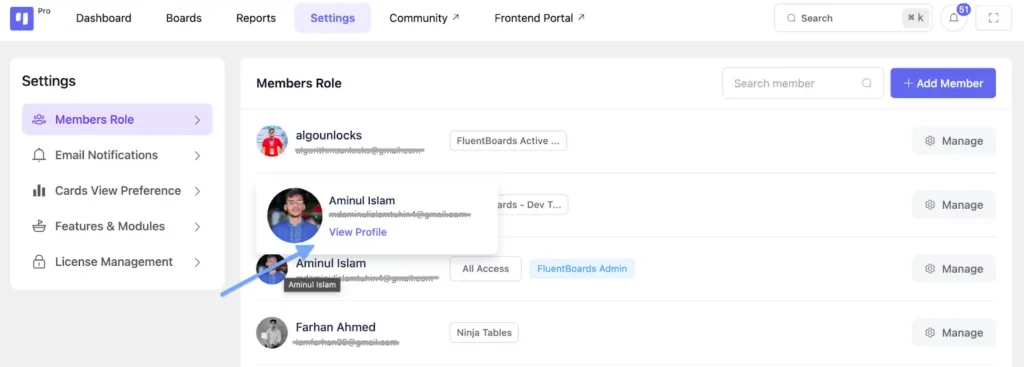
For your team:
Assign every member a role from day one using Member Roles and Permissions.
This defines what each person can see, edit, and comment on automatically.
For your stakeholders:
Use Board Viewer permissions to control exactly what your client sees.
No internal noise. Just the updates that matter to them.
Step 2: Define what each audience needs to know
Not every update belongs to every person.
Sharing everything with everyone isn’t transparency. It’s noise.
For your team:
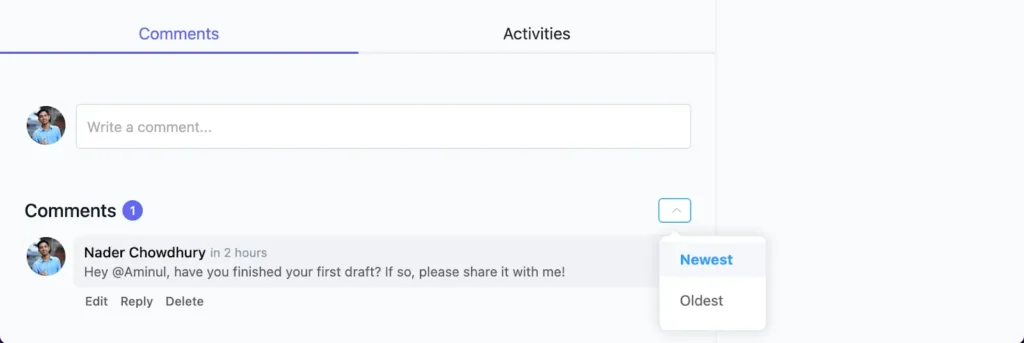
Define the message types each member needs: task updates, blocker alerts, decisions that affect their work.
Task descriptions capture the what and comments handle the back and forth.
For your stakeholders:
Clients need progress summaries and milestone confirmations. Sponsors need risk flags and key metrics.
Connect every update back to your project objectives so nothing shared is ever without purpose.
Step 3: Choose the right communication channels
The wrong channel loses the message, no matter how good it is.
A scope change buried in Slack isn’t communication. It’s a liability.
For your team:
Task comments and @mentions keep feedback tied directly to the work.
When information lives where the work lives, nothing slips through.
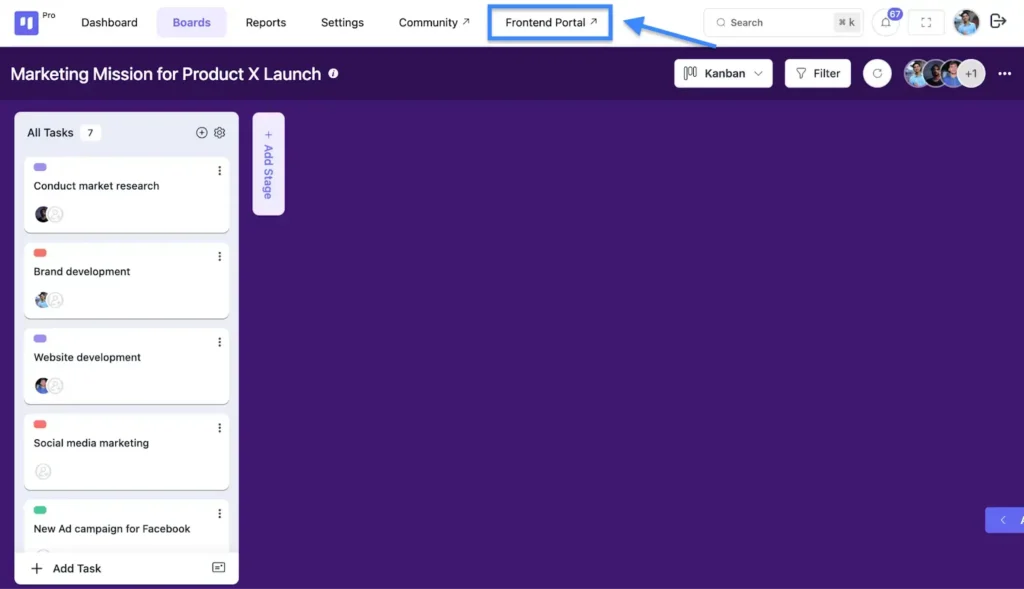
For your stakeholders:
The Frontend Portal gives clients a clean, professional view of progress.
No internal clutter. Just what they need to see.
Step 4: set communication frequency and format
Cadence is where most plans fall apart.
Too much and you kill focus. Too little and clients start to panic.
For your team:
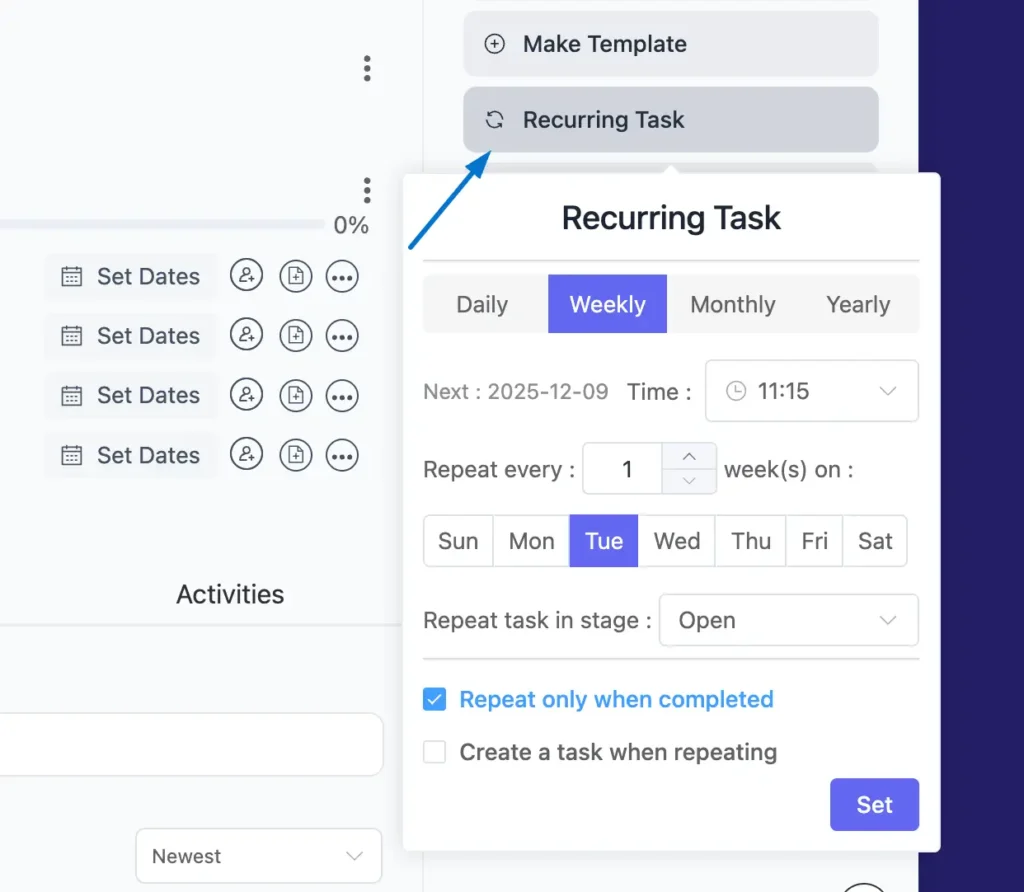
Set a rhythm: daily task comments, weekly board reviews, end of sprint recaps.
Recurring Tasks make sure no touchpoint gets forgotten.
For your stakeholders:
Weekly progress email for clients. Milestone updates when key deliverables land. Bi-weekly summary for sponsors.
Define the format once and stay consistent. Consistency is what builds trust.
Step 5: Assign communication ownership
If everyone is responsible, no one is.
Every communication type needs one name next to it.
For your team:
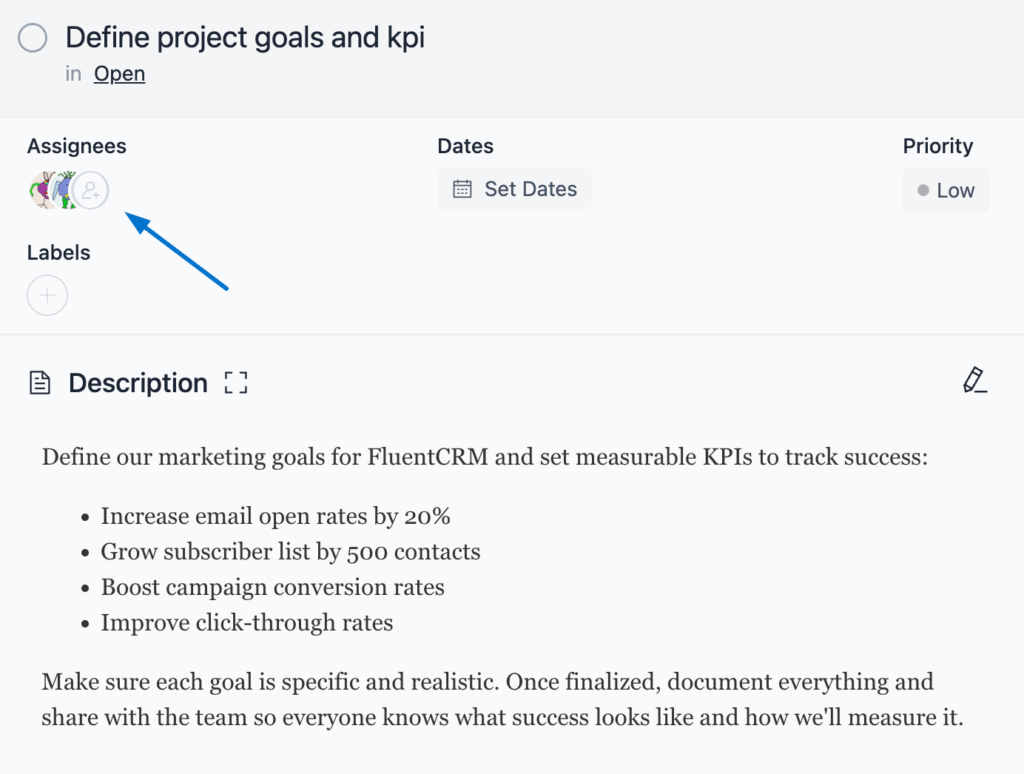
Decide who runs the standup, who logs decisions, who flags blockers.
The Assign feature ties every task and update to a specific owner.
For your stakeholders:
Decide who sends the weekly client update, who handles scope change conversations, who escalates to the sponsor.
Write it down. One name per communication type.
Step 6: document and share the plan
A plan nobody can find is not a plan.
Keep it visible, accessible, and updated.
For your team:
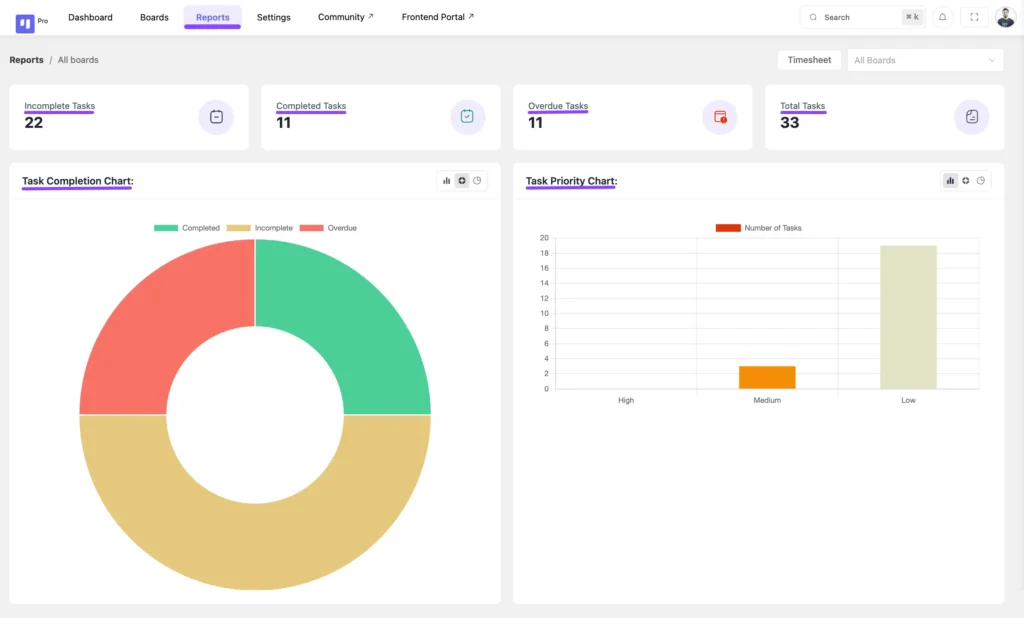
Pin the plan inside your project board. The Activities Log keeps a running record of what was communicated and when.
For your stakeholders:
Gives clients a clean view of progress and direction without needing internal board access.
Why Most Communication Plans Fail (And How to Keep Yours on Track)
Here’s the uncomfortable truth.
Most teams do create a communication plan. They just stop using it two weeks in.
Not because the plan was wrong. Because it wasn’t built for how the project actually runs. And when the project picks up speed, the plan becomes one more document sitting in a folder nobody opens.
That said, a failing communication plan doesn’t collapse all at once. It gives you signals first.
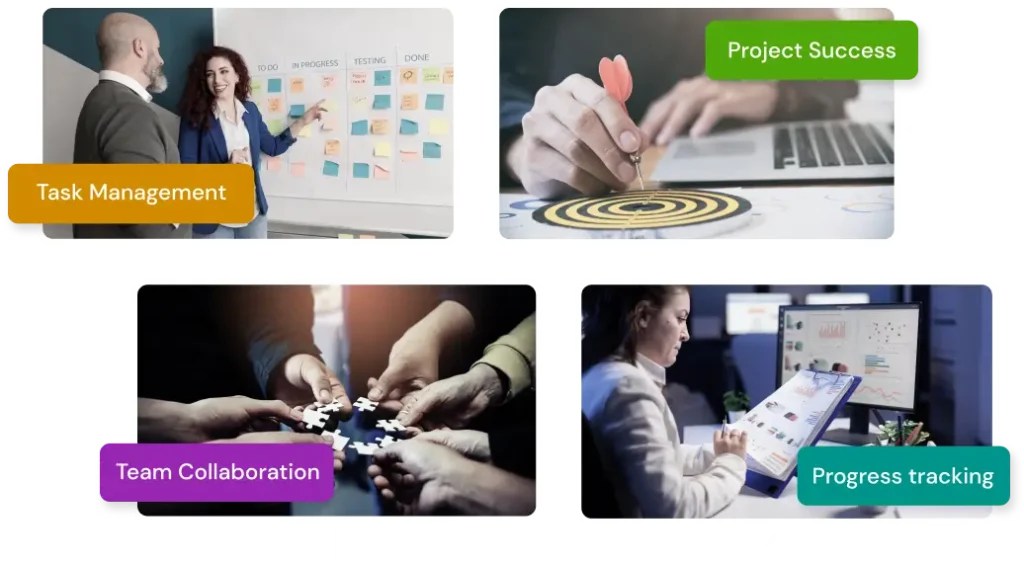
Step into the Future of Project Management!
Signs Your Plan Is Breaking Down
Watch for these. Any one of them is a yellow flag. Two or more means stop and review immediately.
- The client starts asking for updates instead of receiving them on schedule
- Team members are duplicating work because nobody knew who owned a decision
- Meetings start getting longer because context isn’t being shared between them
- Escalations land on the project manager’s plate that should have been caught earlier
- Your project team collaboration starts feeling fragmented — some people over-informed, others completely out of the loop
- Tasks are moving in the board but nobody’s commenting, and nobody’s asking questions either (that silence is often louder than the noise)
Final Words
Projects succeed when teams move in the same direction.
And clear communication makes that possible.
A strong project communication plan ensures that information flows smoothly between teammates and stakeholders. It removes confusion, speeds up decisions, and helps everyone stay focused on the work that matters.
Because at the end of the day, collaboration isn’t just about working together.
It’s about understanding each other along the way.
Let’s redefine project management with FluentBoards!

Follow:


Get Tips, Tricks, & Updates
We won’t send you spam.




Leave a Reply