

What Is the Role of External Stakeholders in Project Success and How They Influence Outcomes


You kicked off the project. Roles are set. The plan looks solid.
And then the client emails.
“Just a small change.” No big deal, right?
But nobody pulled the fire alarm.
Nobody warned you that one request would touch three tasks, two dependencies, and a vendor already running tight.
And just like that, the project is on fire.
That’s external stakeholders. They don’t announce themselves.
They just show up. And most managers learn their role the hard way, midway through execution, when it’s already too late.
So what role do they actually play? And how do you stop managing them from behind?
Let’s break it all down.
Let’s dive in!
What Are External Stakeholders in a Project?
External stakeholders are individuals, groups, or organizations outside your company who have a direct interest in your project’s outcome or are affected by it.
Simply put, they are the people your project touches from the outside.
Now, they are not part of your organization. They don’t sit in your meetings or work inside your daily workflow.
But they have a real stake in what your project produces, whether that’s a client, a vendor, or a regulator whose approval you can’t skip.
In practice, external stakeholders are the ones who:
- Can influence your project’s direction from outside your organization
- Have an interest in your project’s outcome
- Are directly affected by what your project delivers
Read: Different Types of Stakeholders in a Project
External Stakeholders vs Internal Stakeholders
Understanding the difference isn’t just categorization. It completely changes how you manage each group.
Internal stakeholders are the people inside your organization who fund, approve, plan, and execute the project.
Your project sponsor, your team members, your department heads. They share your tools, attend your meetings, and feel the same pressure you do when a deadline tightens.
External stakeholders don’t have that context. They see the deliverable. They don’t see what it took to get there.
So when something shifts on your end, they’re often the last to know and the first to react.
That’s the core difference. Not just inside vs outside. It’s visibility vs blindness.
Here’s a simple breakdown:
| Internal Stakeholders | External Stakeholders | |
| Location | Inside your organization | Outside your organization |
| Project access | Inside workflow and tools | See outcome, not the process |
| Communication | Ongoing, daily workflow | Structured, intentional touchpoints |
| Your control | Direct | Through relationship only |
| Examples | Sponsor, team, managers, analysts | Clients, vendors, regulators, investors |
Why Most Managers Struggle with External Stakeholders
Managing external stakeholders without knowing their role is like navigating without a map. You’ll eventually get somewhere, just not where you planned.
And the numbers back this up.
According to PMI,
Stakeholder management is the most critical process in project success, with over 90% of project professionals ranking it as their top priority, regardless of scope, budget, or timeline challenges.
Yet most managers only think about it after something has already gone wrong.
When you don’t understand the role each external stakeholder plays, here’s what actually happens on a project:
- The client adds “small” changes mid-execution because project scope boundaries were never made clear to them at the start
- A vendor misses a critical handoff because their dependency on another task was never communicated
- Regulatory approval stalls the final delivery because compliance wasn’t mapped into the plan from the project planning phase
- Sign-off takes two weeks because the right person wasn’t looped in at the right milestone
- A kickoff never happened, so every stakeholder walked in with their own version of what the project should deliver
- Late feedback forces rework because external stakeholders had no structured visibility and saved everything for the final review
None of that is bad luck. It’s a role clarity problem.
So before you can manage external stakeholders well, you need to know who they actually are.
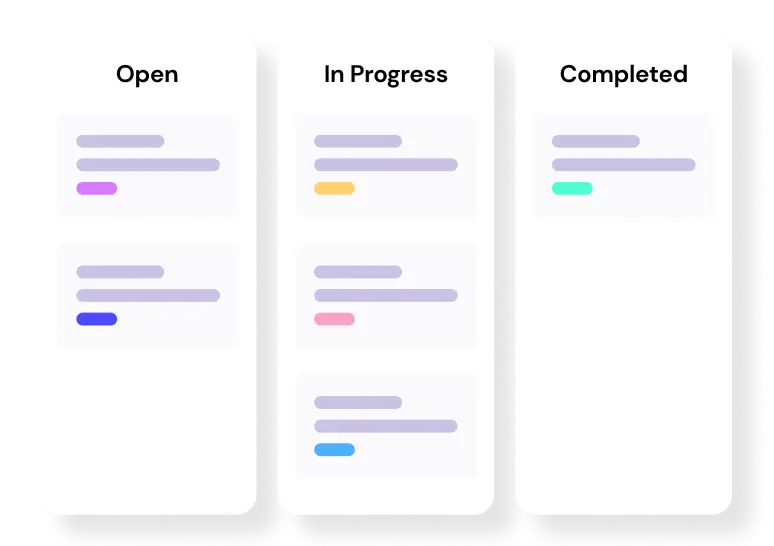
Level up your WordPress project management game with this Trello equivalent solution – where limitless possibilities come at an unbeatable price!
Types of External Stakeholders and Their Role in Your Project
Not every project has the same external stakeholders. But most will have at least a few from this list.
And each one carries a different kind of influence across your project lifecycle.
1. Clients and Customers
The client defines what success looks like from the outside. Their satisfaction is the final word on whether the project actually delivered what it promised.
Their role is heaviest during initiation and planning, where they set requirements and scope boundaries, and again at closure, where they approve or reject the final deliverable.
When their role isn’t defined early, every mid-execution request becomes a scope conversation nobody planned for.
2. Vendors and Suppliers
Vendors supply the tools, materials, or services your project depends on to move forward.
Their role is most critical during planning and execution. They confirm availability, costs, and timelines during planning. During execution, their reliability directly determines whether your project stays on schedule.
A vendor running two days behind doesn’t just affect their piece. It creates a chain reaction through your entire timeline.
3. Regulators and Government Bodies
Some projects can’t legally move forward without regulatory sign-off. Permits, compliance approvals, legal clearances.
Their role kicks in early, during initiation and planning, where compliance requirements need to be mapped into the project plan. Teams that engage regulators late are the ones rewriting deliverables under pressure in the final stretch.
4. Investors and Funders
Investors aren’t always visible during execution. But their role is significant at two points: initiation, where they decide whether the project is worth funding, and closure, where they assess whether outcomes matched expectations.
Keep them informed at the right intervals and they stay in the background. Go quiet too long and suddenly they’re very present.
A project sponsor often bridges this gap, connecting internal leadership with external investors to keep both sides aligned.
5. End Users
End users are the people who will actually use what your project produces.
Their role matters most during planning, where their requirements should shape decisions, and during execution, where structured feedback loops keep the project on track.
When end user feedback comes in late, it usually means rework. And rework at the end is the most expensive kind.
External Stakeholders at a Glance
Here’s a quick summary so you can map your own project right now.
| Stakeholder | Their Role | Most Active Phase | What They Need |
| Clients and customers | Define success, approve deliverables | Initiation, closure | Clear expectations, structured feedback |
| Vendors and suppliers | Supply resources, maintain timelines | Planning, execution | Advance notice, reliable communication |
| Regulators and government | Set compliance boundaries | Initiation, planning | Early engagement, documented approvals |
| Investors and funders | Fund and assess project value | Initiation, closure | Progress visibility at key intervals |
| End users | Shape requirements, validate output | Planning, execution | Early involvement, feedback channels |
How to Manage External Stakeholders Through Your Project
This isn’t about adding more meetings. It’s about building a structure so external stakeholders stay informed, involved at the right moments, and never become a source of last-minute pressure.
Step 1: Map them before the project starts
Before a single task moves, know who your external stakeholders are and what they need.
For each one, answer:
- What is their level of influence on the project?
- What does success look like from their side?
- Which project phase requires their involvement?
- What decisions need their input or approval?
A simple mapping exercise at the start will save you hours of reactive communication later. This isn’t a formality. It’s how you avoid surprises.
Step 2: Run a Proper Kickoff Meeting
A kickoff meeting with your key external stakeholders, particularly the client, is not optional.
Think of it as the foundation before the house goes up. Skip it and everything built on top is unstable.
This is where scope, timelines, communication channels, and decision-making authority get aligned before the work starts moving.
It’s also where you establish who goes through whom when requests come in.
Done well, a kickoff meeting eliminates the assumptions that would otherwise take weeks to surface and fix.
Step 3: Set expectations before execution begins
The most common external stakeholder mistake isn’t managing them badly. It’s starting the management too late.
Before execution begins, define:
- What you’ll share and when
- What decisions require their input
- What decisions require their approval
Clients often assume more involvement than they’re given. Vendors sometimes assume less responsibility than they actually carry.
Getting this clear in week one is a lot easier than correcting it in week four.
Step 4: Give them the right visibility
External stakeholders need enough visibility to stay confident. They don’t need everything.
Well, think of it like a window, not a door. They should see what’s happening inside. Not walk in whenever they want.
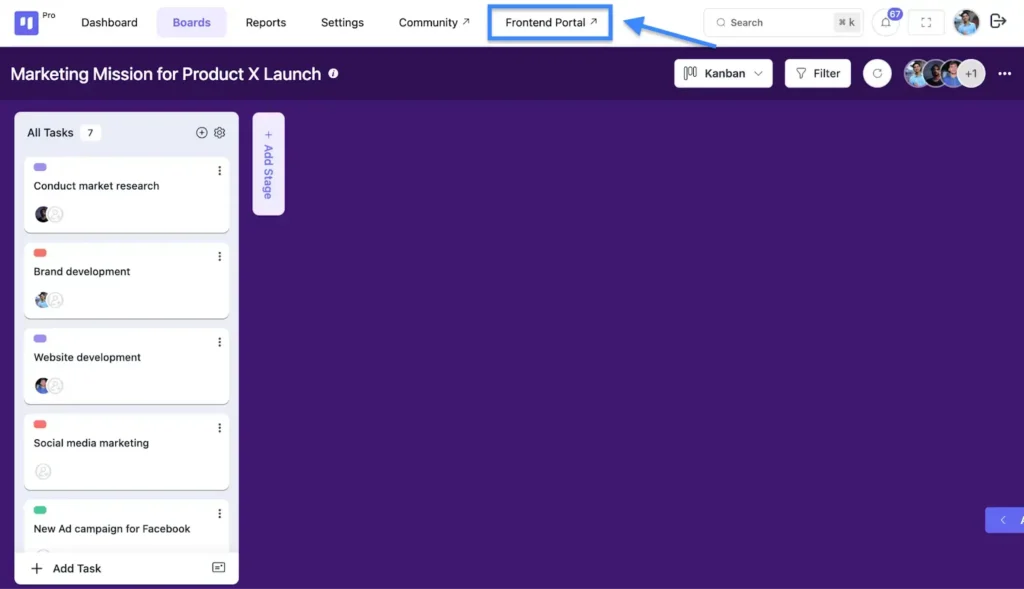
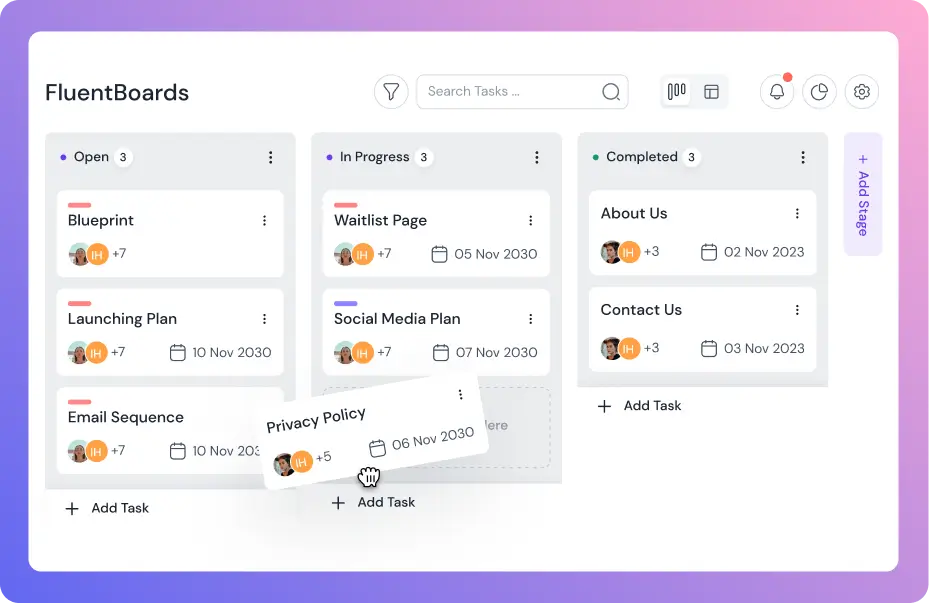
This is exactly where a project management tool changes the dynamic. Instead of forwarding summary emails and hoping they land clearly, you can give external stakeholders structured, real-time visibility into the parts that actually matter to them.
With the right tool, you can: Share a dedicated project view with clients without exposing your full internal workflow.
Step 5: Structure feedback and know what to escalate
External stakeholders don’t give bad feedback because they’re difficult. They give bad feedback because they’re responding to the wrong question at the wrong time.
So what does structured feedback actually look like?
- Tell them exactly what you’re asking them to review
- Give them the context they need to respond usefully
- Set a clear deadline for their input
- Have one place where that feedback lives so nothing gets lost
Plus, not every issue needs to go to an external stakeholder. But some absolutely do.
If a scope decision needs client sign-off, don’t assume and move forward. The cost of getting approval is a short wait. The cost of assuming it is a rework conversation nobody wants.
Decide at the start what categories of decisions require external input. Write it down. Then you’re not making that judgment call under pressure every single time.
Read: Project Communication Plan
From Outside Pressure to Inside Advantage
External stakeholders will always have opinions, timelines, and expectations that don’t perfectly match yours.
That’s not the problem.
The problem is when their world and your project’s world never properly connect.
When you map them early, run a proper kickoff, and give them structured visibility at every phase, something shifts. They stop being a source of last-minute pressure. They become part of what keeps the project on track.
No PM is an island. And neither is a project.
The relationship doesn’t manage itself. But with the right structure around it, you won’t spend the whole project managing the fallout from it either.
Let’s redefine project management with FluentBoards!

Follow:


Get Tips, Tricks, & Updates
We won’t send you spam.




Leave a Reply