

Transparency vs Oversharing: Finding the Right Balance in Projects


You know that moment when you say something and immediately wish you could take it back?
We’ve all been there.
That 2AM feeling. Staring at the ceiling, rewinding every word.
Well, as a project manager, you live that feeling on repeat.
- Did I share too much with the stakeholder?
- Did I keep my team in the dark?
And every day that same tension follows you from your desk back to the ceiling.
That cycle starts the moment transparency crosses into oversharing.
In this blog we show you exactly where that line is and how to find the right balance in your project.
Let’s get into it.
Transparency vs Oversharing: What’s the Real Difference?
Before anything else, let’s define both clearly.
Transparency means sharing project information that helps stakeholders and team members make informed decisions or take action. It’s structured. It’s purposeful. It’s context-aware.
Oversharing, on the flip side, is broadcasting every update, change, and detail to everyone, regardless of role or relevance. It buries critical information under noise.
It often comes from anxiety: if you know it, everyone should know it. But that’s not how information works.
Here’s how they’re different:
| Transparency | Oversharing | |
| What it is | Sharing with purpose | Sharing without filter |
| Who receives it | Right person, right time | Everyone, all at once |
| Comes with | Context and clarity | Raw data, no explanation |
| Impact on team | Builds trust and alignment | Creates noise and anxiety |
| Impact on stakeholder | Keeps them informed | Pulls them into decisions they should not make |
| What it does to project | Keeps it moving forward | Slows it down |
So the difference was never about how much you share. It was always about whether what you share actually serves the person receiving it.
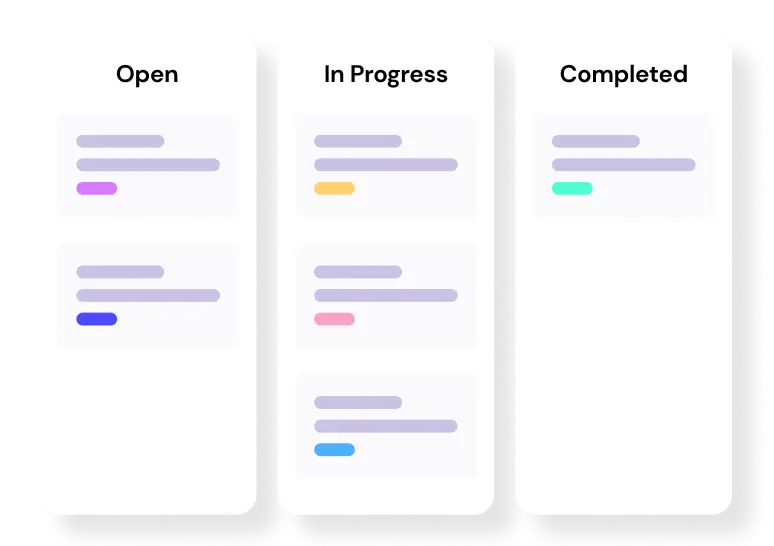
Level up your WordPress project management game with this Trello equivalent solution – where limitless possibilities come at an unbeatable price!
When Does Transparency Become Oversharing in a Project?
Most of the time, it doesn’t happen all at once.
It creeps in. One small share at a time. And by the time you notice, the damage is already done.
Let’s look at what it actually looks like inside a project.
Sharing problems before you have a solution: There’s a difference between “we hit a blocker and here’s how we’re handling it” and “we hit a blocker and I have no idea what to do.” The first keeps people informed. The second creates panic.
Giving stakeholders full access to one task: Now they can see everything. Every comment. Every internal blocker. Suddenly they have opinions on things that were never part of their role.
Sharing raw metrics without context: Your stakeholder sees a dip in progress with no explanation. So they escalate. They assume the worst. Numbers without story are dangerous.
Turning daily updates into a micromanagement trap: Overly detailed updates invite unnecessary scrutiny. Your team spends more time explaining their work than actually doing it.
Using your team as a sounding board for unresolved decisions: Some decisions aren’t theirs to carry. Sharing unresolved concerns before they’re settled shifts anxiety downward.
Communicating across too many channels with no system: updates scatter everywhere. No one knows what was meant for whom. And that is when communication breaks down between project members.
C’ing everyone on every update: You loop in the entire team “just to keep them informed.” Now their inboxes are flooded. And when something actually urgent comes through, they miss it.
Broadcasting every task movement: Every time a task moves stages, everyone gets notified. Your team drowns in noise. Real blockers get lost in routine updates.
What Oversharing Actually Does to Your Project
The damage builds quietly. It doesn’t show up in your next standup. It shows up three weeks later when things feel harder than they should
On the team side:
- Psychological safety disappears and team members stop sharing honestly
- Blame culture grows and people start covering tracks instead of fixing problems
- Decision fatigue sets in when unresolved concerns land on the wrong people
- Productivity drops when more time goes into explaining work than doing it
On the stakeholder side:
- Micromanagement creeps in and stakeholder starts interfering in team decisions
- Unnecessary escalations happen when raw data gets misread as a red flag
- Scope creep follows when stakeholders see every detail and start suggesting changes
- Trust breaks down when seeing everything unfiltered creates doubt not confidence
Learn more: Project Team Collaboration Tips
Why Transparency Matters But Has Limits
Here is the thing. Transparency is not the enemy. Too much of it at the wrong time is.
Every piece of information has a right moment and a right person. And your job as a project manager is not to share everything. It is to share the right thing at the right time to the right person.
Ask yourself before sharing anything:
- Is this information ready or still being resolved?
- Does this person need it right now to do their job?
- Will sharing this move the project forward or create unnecessary noise?
If the answer is no to any of these, it is not the right time.
Not because you are hiding things. But because half cooked information does not help anyone move forward.
So transparency has a filter. And using that filter is not a lack of openness. It is judgment. It is leadership.
Step into the Future of Project Management!
The Practical Way to Maintain the Right Balance in Your Project
Knowing the line is one thing. Holding it inside a live project is another.
Here is how to do it on both sides.
For your team:
Step 1: Route information, do not broadcast it
Not every update belongs to everyone. Assign tasks to the right person so only they get notified. In FluentBoards the Assignee feature on every task lets you pick exactly who owns it.
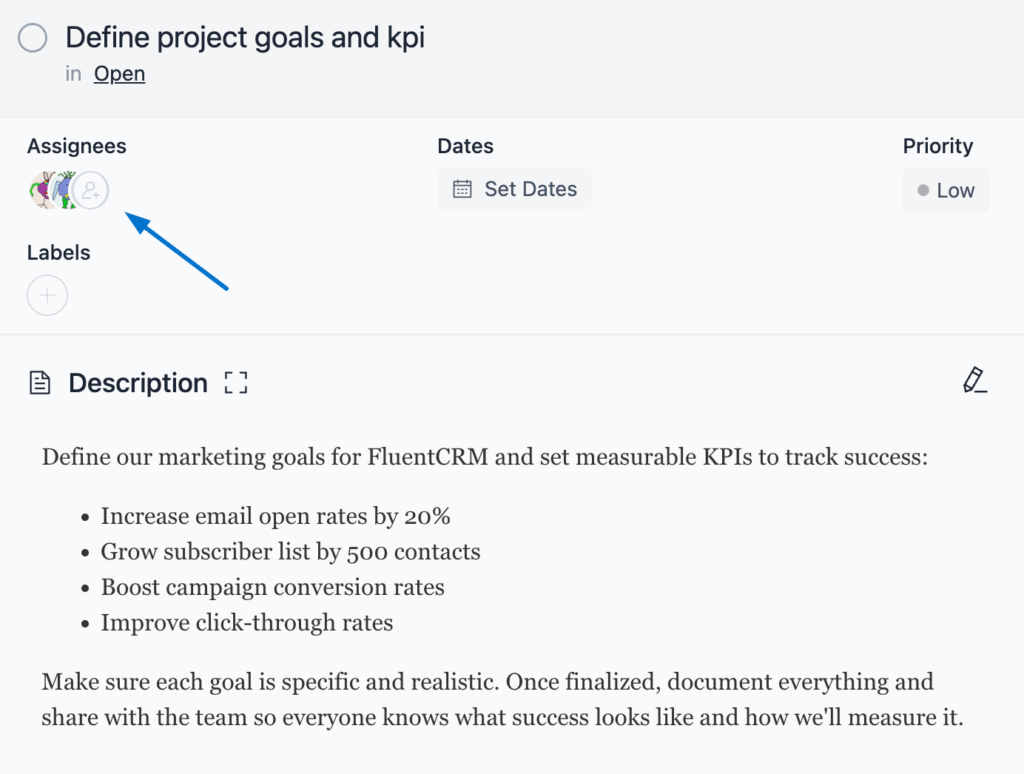
Everyone else sees only their own work in their personal My Tasks dashboard. No noise from tasks that do not belong to them.
Step 2: Keep discussions on the task, not in a group channel
When a conversation about a specific task ends up scattered, it loses context. FluentBoards task level comments keep every thread attached to the task it belongs to.
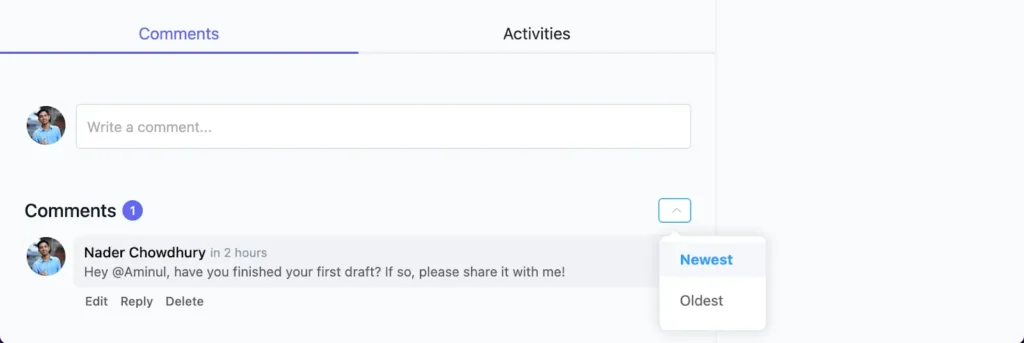
The Activities log records every change so the full history is always there without asking anyone.
Step 3: Let your team control what they follow
Not everyone needs to see everything. For team members who want to stay updated on a task without being assigned, the Watching feature lets them subscribe to activity on that task with one click.
They choose what they follow. Nothing gets pushed without their choosing it.
For your stakeholders:
Step 4: Give them visibility without control
When you add a stakeholder to a board in FluentBoards, the view only permission makes them a Boards Viewer. They can see everything. Task statuses, stages, assignees, progress.
But they cannot add, delete, or change anything. Informed without interfering.
Step 5: Give access to one task, not the whole board
For stakeholders who only need visibility into one deliverable, Task Watchers is the right move.
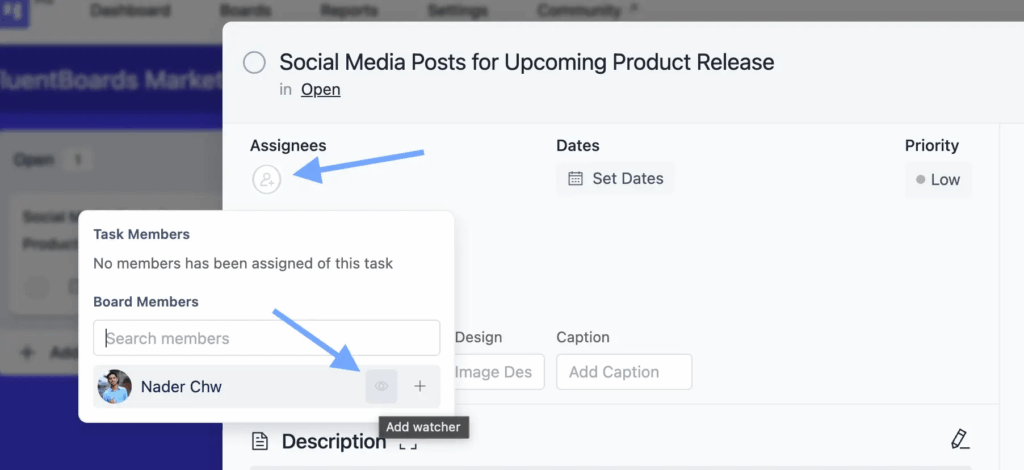
Add them as a watcher from the task menu and they receive all notifications for that task with zero edit access.
Step 6: Share a report instead of giving direct access
When real time visibility is not needed, do not give access at all. The Reports section in FluentBoards gives you a board specific summary of incomplete, completed, overdue, and total tasks with visual progress charts.
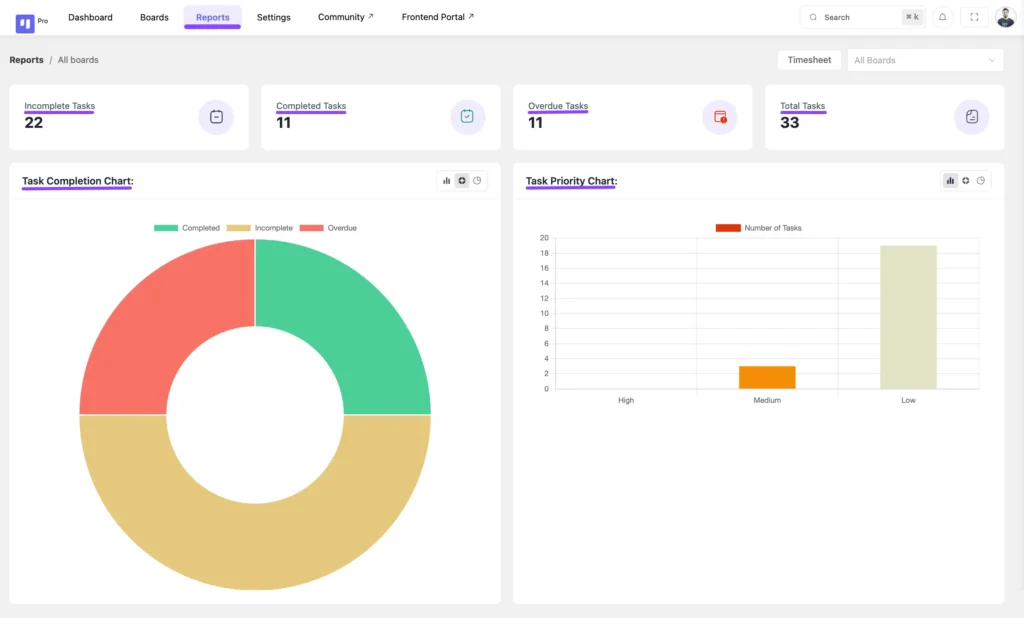
Review it, frame what matters, and share that. Stakeholders get clarity without getting access and without a reason to interfere.
This is how project boards improve visibility without turning into a surveillance tool. And once you have this structure in place, maintaining the right balance stops being something you think about and starts being something that just works.
The Sweet Spot Is Not Less! It’s Right
You don’t need to share less. You need to share smarter.
The line between transparency and oversharing isn’t about holding back information. It’s about knowing what helps and what creates noise.
When you share the right information with the right people at the right time, transparency builds trust and keeps everyone focused.
When you share everything with everyone, you create micromanagement, burnout, and confusion.
So before you send that update, ask yourself: does this help someone do their job better or make a better decision?
If yes, share it. If no, don’t.
The sweet spot isn’t less transparency. It’s right transparency.
Let’s redefine project management with FluentBoards!

Follow:


Get Tips, Tricks, & Updates
We won’t send you spam.





Leave a Reply