
How to Ensure Accountability in Each Team Member Without Pulling Every String


“Micromanaging is like breathing down someone’s neck. It’s suffocating.” – Leila Hock
That’s exactly how your team feels when you’re hovering over their every move.
But wait. You didn’t mean for it to go this way, right?
You just wanted the project finished on time.
You try to step back. But every time you do, something slips through the cracks.
So you check in more. You follow up harder.
Guess what?
You become the nightmare in their story.
And the heaviest part, the whole project weight, shifts onto you.
- Every deadline.
- Every blocker.
- Every decision.
All yours.
So how do you break that cycle? How do you build accountability without becoming the only thing holding it together?
That’s exactly where we start.
Why Do Managers End Up Micromanaging in the First Place?
Let’s get real for a second.
Nobody wakes up thinking, “Today, I’m going to breathe down my team’s neck and make everyone miserable.”
So how does it happen?
Simple. Fear.
Fear that the project might fail, deadlines will slip, or one mistake will snowball into chaos.
And honestly?
Those fears aren’t irrational. You’ve seen it happen. A missed deadline here. A dropped ball there. Suddenly, the whole project’s on fire, and you’re the one holding the extinguisher.
So you start controlling every step.

Before you know it, you’re hovering over every task. Every decision waits for your approval. Every update goes through you first.
Now here’s what that actually looks like from the outside:
- Your team stops making decisions without you
- They ask permission for everything
- Work queues up the moment you’re unavailable
- And they stop bringing ideas because there’s no point
In Harry Chambers’ research in My Way or the Highway, 71% of employees said micromanagement interfered with their job performance. 85% said it negatively affected their morale. 69% considered leaving because of it.
So you’re not just slowing the project down. You’re quietly pushing your best people out the door.
But here’s what makes it worse.
According to Gallup, only about half of all employees strongly indicate that they know what is expected of them at work.
Wait, hold up. What’s going on here?
If your team doesn’t know what success looks like, how can they own it? If you can’t see progress without interrupting someone, how can you trust them to deliver?
You can’t. So you step in and take over instead.
And while all that’s happening to you, something else is breaking on the other side.
Your team stopped collaborating with each other.
Not because they don’t want to. Because there’s no point. Every decision routes through you. So why would anyone coordinate directly with a teammate when the manager is the hub of everything?
As Simon Sinek said,
“Micromanagement is the enemy of trust and collaboration, leading to a toxic work environment.”
And that’s the real problem.
What Does Accountability in a Project Actually Mean?
Before we fix the problem, let’s make sure we’re solving the right one.
Accountability gets thrown around a lot in project management conversations. But what does it actually look like in practice?
Here’s a simple way to think about it:
Accountability means every team member knows exactly what they’re responsible for, when it’s due, and what success looks like.
It’s not about blame. It’s not about surveillance. It’s structured ownership.
When accountability is working, nobody has to wonder who’s handling what. Nobody has to chase updates. And when something doesn’t get done, there’s no confusion about who was supposed to deliver it.
Level up your WordPress project management game with this Trello equivalent solution – where limitless possibilities come at an unbeatable price!
Accountability Is Built. Not Enforced.
Here’s where most managers get it wrong.
You can’t demand accountability. You can’t create it through constant check-ins or stern reminders. That’s not accountability. That’s supervision.
Real accountability happens when the conditions are right. When tasks have clear owners. When deadlines are visible to everyone. When progress is transparent without anyone having to report it manually.
You create the structure. The structure creates accountability.
That’s the shift.
Accountability vs Micromanaging: Where Is the Line?
This is where things get tricky.
You want your team to deliver. You want visibility into progress. You want to catch problems before they become disasters.
But you also don’t want your team to feel watched. You don’t want to kill their motivation or creativity by controlling every step.
So where exactly is the line?
Micromanaging Controls the How
Micromanaging focuses on the process. It’s telling someone not just what to do, but exactly how to do it. It’s checking in on every decision. It’s needing to approve every small step before they can move forward.
When you micromanage, you’re essentially saying, “I don’t trust you to figure this out.”
And your team feels it. Research shows that employees who feel micromanaged become less engaged, less creative, and more likely to disengage entirely.
Accountability Focuses on the What and When
Accountability is different. It focuses on outcomes.
What needs to be delivered? When is it due? Who owns it?
The how? That’s trusted to the person doing the work.
You’re not hovering over their shoulder. You’re setting clear expectations and giving them the space to meet those expectations in their own way.
That’s the difference. One controls. The other empowers.
How Poor Collaboration Structure Creates an Accountability Gap
Let’s connect the dots now.
You’ve seen how micromanaging isn’t really about trust. And you understand that accountability needs to be built, not demanded.
But why does the gap exist in the first place? Why do so many teams struggle with accountability even when everyone means well?
The answer is collaboration structure. Or more accurately, the lack of it.
When Collaboration Breaks Down, Accountability Disappears
Think about what happens when your team doesn’t have a shared system:
- Tasks get assigned loosely in meetings or chat threads
- There’s no single place showing who owns what
- Deadlines exist in emails that get buried
- Progress lives only in each person’s head
In this environment, accountability becomes impossible. Not because people don’t care. Because the structure doesn’t support it.
When there’s no clear project team collaboration, ownership gets fuzzy. When ownership gets fuzzy, things fall through the cracks. And when things fall through the cracks, the manager steps in to fill the gap.
The Manager Becomes the Only Accountability Mechanism
Here’s the painful truth.
Without a proper collaboration system, you become the system.
You’re the one reminding everyone about deadlines. You’re the one tracking who’s working on what. You’re the one following up when tasks stall.
And from the outside, that looks exactly like micromanaging.
But you’re not doing it because you want control. You’re doing it because nobody else is doing it, and if you don’t, the project fails.
The problem isn’t you. The problem is the missing structure.
How to Ensure Accountability in a Project Without Micromanaging
Alright, enough diagnosing the problem. Let’s fix it.
What follows is a practical, step by step process for building accountability into your projects. These aren’t vague tips like “communicate better.” These are concrete actions you can implement today.
The goal? Create a system where accountability happens naturally, so you never have to hover again.
Step 1: Define Clear Task Ownership From the Start
Every task needs one owner. Not a team. Not a group. One person who is responsible for delivery.
This sounds obvious, but it’s where most projects fail before they even begin.
Tasks get assigned to “the team” or discussed in meetings without anyone explicitly taking ownership. And when nobody specifically owns a task, nobody is accountable for it.
So before any work begins, ask yourself: Does every single task have a name attached to it?
If the answer is no, that’s your first problem to solve.
When you assign tasks in a project management tool, make ownership crystal clear. The person’s name should be right there, visible to everyone.
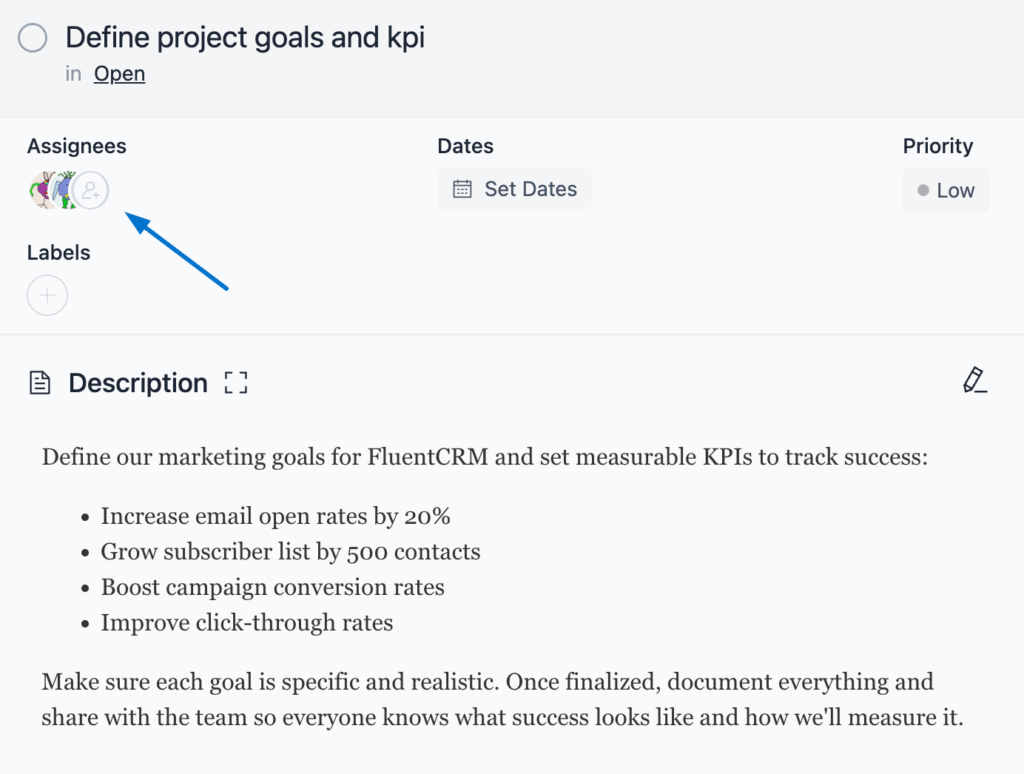
No ambiguity. No “we’ll figure it out later.” One task, one owner.
Step 2: Set Deadlines and Priorities Upfront
A deadline that lives only in someone’s head is not a real deadline.
Neither is a deadline buried in an email thread from three weeks ago. Or mentioned once in a meeting that nobody took notes on.
For deadlines to create accountability, they need to be visible to everyone. Not just the person responsible. The whole team.
When deadlines are public, something interesting happens. People take them more seriously. There’s social accountability built in. Nobody wants to be the person whose overdue task is visible to the entire team.
The same goes for priorities. Not every task carries equal weight. Some things are urgent. Some can wait. When priorities are labeled clearly, your team knows what to tackle first without you having to tell them.
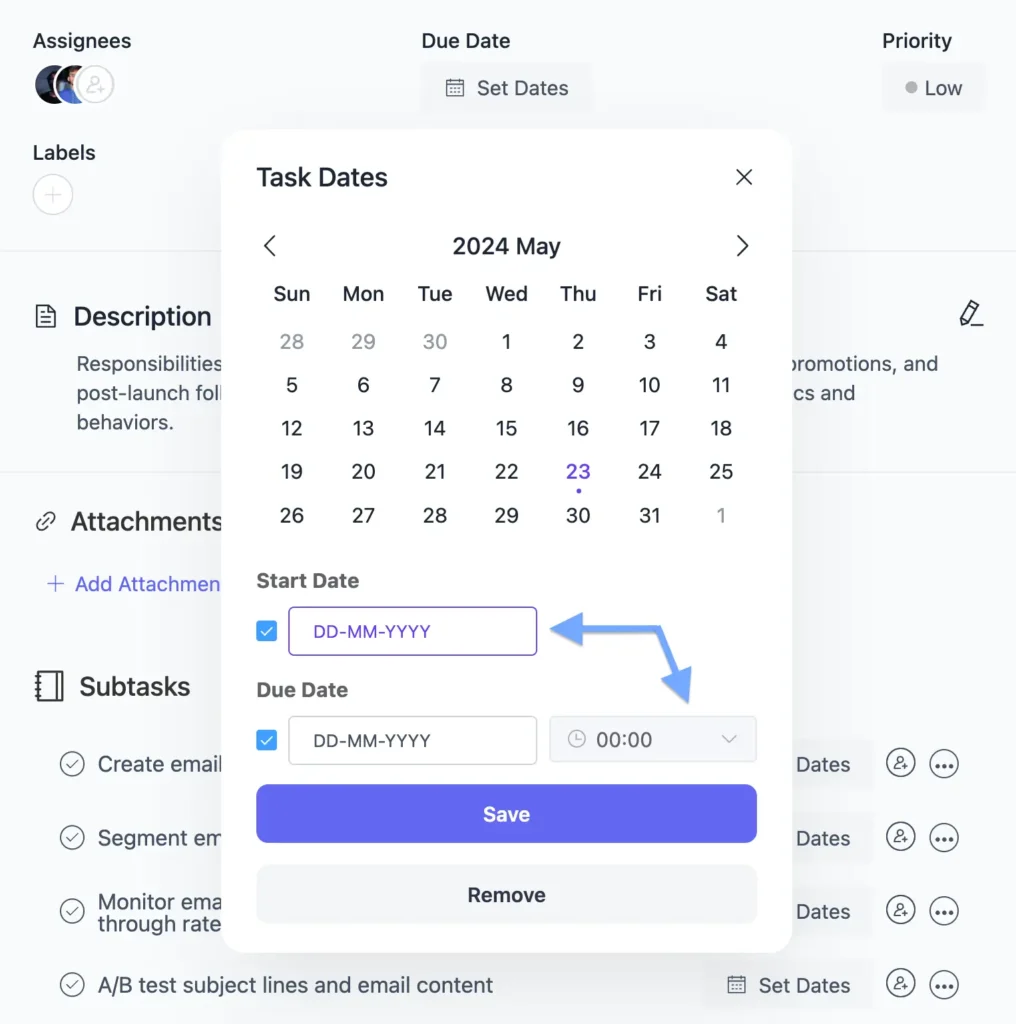
Set the deadline. Set the priority. Make both visible. Then step back.
Step 3: Create a Shared Visibility System for Individual Tasks
This is the missing piece that changes everything.
Right now, each team member probably manages their individual tasks differently. Personal apps. Sticky notes. Mental lists. Whatever works for them.
The problem? You have zero visibility into any of it.
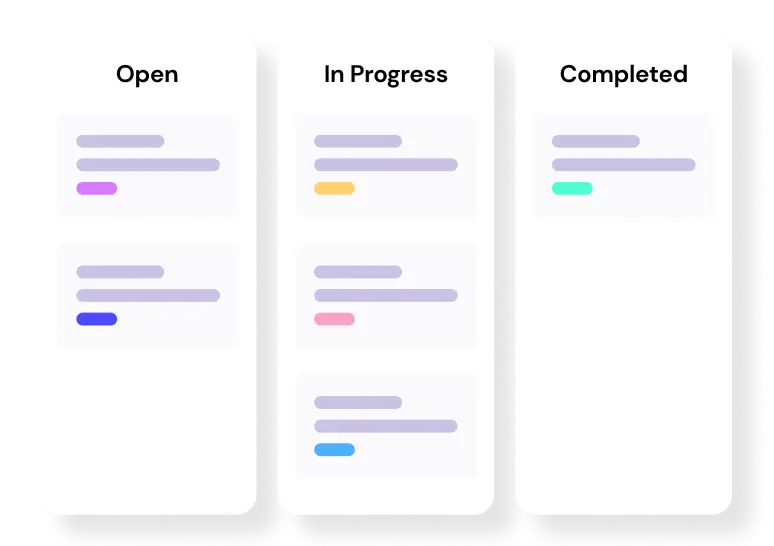
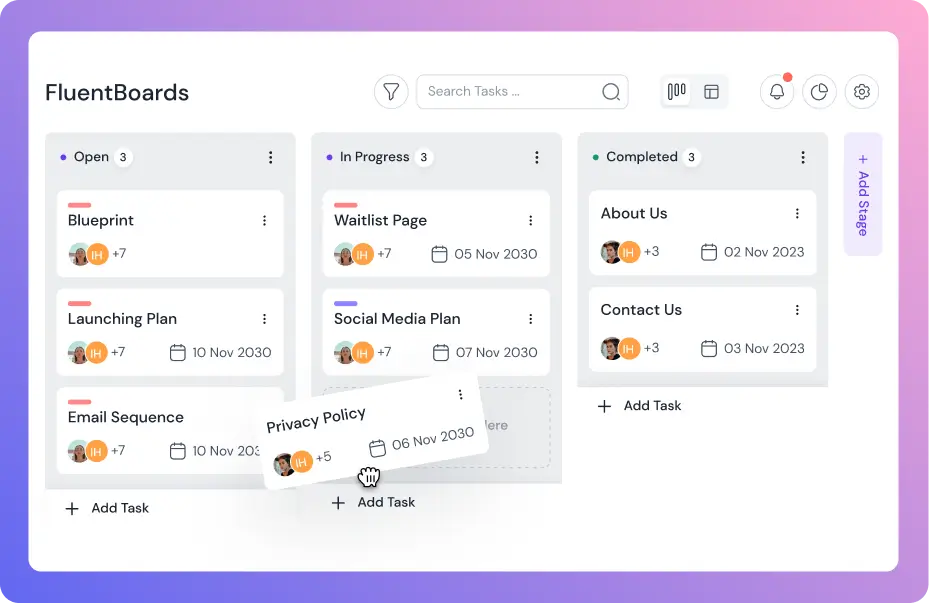
The solution is a shared system where everyone’s tasks live in one place. Not scattered across individual tools. One board. One view. One source of truth.
When individual task management connects to the overall project, something powerful happens. Progress becomes visible without anyone having to report it.
You can see at a glance:
- What’s in progress
- What’s completed
- What’s blocked
- What’s overdue
No more asking “where are we on this?” The board tells you.
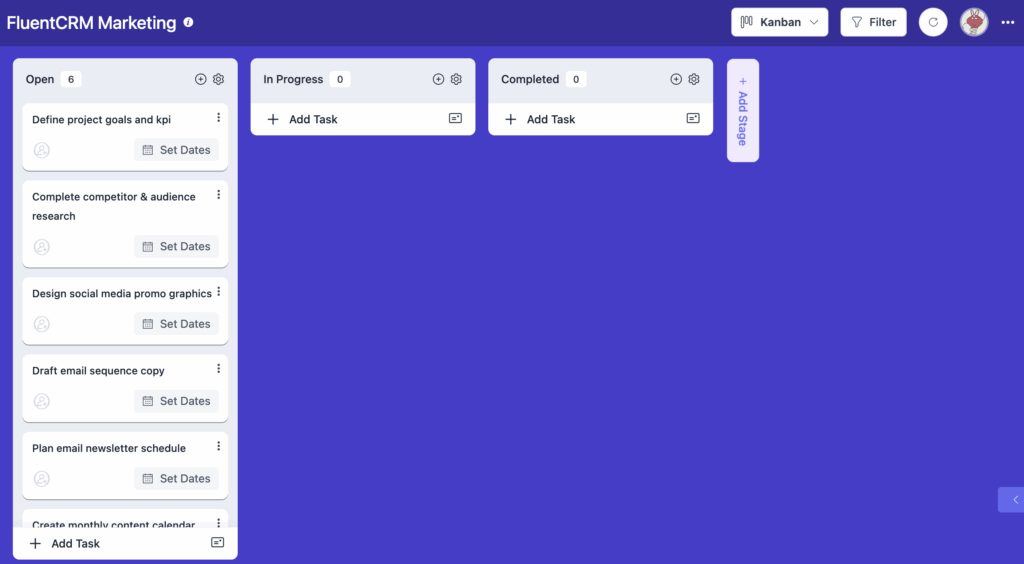
This is how you replace check-ins with clarity. The system does the visibility work so you don’t have to.
Step 4: Structure Check-ins Around Progress, Not Status
Check-ins aren’t the enemy. Bad check-ins are.
There’s a difference between a check-in that feels like support and one that feels like surveillance. The first builds trust. The second destroys it.
Here’s how to tell the difference:
A status check-in asks: “Did you finish this? Where are we? Why isn’t this done yet?”
A progress check-in asks: “What’s blocking you? What do you need from me? How can I help you move forward?”
See the shift? One is about control. The other is about support.
When you have a shared visibility system, you don’t need status check-ins anymore. You already know where things stand. So your conversations can focus on what actually matters: removing blockers, providing resources, and helping your team succeed.
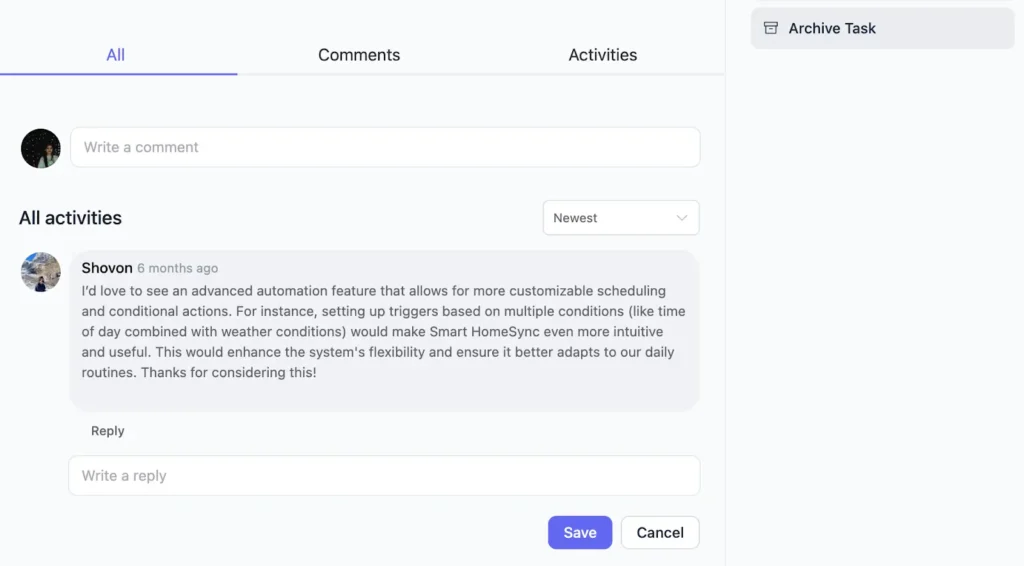
Use task comments for async updates. Save meetings for problem-solving, not status reporting.
Step 5: Build a Feedback Loop That Reinforces Ownership
Accountability doesn’t end when a task is marked complete.
Closing the loop is what reinforces the culture. When work gets acknowledged, when outcomes get reviewed, when lessons get captured, ownership becomes part of how your team operates.
Here’s what this looks like in practice:
- Acknowledge completed work publicly. A quick “nice work on this” in the task thread goes a long way.
- Review what went well and what didn’t at the end of each sprint or milestone.
- Capture lessons so the same mistakes don’t repeat.
This isn’t about blame when things go wrong. It’s about creating a pattern where ownership is recognized and valued.
When people feel that their ownership matters, they take it more seriously. Not because someone’s watching. Because they take pride in their work.
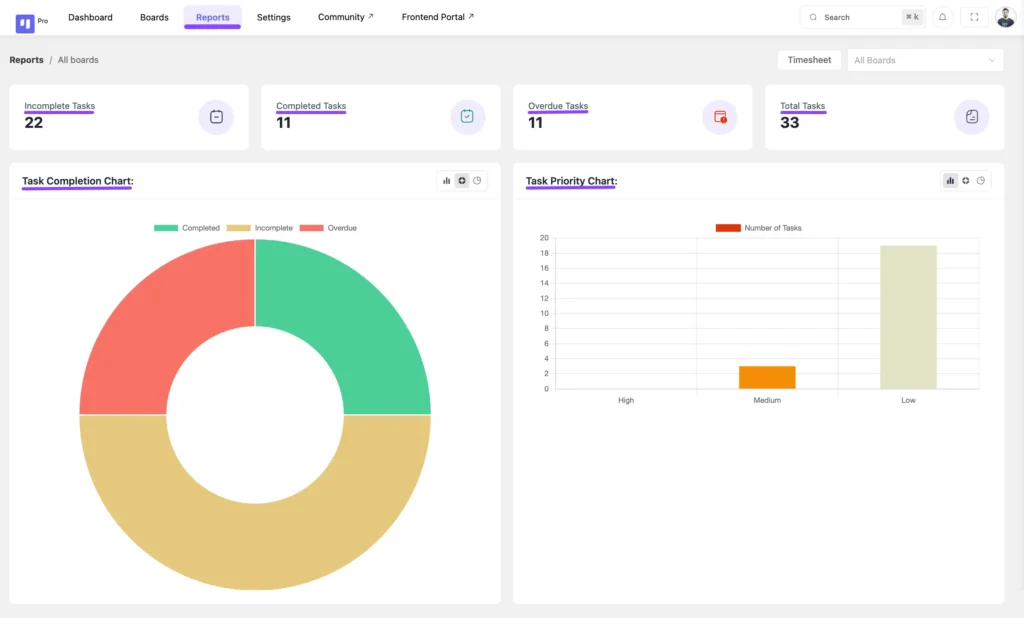
Close the loop. Acknowledge the work. Learn and move forward.
What Changes When Accountability Is Built Into the System
Let’s paint a picture of what your project environment looks like once these steps are in place.
Because this isn’t just about process improvement. It’s about a fundamental shift in how your team works together.
For the Manager
You can see everything without asking anyone.
Progress is visible on the board. Deadlines are clear. Ownership is explicit. You know exactly where the project stands at any moment without sending a single “checking in on this” message.
Your check-ins become conversations, not interrogations. You’re talking about blockers and strategy, not chasing status updates.
Your energy goes toward leadership instead of tracking. You’re making decisions, removing obstacles, and guiding direction. Not babysitting tasks.
And here’s the best part: you can actually step back. Take a day off. Trust that things are moving. Because the system holds accountability, not you.
For the Team
They feel trusted.
No more constant check-ins that feel like surveillance. No more wondering if you trust them to do their jobs. The autonomy they’ve been craving? It’s finally real.
They own their work with pride. When ownership is clear and visible, it’s not just responsibility. It’s recognition. Their name is on that task. They’re going to make sure it gets done right.
Deadlines are clear. Expectations are set. Nobody is waiting to be told what to do next. They know what’s expected, when it’s due, and how their work connects to the bigger picture.
And when they hit a blocker, they know how to ask for help. Because check-ins are about support, not status.
Step into the Future of Project Management!
The System That Replaces Micromanaging
Let’s bring it all together.
Micromanaging was never your plan. It became the default because there was no system to rely on. When visibility is missing, checking in constantly is the only option.
But now you know the alternative.
Accountability isn’t something you enforce through constant supervision. It’s something you build into the structure of how your team works.
Clear task ownership. Visible deadlines. Shared progress tracking. Supportive check-ins. Feedback that reinforces ownership.
These aren’t complicated ideas. But together, they create an environment where accountability happens naturally. Where your team delivers without being watched. Where you lead without hovering.
The manager’s job isn’t to be the accountability system. It’s to set up a system where accountability is built in.
That’s the mindset shift.
Let’s redefine project management with FluentBoards!

Follow:


Get Tips, Tricks, & Updates
We won’t send you spam.




Leave a Reply